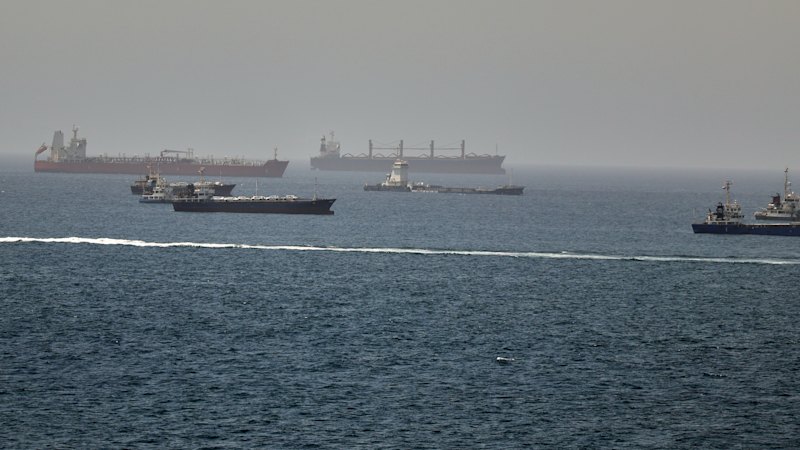
Political declarations cannot move container ships. When a government announces that a blockaded or contested waterway is suddenly "open" for business, politicians expect the global economy to snap back into place like a rubber band. It never does. The gap between a geopolitical decree and a functioning maritime supply chain is measured in millions of dollars of daily risk, recalcitrant insurers, and the quiet calculations of ship captains who refuse to risk their crews for someone else's press release.
The Strait of Hormuz handles roughly a fifth of the world’s petroleum liquids. When tension spikes in this narrow choke point, the global energy market holds its breath. But when the tension seemingly breaks, the bottleneck does not magically dissolve. Reopening a trade artery requires more than clearing physical debris or signing a truce; it requires convincing an incredibly risk-averse maritime industry that the water is safe. Right now, that confidence is a rare commodity.
The Illusion of the Open Switch
Governments treat trade routes like light switches. They believe turning the switch "on" instantly restores the flow of commerce. This view ignores the complex mechanics of international shipping.
When a maritime choke point experiences a severe disruption—whether from state-sponsored seizures, drone strikes, or naval skirmishes—the immediate response is a mass diversion of assets. Ships alter course, steaming around the Cape of Good Hope or dropping anchor in safe harbors outside the gulf. Returning these massive vessels to their original routes takes time. A container ship cannot simply perform a U-turn on a dime; its schedule is locked into a rigid network of port berths, refueling stops, and contractual windows stretching weeks into the future.
Furthermore, the physical presence of naval escorts does not guarantee safety. A destroyer patrolling the waters can deter a conventional warship, but it struggles against asymmetric threats like drifting mines or low-flying loitering munitions. Shipowners know this. They look at the physical reality of the waterway, not the diplomatic assurances issued from landlocked capitals.
The Invisible Dictators of Maritime Trade
The real power to restart shipping traffic does not reside in ministries of defense. It belongs to the underwriters in the City of London.
The Marine Insurance Squeeze
Every commercial vessel operating globally requires multiple layers of insurance, most notably Hull and Machinery (H&M) coverage and Protection and Indemnity (P&I) clubs. When a region is designated a "Listed Area" by the Joint War Committee (JWC), underwriters impose a mandatory war risk premium.
These premiums are not static fees. They are calculated as a percentage of the ship's total value for a specific transit window, usually lasting seven days. During peak escalations in the gulf, these premiums can skyrocket to over 1% of the hull value per transit. For a modern Very Large Crude Carrier (VLCC) valued at $120 million, that translates to a $1.2 million penalty just to sail through the strait once.
- The Premium Lag: Even after a conflict de-escalates, insurers do not drop their rates overnight. They wait for weeks of sustained calm before adjusting their risk models.
- The Exclusion Zones: Underwriters can simply refuse to cover certain flags or ownership structures, effectively banning those ships from the route regardless of government declarations.
- The Cost Pass-Through: These massive financial penalties are passed directly to the charterers, driving up the spot price of crude oil and consumer goods worldwide.
Crew Psychology and Labor Unions
Ships are crewed by human beings, not algorithms. International maritime labor unions hold immense leverage during crises. If the International Transport Workers' Federation (ITF) designates a waterway as a "High Risk Area," seafarers gain the right to refuse assignment to those vessels.
If a crew refuses to sail into the Strait of Hormuz, the ship stays stuck at the pier. Replacing a specialized crew at a moment's notice in a foreign port is a logistical nightmare that can cost hundreds of thousands of dollars in delays. Owners must pay double wages to incentivize crews to enter these zones, adding another layer of friction to the simple act of moving a ship from Point A to Point B.
The Logistical Whiplash
When a bottleneck suddenly clears, it creates a secondary crisis: port congestion.
Imagine twenty supertankers and fifty container ships all waiting outside the Gulf of Oman, hesitant to enter the strait. The moment the route is deemed viable, these vessels rush forward simultaneously. This surge creates an immediate operational crisis at the destination ports. Ports operate on razor-thin margins of schedule reliability. They lack the berth space, crane capacity, and truck driver networks required to process a month's worth of cargo in a single week.
[Disruption Event] ➔ [Ships Divert/Anchor] ➔ [Insurance Premiums Spike]
                                                        │
[Port Congestion] ↵ [Mass Rush to Transit] ↵ [Geopolitical "All Clear"]
The resulting backlog ripples across the globe. A ship delayed by five days in the Middle East misses its loading window in Singapore, which delays a delivery in Rotterdam, ultimately leaving retail shelves empty in New York. The system is interconnected, fragile, and inherently allergic to sudden shocks.
The Asymmetric Threat Matrix
The nature of modern maritime warfare means that a waterway is never truly safe just because a treaty is signed. The proliferation of cheap, accessible technology has permanently altered the risk equation for commercial shipping.
A state actor or a well-funded proxy group does not need a conventional navy to shut down the Strait of Hormuz. They only need a handful of commercial drones carrying small explosive payloads, or a few fast-attack craft armed with anti-ship missiles. These assets are easily hidden, rapidly deployed, and incredibly difficult to intercept with absolute certainty.
"A billion-dollar air defense destroyer must expend a two-million-dollar missile to intercept a twenty-thousand-dollar drone. The economics of maritime protection are fundamentally broken."
This reality forces shipowners to make a cold financial calculation. Is the profit from a single voyage worth the potential total loss of a vessel and its cargo? For major energy conglomerates, the answer is increasingly negative. They would rather pay the premium to route ships around Africa than play Russian roulette in a narrow strait, no matter how many politicians claim the route is secure.
The Shell Game of Flag States and Subterfuge
When legitimate, blue-chip shipping lines pull out of a troubled waterway, they leave behind a vacuum. This vacuum is invariably filled by the "dark fleet"—a shadowy network of older, poorly maintained vessels operating under flags of convenience with opaque ownership structures.
These ships operate without standard insurance, often using unverified Russian or Middle Eastern underwriters. They ignore safety protocols, turn off their Automatic Identification System (AIS) transponders, and engage in risky ship-to-ship transfers at night.
While this dark fleet keeps a baseline level of oil moving through the strait during a crisis, it introduces a massive environmental and operational hazard. A single collision or grounding involving an uninsured, structurally deficient tanker in the narrow shipping lanes of the strait would cause a catastrophic oil spill. Such an event would physically close the channel far more effectively than any military blockade ever could.
Moving Beyond Rhetoric
Rebuilding shipping traffic requires addressing the underlying financial and psychological anxieties of the maritime industry.
Governments must stop issuing empty proclamations of safety and instead focus on providing tangible, verifiable risk reduction. This means establishing international sovereign insurance funds to backstop commercial underwriters, guaranteeing that state treasuries will absorb the losses if a commercial vessel is struck. It means deploying standardized, multi-national naval convoys that integrate directly with commercial fleet schedules, rather than relying on sporadic unilateral patrols.
Until these structural financial mechanisms are established, declaring a contested waterway open remains an exercise in political theater. The world’s merchant fleet will continue to watch the water, waiting for the reality on the waves to finally match the rhetoric from the podium. Shareholders do not accept promises as collateral. Crews do not eat press releases. The traffic will return only when the math makes sense, and not a single moment sooner.


