President Donald Trump has declared that Israel is "prohibited" from further bombing in Lebanon, an assertion that complicates a fragile ten-day ceasefire and exposes a widening rift between Washington and Jerusalem. This unilateral declaration, issued via social media, marks a significant departure from traditional diplomatic norms and attempts to impose a hard ceiling on Israeli military operations that Prime Minister Benjamin Netanyahu suggests are far from finished. While the White House frames this as a decisive end to a conflict that has claimed over 2,100 lives since March, the reality on the ground in southern Lebanon tells a story of strategic confusion and latent hostility.
The core of this "prohibition" rests on a 10-day cessation of hostilities that officially went into effect on April 16, 2026. According to the text released by the State Department, the goal is to provide a window for direct negotiations in Washington to settle long-standing border disputes and the status of Hezbollah’s arsenal. However, the linguistic gap between "truce" and "prohibition" is where the danger lies. Trump’s forceful language—stating "Enough is enough!!!"—is designed to signal a total halt, yet the ceasefire agreement itself contains a massive loophole: Israel retains the right to act in self-defense against "planned, imminent, or ongoing attacks." Meanwhile, you can find other developments here: The Illusion of the Last Minute Strike and the Cold Logic of De-escalation.
The Friction Between Command and Autonomy
Washington is attempting to treat the Lebanese front as a separate theater from the ongoing tensions with Iran. By declaring that the U.S. will "separately" handle the Hezbollah situation, Trump is trying to de-escalate a regional conflagration by breaking it into smaller, manageable pieces. But this strategy ignores the internal political pressure cooker facing Netanyahu. Just hours after the truce began, Netanyahu addressed the Israeli public to clarify that the job of "dismantling" Hezbollah remains incomplete. He explicitly noted that threats from rockets and drones still exist, and the IDF has not withdrawn its positions from southern Lebanon.
This creates a scenario where the U.S. President has publicly forbidden an ally from conducting the very operations that ally considers vital for its national survival. When a superpower uses the word "prohibited," it usually implies a threat of withheld military aid or diplomatic isolation. Yet, there has been no formal change in the U.S. defense posture toward Israel. This suggests the "prohibition" is as much a rhetorical tool to force Lebanon and Iran to the bargaining table as it is a literal command to the IDF. To understand the complete picture, check out the excellent article by TIME.
The Mechanics of a Ten Day Window
The truce is not a peace treaty; it is a high-stakes pause. The agreement stipulates that the Lebanese Armed Forces (LAF) are to be the only authorized armed body in Lebanon. This is a tall order for a government in Beirut that has historically struggled to exert authority over Hezbollah’s paramilitary wing.
Under the terms, the following steps are expected to occur:
- Hostility Cessation: A total freeze on offensive air, land, and sea strikes.
- Direct Negotiations: Delegations from Beirut and Jerusalem meeting under U.S. mediation.
- Security Corridors: Establishing zones where the LAF can deploy to replace non-state actors.
The 10-day limit is intentionally short. It creates a "ticking clock" meant to prevent the parties from using the pause to re-arm or entrench. But history shows that short-term ceasefires in this region often serve as a tactical reset rather than a diplomatic breakthrough. UNIFIL observers have already reported that while airstrikes have stopped, Israeli artillery remains active in response to what the IDF describes as "proximity violations" by Lebanese residents.
Why the Prohibition Might Fail
The primary obstacle is the definition of "offensive" versus "defensive." If Hezbollah launched a single drone, Trump's prohibition would technically remain in place, but Israel's "inherent right to self-defense" would override it. This ambiguity is where wars restart. Furthermore, the Iranian factor cannot be ignored. While Trump claims the Lebanon situation is separate, Tehran has linked the reopening of the Strait of Hormuz to the cessation of strikes on its proxies.
If the U.S. naval blockade on Iran remains in place—which Trump has confirmed it will—the incentive for Hezbollah to remain quiet is minimal. They see the ceasefire not as a path to peace, but as a period of enforced vulnerability while their primary benefactor is strangled economically.
The Cost of the Deadlock
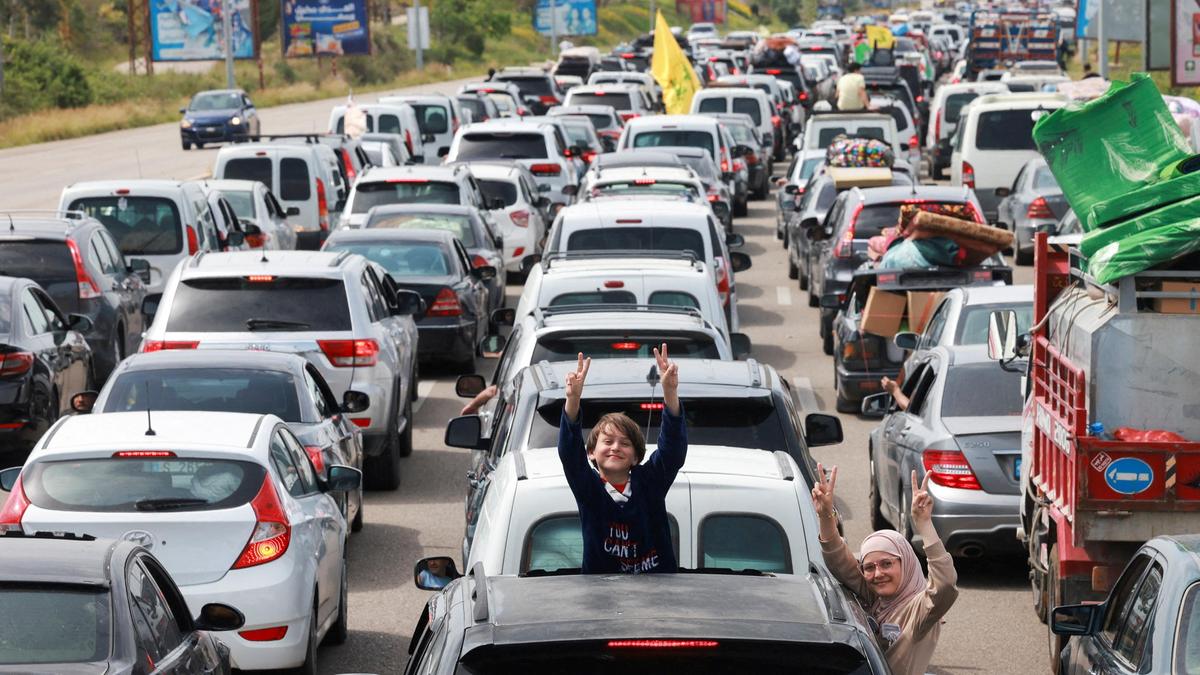
The humanitarian toll of the 45-day escalation that led to this point is staggering. Lebanese health officials report that the casualties are predominantly civilian, with children making up a significant portion of the displaced population. Over one million people are currently living in temporary shelters across Lebanon. For these people, a "prohibition" on bombing is a welcome relief, but without a permanent withdrawal of Israeli ground forces and a credible disarmament of Hezbollah, the quiet is merely a holding pattern.
The Israeli perspective is equally grim. Residents of northern Galilee, who have lived under a hail of 150,000 potential missiles, view any ceasefire that leaves Hezbollah intact as a betrayal. They do not want a 10-day pause; they want the "distant threat" removed permanently. Trump’s blunt intervention has momentarily silenced the jets, but it has not silenced the demand for a total resolution.
Military Reality versus Political Rhetoric
The IDF’s presence "deep in Lebanon" is the ultimate leverage. By staying on Lebanese soil during the truce, Israel ensures that any failure by the LAF to control Hezbollah will result in an immediate resumption of close-quarters combat. This "forward defense" posture is a direct challenge to the U.S. "prohibition." If a commander on the ground perceives a threat, they will fire. They will not wait for a Truth Social post to tell them otherwise.
The United States is now the guarantor of a deal that neither side fully trusts. By using such absolute language, the White House has tied its prestige to a 240-hour window. If a bomb falls in Beirut tomorrow, it won't just be an Israeli strike; it will be a public defiance of American orders. This turns every tactical skirmish into a potential diplomatic crisis between two of the world's closest allies.
The Missing Pieces of the Accord
Noticeably absent from the public ceasefire text is any mention of the Shebaa Farms or the specific mechanics of how Hezbollah will be disarmed. To expect a weakened Lebanese state to achieve in ten days what the international community hasn't achieved in twenty-six years is optimistic at best. The "prohibition" acts as a lid on a boiling pot, but the fire underneath—fueled by territorial disputes and regional proxy wars—is still burning at full strength.
As the 10-day countdown continues, the focus shifts from the skies over Beirut to the meeting rooms in Washington. If the negotiators cannot find a way to reconcile Israel’s security requirements with Lebanon’s sovereignty, the "prohibition" will expire with a roar of renewed engines and falling munitions. The clock is running.



