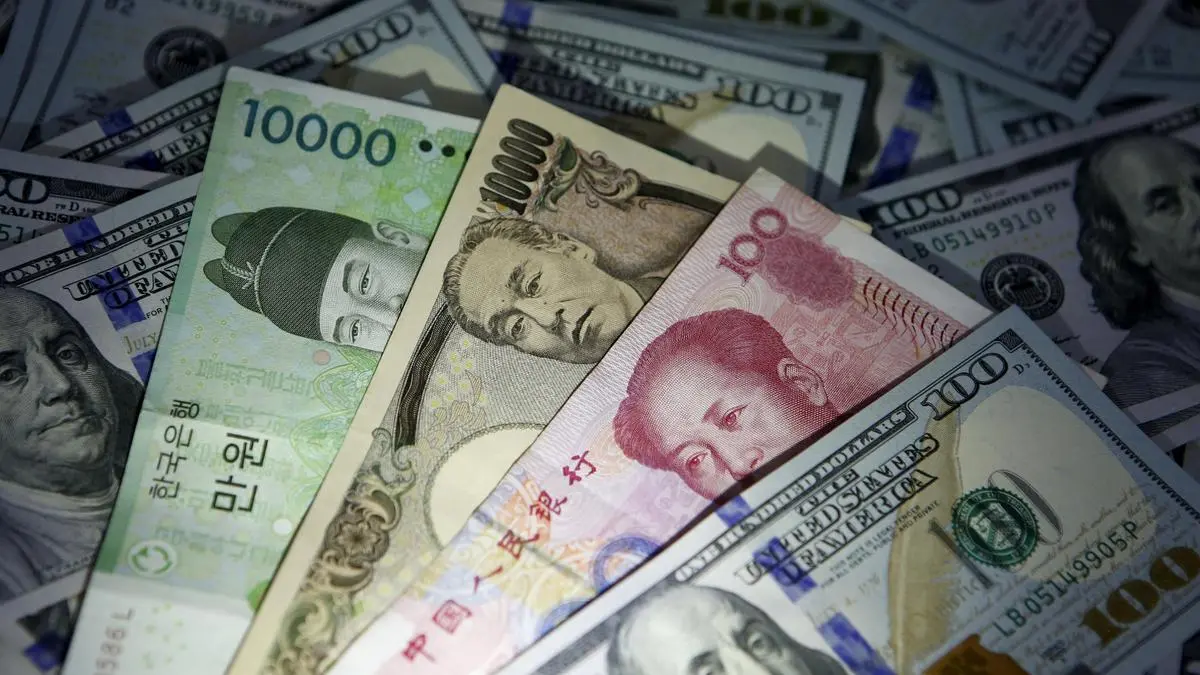
The collapse of peace negotiations between Washington and Tehran has triggered a predictable but violent flight to safety that is currently crushing the Chinese yuan. While surface-level analysis suggests this is a simple matter of investors seeking the shelter of the U.S. dollar, the reality is far more systemic. The yuan is caught in a pincer movement between a domestic economic slowdown and a geopolitical shockwave that threatens China's energy security. When the prospect of stability in the Persian Gulf evaporates, the global financial system reverts to its default setting: the greenback is king, and emerging market currencies, including the managed yuan, are the primary casualties.
Beijing now faces a grim mathematical reality. The breakdown in diplomacy ensures that the risk premium on oil remains elevated, putting immense pressure on China's current account surplus. As the world’s largest oil importer, China sees every dollar added to the price of a barrel as a direct drain on its foreign exchange reserves. This isn't just about market sentiment. It is about the fundamental flow of capital.
The Dollar Liquidity Trap
Global markets react to Middle Eastern instability with a primitive instinct. They hoard dollars. This "safe-haven" trade is not a vote of confidence in American fiscal policy, which remains a shambles of rising debt and partisan gridlock. Instead, it is a recognition that in times of potential kinetic conflict, the dollar remains the only currency with the depth and liquidity to handle massive, panicked outflows from riskier assets.
The yuan, despite Beijing’s decade-long push for internationalization, lacks this "crisis utility." Because the People’s Bank of China (PBOC) maintains a tight grip on capital controls, the yuan cannot function as a pressure valve during a global emergency. Investors know they can get into the yuan, but they aren't always sure how quickly—or at what cost—they can get out when the missiles start flying. This inherent friction makes the yuan an easy target for short-sellers whenever the geopolitical temperature rises.
The spread between the onshore yuan (CNY) and the offshore yuan (CNH) has begun to widen significantly. This gap is a flashing red light. It indicates that while the PBOC is trying to project a facade of stability at home through its daily fixing rate, the rest of the world is aggressively betting against the currency.
Energy Vulnerability and the Petroleum Pivot
The collapse of the US-Iran talks hits China harder than almost any other major power because of its unique relationship with Iranian crude. For years, China has been the primary buyer of sanctioned Iranian oil, often settled in yuan or through complex barter arrangements. This "shadow trade" provided China with discounted energy and a way to circumvent the dollar-dominated global financial system.
If the breakdown in talks leads to a more aggressive enforcement of U.S. sanctions or, worse, a direct military escalation that disrupts shipping in the Strait of Hormuz, China's "cheap oil" strategy dies. Beijing would be forced back into the open market, competing for barrels in a high-price environment where every transaction is settled in dollars.
Consider the mechanics of this shift. To buy that replacement oil, Chinese state-owned enterprises must sell yuan to acquire dollars. This creates a massive, constant selling pressure on the yuan. It is a self-reinforcing cycle. Higher oil prices lead to a weaker yuan, which in turn makes oil even more expensive for Chinese refineries in local currency terms. This is how stagflationary pressure begins to take root in the world’s second-largest economy.
The PBOC’s Limited Arsenal
The central bank in Beijing is currently fighting a two-front war. On one side, it needs to keep interest rates low to stimulate a sagging property sector and encourage domestic consumption. On the other side, it must prevent the yuan from depreciating too rapidly, which would trigger capital flight and spook international investors.
The failure of the Iran talks has effectively stripped the PBOC of its ability to manage this transition smoothly. Usually, the bank uses its "counter-cyclical factor"—an opaque adjustment to the daily midpoint—to signal to the market that it won't tolerate excessive weakness. But these signals are losing their potency. When the macro environment is dominated by the threat of war, a central bank’s verbal intervention is like trying to stop a tidal wave with a megaphone.
The Myth of De-dollarization
This crisis exposes the hollow core of the "de-dollarization" narrative that has dominated financial headlines for the last two years. While it is true that central banks are buying gold and exploring non-dollar trade blocks, those are long-term structural shifts. They do nothing to help a trader in London or Singapore who needs to move $500 million into a safe asset in the next ten minutes.
In those moments, the yuan is not even in the conversation. The breakdown of peace talks confirms that the world is nowhere near ready for a multipolar currency system. If China cannot provide a stable, liquid alternative during a Mideast crisis, the yuan will remain a secondary currency, used for trade when convenient but discarded when things get dangerous.
Collateral Damage in the Supply Chain
A weakened yuan is often viewed as a boon for Chinese exporters because it makes their goods cheaper on the global market. That is an outdated perspective. Modern manufacturing is a globalized web of components. Chinese factories import high-end semiconductors from Taiwan, specialty chemicals from Germany, and raw materials from Australia. Most of these inputs are priced in dollars.
As the yuan loses value against the dollar, the cost of these essential imports spikes. This erodes the profit margins of the very manufacturers that the Chinese government is trying to support. We are seeing a "squeeze" effect. The export advantage gained from a weaker currency is being negated by the rising cost of production.
Furthermore, the volatility itself is a poison. International buyers hate price uncertainty. If a Western retailer cannot predict what their landed cost will be three months from now because the yuan is swinging wildly on every headline out of Tehran or Washington, they will look to move their supply chains to more stable environments like Vietnam or Mexico.
The Geopolitical Cost of Financial Instability
Beijing’s influence in the Middle East was largely built on its image as a stable, purely commercial partner that doesn't get bogged down in the messy "forever wars" of the West. By brokering deals between regional rivals, China hoped to secure its energy future while positioning the yuan as the currency of regional stability.
The collapse of the US-Iran talks shatters that illusion. It demonstrates that the U.S. still holds the keys to the region’s security architecture and, by extension, its financial volatility. China is realizing that it can't just buy its way to regional dominance. If it cannot guarantee the safety of the oil lanes or the stability of its own currency during a crisis, its "Soft Power" in the Gulf is largely irrelevant.
The PBOC is now forced to dip into its massive pile of U.S. Treasuries to support the yuan. This is the ultimate irony. To defend its currency against the fallout of a U.S.-driven geopolitical crisis, China must use the very U.S. debt instruments it has spent years trying to diversify away from.
The Exit of Foreign Capital
Foreign institutional investors have been paring back their exposure to Chinese bonds and equities for months, citing regulatory uncertainty and the property debt crisis. The new Mideast tension provides them with a definitive reason to complete that exit.
The carry trade—where investors borrow in a low-interest-rate currency to invest in a higher-yielding one—is currently favoring the dollar. With the Federal Reserve forced to keep rates "higher for longer" to combat the inflationary impact of rising oil prices, the interest rate differential between the U.S. and China is widening. There is no incentive to hold yuan-denominated debt when the yield is lower and the currency risk is significantly higher.
Hard Choices in the Forbidden City
The Chinese leadership is now approaching a crossroads. They can allow the yuan to find its true market value, which would likely mean a sharp, painful devaluation toward the 7.50 or even 7.80 level against the dollar. This would help the export sector in the short term but would risk a massive exodus of domestic wealth and potentially trigger a banking crisis as dollar-denominated debts become unpayable.
Alternatively, they can burn through their foreign exchange reserves to defend an arbitrary level, which is a losing game in the long run against the backdrop of a global dollar surge. The middle path—incremental, managed depreciation—is what they are currently attempting, but it is the most expensive option. It provides a slow-motion exit ramp for speculators, allowing them to sell yuan at a government-subsidized price.
Structural Reality vs. Political Narrative
The failure of the Iran talks isn't just a diplomatic footnote. It is a catalyst that exposes the structural weaknesses in the Chinese economic model. An economy that is heavily dependent on imported energy and offshore technology cannot have a truly "sovereign" currency if it is not prepared to let the market set the price.
For the veteran observer, this isn't a new story, but the stakes are higher than they were in 2008 or 2015. China is no longer a rising insurgent; it is a massive, aging behemoth trying to maintain its balance in an increasingly hostile world. The "safe-haven dollar" is a symptom. The disease is a global system that still has no viable alternative to American financial hegemony, even as the American political system becomes more unpredictable.
Companies operating in this environment need to stop treating yuan volatility as a temporary glitch. It is the new baseline. Hedging strategies that worked in a world of $60 oil and functional diplomacy are useless now. If you are holding significant yuan assets without a direct, physical hedge in commodities or harder assets, you are essentially gambling on the ability of a single central bank to defy the laws of global gravity.
The window for a "soft landing" for the yuan closed the moment the negotiators walked away from the table. The focus now shifts from growth to survival. Watch the daily fixings, but pay more attention to the tankers moving through the Indian Ocean. That is where the value of the yuan is actually being decided. Any attempt to stabilize the currency without a resolution to the energy security crisis is merely theater.
Investors should prepare for a period where the yuan behaves less like a global reserve currency and more like a high-beta proxy for Mideast peace. Given the current trajectory, that is a terrifying prospect for anyone looking for stability in the East.
The immediate move for any treasurer or fund manager is a total audit of China-linked currency exposure. Expect the 7.30 level to be tested and broken with speed. The PBOC will fight, but the dollar's momentum, fueled by the fires of the Middle East, is a force that no amount of reserve spending can truly contain. Diversify into hard assets or dollar-denominated staples immediately. The era of the "stable yuan" is over.