Morning on University Avenue usually smells of wet asphalt, roasting coffee beans from the corner cart, and the faint, metallic tang of the subway vents breathing exhaust from deep beneath the city. It is a predictable rhythm. People in tailored wool coats rush past limestone facades, clutching cardboard cups with both hands against the Lake Ontario wind. For decades, this stretch of downtown Toronto has felt like a quiet sanctuary of diplomacy. Flags flutter lazily overhead. Glass doors remain unlocked to the gentle flow of visa applicants, staff members, and neighbors seeking shelter from a sudden November drizzle.
Until the glass shatters.
Not with a roar, but with a sharp, sickening crack that stops the morning commute dead in its tracks.
This is not a movie scene. There are no stunt coordinators, no swelling orchestral strings to cue your adrenaline, and no cuts to safety. It is a real Tuesday, and a bullet has just punched its way through the exterior glass of the United States Consulate General.
Again.
To understand why this matters, you have to look past the dry police blotters and the hurried morning news updates. You have to understand what a consulate actually is. It is a physical manifestation of a foreign country sitting squarely on domestic soil. When someone fires a projectile at those windows, they are not just breaking glass. They are testing the membrane of international order. They are puncturing the illusion of safety that ordinary citizens rely on to walk down a public sidewalk without looking over their shoulder.
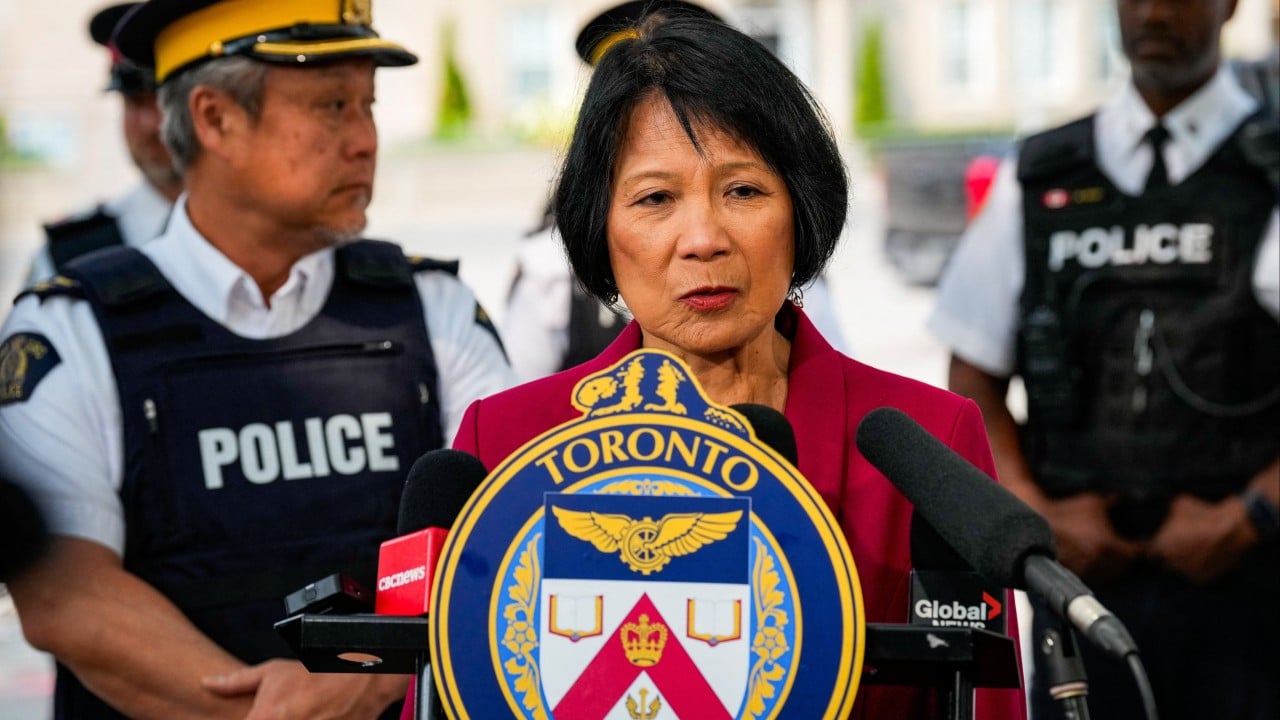
Consider what happens next in the immediate aftermath of a shooting. Sirens wail, slicing through the urban canyon. Police cruisers converge with tires screeching, flashing crimson and blue against the grey stone of the buildings. Officers fan out, service weapons drawn, eyes darting up toward the shadowy cornices of nearby skyscrapers and down into the subterranean grates.
Panic has a very distinct sound. It sounds like a sudden intake of breath from fifty people at once. It sounds like heels clicking frantically against concrete as pedestrians scatter toward the nearest subway entrance, desperate for cover, wondering if the next shot will find them.
And then comes the unsettling quiet.
The police tape goes up. Yellow plastic flaps in the breeze, turning a bustling thoroughfare into a crime scene. Inside the perimeter, forensic investigators in blue booties crouch on the pavement, shining high-intensity flashlights over stray fragments of safety glass, searching for brass casings, measuring trajectories with lasers.
This was the second time in four months.
That statistic is the knife twist. A single isolated incident can be written off as the erratic act of a lone, desperate individual—a statistical anomaly in a city consistently ranked among the safest major metropolitan areas in the world. But a second incident? That forms a pattern. That whispers of escalation. That transforms a random act of urban violence into a targeted symptom of something deeper, darker, and entirely unresolved.
Let us be honest with each other. The world feels increasingly frayed at the edges.
You can feel it in the grocery store aisles where strangers snap at each other over the price of eggs. You can feel it in the endless scroll of digital feeds, where every conflict across the globe is beamed directly into our palms in high definition, stoking an ambient, low-grade fury that never quite dissipates. People are angry. People feel unheard, invisible, and utterly powerless against the crushing weight of macroeconomic forces and geopolitical chess games they never consented to play.
When that systemic frustration boils over, it has to land somewhere. Often, it lands on the symbols of authority.
Imagine standing across the street, watching the news crews set up their heavy cameras on heavy tripods. The reporters adjust their earpieces, smoothing down their hair against the wind, putting on that grave, practiced tone of authority that television demands. They speak of perimeter security, diplomatic security services, and local police investigations. They talk about ballistic reports and ballistic glass ratings.
They talk about everything except the fear.
The fear is the invisible architecture of this entire event. It is the reason why the consulate staff will approach their desks tomorrow morning with a slightly heavier heart. It is the reason why the security guards at the metal detectors will look at the next person stepping through the doors with an extra fraction of a second of scrutiny, their fingers hovering a millimeter closer to their utility belts.
Trust is fragile. It takes generations to build the diplomatic norms that allow nations to share borders and cities without constant bloodshed. It takes decades of patience, treaty-making, cultural exchange, and quiet compromise to construct a world where a consulate can sit openly on a busy downtown street without needing a fortress wall of blast-resistant concrete.
And it takes a single second, and a single bullet, to shatter that trust into a thousand glittering pieces on the sidewalk.
The investigation is ongoing. Detectives pore over grainy closed-circuit television footage harvested from neighboring office buildings, trying to track the ghost of a suspect who melted into the morning rush hour. Was it a political statement? Was it a personal grievance aimed at American foreign policy? Was it simply a deranged individual testing the limits of chaos?
We do not know yet. And that uncertainty is perhaps the most uncomfortable pill to swallow. We crave narratives with clean resolutions. We want the villain caught, the motive explained, and the world neatly put back together by the end of the broadcast.
Life does not offer those neat conclusions.
Instead, the sun sets over Lake Ontario, casting long, amber shadows across University Avenue. The police tape is eventually rolled up and hauled away. The shattered window is boarded up with heavy plywood, a temporary scar on a proud facade. Pedestrians return to their routines, walking past the wound with their eyes fixed firmly ahead, pretending not to notice the raw wood.
Yet the question remains suspended in the evening air, sharp as a shard of glass waiting in the dark.