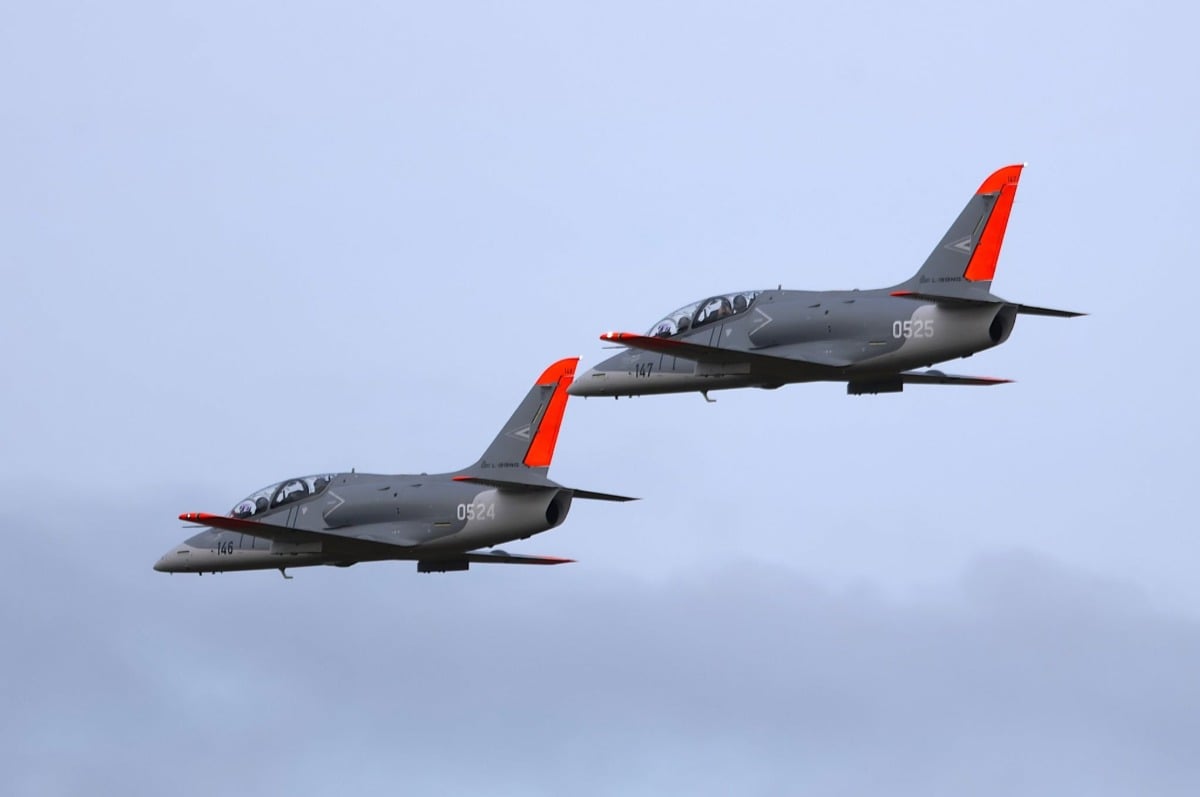
The defense aerospace industry is celebrating. Aero Vodochody is booking new deals for its L-39NG jet trainer, and the consensus among military procurement officers is unanimous: upgrading to the latest light jet trainer is the responsible, forward-thinking way to prepare the next generation of fighter pilots.
They are dead wrong. Don't forget to check out our recent article on this related article.
Investing millions into brand-new, dedicated lead-in fighter trainers (LIFTs) is a textbook example of preparing for the last war using yesterday's procurement playbook. The assumption that a student pilot needs to log hundreds of hours burning expensive aviation fuel in a subsonic aluminum tube to learn how to fly a fifth-generation fighter is a myth kept alive by legacy manufacturers and bureaucratic inertia.
I have watched defense departments burn through staggering percentages of their operational budgets maintaining these intermediate fleets. The math no longer works. The airframes are changing, the threats are changing, and the entire philosophy of flight training needs to be dragged into the present day. To read more about the history of this, Reuters Business offers an excellent summary.
The Fatal Flaw of the Modern Jet Trainer
The argument for aircraft like the L-39NG or even the Leonardo M-346 rests on a simple premise: you need a stepping stone between a basic turboprop trainer and a front-line supersonic fighter like the F-35 or Eurofighter Typhoon.
This premise ignores the fundamental shift in what makes a modern fighter pilot effective.
Flying a fifth-generation platform is not about mastering stick-and-rudder mechanics at high G-loads. The aircraft itself is remarkably easy to fly; the flight control computers handle the aerodynamics. The real job of a modern pilot is managing an overwhelming torrent of data. They are sensor managers and tactical battle commanders who happen to be sitting in a cockpit.
A subsonic jet trainer cannot replicate that environment.
The Avionics Disconnect
Imagine a scenario where a student transitions from a legacy jet trainer to an operational squadron. In the trainer, they look at a small, simulated radar screen with limited data fusion. The moment they step into an F-35, they are blinded by an entirely different architecture—a helmet-mounted display system that projects a 360-degree view of the battlespace, fusing radar, infrared, and datalink information into a single picture.
Putting a student in a physical jet that lacks these advanced capabilities just to teach them how to fly a landing pattern is a massive waste of resources. You are paying thousands of dollars per flight hour for an engine and an airframe, when what the student actually needs is the processing power of a supercomputer.
The Financial Reality of the "Cheap" Jet
Proponents of new jet deals always point to lower operating costs compared to front-line fighters. They brag about an hourly operating cost of $2,500 to $3,000 for a light jet, compared to the $30,000+ it takes to fly a heavy stealth fighter.
This is a classic shell game.
| Aircraft Type | Purchase Cost per Unit | Hourly Operating Cost | Mission Relevance to 5th-Gen |
|---|---|---|---|
| Legacy/New Jet Trainer | $15M – $30M | $2,500 – $5,000 | Low (Sensor/Data Mismatch) |
| Advanced Turboprop | $8M – $12M | $800 – $1,200 | Moderate (Basic Flight/Airmanship) |
| Ground-Based Synthetic Training | Variable (Fixed CapEx) | Minimal | High (Tactical/System Mastery) |
When you factor in the acquisition cost of a new fleet, the specialized maintenance infrastructure, the separate parts supply chain, and the dedicated instructor pilots required to run a separate jet training squadron, the true cost skyrockets.
You are maintaining an entire parallel air force just to teach people how to use the actual air force.
Worse, every dollar spent on a dedicated jet trainer is a dollar taken away from buying operational capabilities or funding flight hours for combat-ready pilots. Air forces around the globe are grounded due to maintenance backlogs and parts shortages, yet procurement officers are eagerly signing checks for shiny new trainer fleets that will never see a day of actual combat.
Dismantling the Premise: Do We Even Need Jets for Training?
Let's address the question nobody in the defense sector wants to ask: Why can't an advanced turboprop and a high-fidelity simulator do 90% of the job?
The defense establishment insists that the psychological leap from a turboprop to a supersonic fighter is too wide. They claim students need to experience the speed and handling characteristics of a jet before climbing into a front-line fighter.
This is pure nostalgia.
The Virtualization Solution
The capability of modern ground-based training systems has surpassed the capabilities of physical trainer aircraft. We are not talking about old-school flight simulators that look like video games. We are talking about full-mission simulators equipped with dynamic motion seats, 360-degree visual domes, and exact replicas of operational software.
In a simulator, you can throw a student into a dense surface-to-air missile environment, simulate electronic warfare degradation, and force them to manage multiple beyond-visual-range engagements simultaneously.
Try doing that in a light jet trainer over a peaceful European test range. You can't. The jet trainer cannot replicate the electronic signature of a modern adversary, nor can it simulate the network-centric warfare environment that defines modern combat.
If a student can handle the cognitive workload of a synthetic multi-threat environment while pulling simulated Gs in a dynamic seat, they can transition directly from a high-performance turboprop like the PC-21 or T-6 Texan II into a two-seat operational fighter variant, or even directly into a single-seat fighter via a structured conversion program.
The Real Risk of the Contrarian Approach
To be absolutely fair, skipping the intermediate jet tier is not without risk.
If you compress the pipeline and rely heavily on synthetic environments, you place a massive bet on the fidelity of your simulators. If your software engineers fail to accurately model the exact aerodynamic quirks or sensor behaviors of the front-line fighter, your students will develop bad habits that could be fatal in the real world.
Furthermore, there is a physical conditioning element. Simulators cannot perfectly replicate the sustained physiological toll of high-G maneuvers on the human body over a two-hour flight. Pilots still need to build up physical tolerance.
But let’s look at the trade-off. Is it smarter to spend hundreds of millions of dollars maintaining a physical fleet of intermediate jets just to condition a pilot's neck muscles, or is it better to use advanced centrifuge training and maximize their tactical sharpness in a virtual environment? The answer is obvious to anyone who isn't trying to sell an aircraft.
The Playbook for Modern Air Procurement
If you want an air force that can actually fight and win a conflict in the next decade, stop buying jet trainers. Here is the blueprint for a modernized training pipeline:
- Maximize the Turboprop Tier: Use high-performance turboprops to teach basic airmanship, formation flying, and instrument rules. They are cheap to run, reliable, and more than fast enough to filter out individuals who lack the spatial awareness required for military aviation.
- Pour Capital into Synthetic Infrastructure: Take the money saved from canceling jet trainer contracts and build world-class, networked simulation centers. Allow student pilots to fly virtual missions alongside operational pilots in the same digital battlespace.
- Download Fighter Hours to Combat Readiness: Use the financial windfall to increase the flight hours of your actual combat fleet. Let your pilots do their advanced learning in the exact aircraft they will take to war.
The era of the dedicated, subsonic intermediate jet trainer is over. The defense ministries still buying them are protecting an outdated industry bureaucracy at the expense of genuine combat readiness. Stop funding the stepping stones of the past. Build the digital pipeline required for the systems of today.
Drop the pen on the new jet contract. Walk away. Your defense budget—and your future pilots—will thank you.

