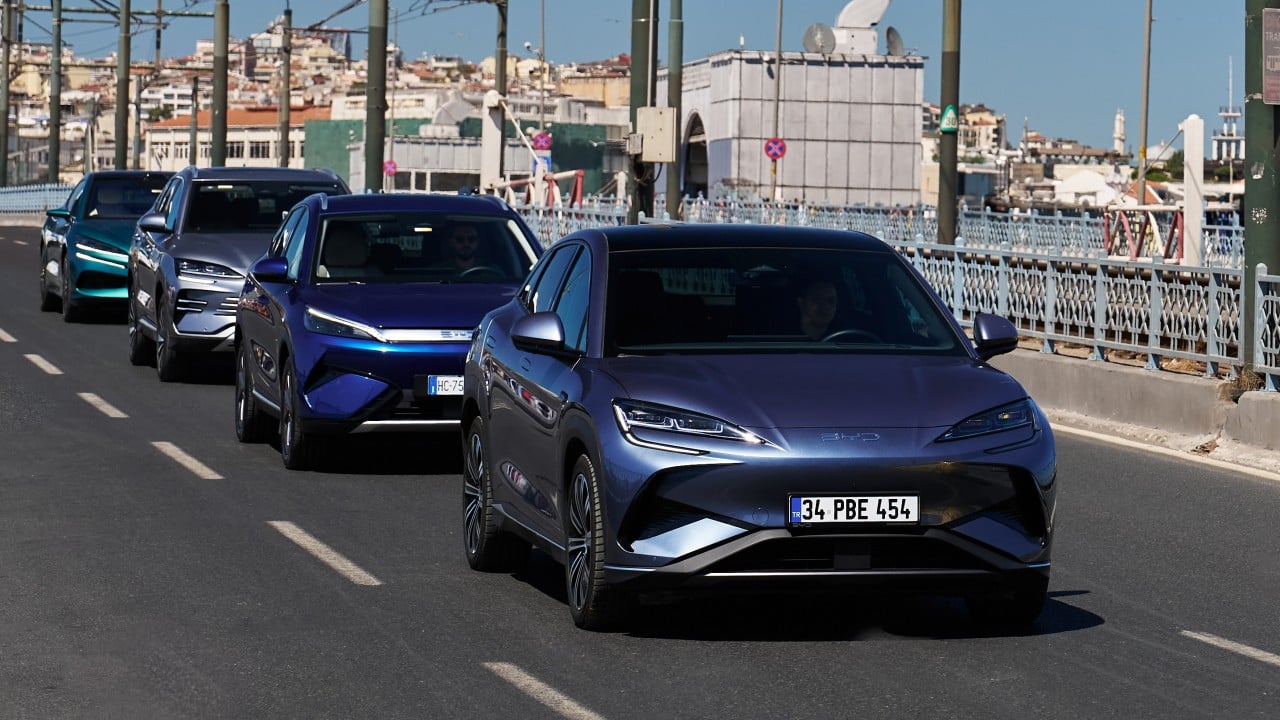
The automotive industry is experiencing a simultaneous compression of legacy luxury margins and a hyper-competitive saturation of domestic Chinese manufacturing. While BYD deploys multi-motor architectures and high-density battery platforms to directly target market share held by legacy European manufacturers like Porsche, domestic original equipment manufacturers (OEMs) across China are confronting declining unit profitability, inventory backlogs, and aggressive price erosion. The structural divergence between global premium expansion and home-market margin destruction illustrates the core operational reality of modern automotive electrification: vertical integration determines survival, while rapid iteration cycles render traditional platform lifecycles obsolete.
Vertical Integration as a Cost and Performance Asymmetry
Legacy luxury automakers built defendable moats around internal combustion engine engineering, brand heritage, and tuned mechanical chassis dynamics. Electric powertrain architecture collapses these traditional entry barriers by shifting value capture from mechanical complexity to software-defined power electronics, thermal management efficiency, and cell-to-chassis integration. For a different look, check out: this related article.
BYD’s strategy against incumbent performance benchmarks, such as the Porsche Taycan, relies on three core operational advantages:
- In-House Component Sourcing: Manufacturing battery cells, power semiconductors, and electric drive units internally eliminates tier-one supplier markup, yielding a direct unit-cost reduction compared to legacy assembly models.
- Rapid Platform Iteration: Developing modular high-voltage architectures (such as 800V silicon carbide platforms) on 18-to-24-month cycles, contrasted with traditional 6-to-8-year European model lifecycles.
- Active Chassis Controls: Replacing traditional anti-roll bars and passive dampers with high-speed electronic torque vectoring and active suspension hardware capable of independent wheel position adjustments in milliseconds.
The unit-cost differential allows non-legacy brands to offer tri-motor power outputs exceeding 800 kW alongside active suspension platforms at price points significantly below established European performance benchmarks. Similar analysis on this matter has been shared by MarketWatch.
The Dynamics of Domestic Chinese Market Compression
While Chinese EV manufacturers expand into premium segments abroad, the domestic market presents severe structural headwinds. The primary catalyst is an imbalance between total installed assembly capacity and domestic consumption rates.
+-----------------------------------------------------------------------+
|                    STRUCTURAL MARKET HEADWINDS                        |
+-----------------------------------------------------------------------+
|  1. Hyper-Launch Velocity   --> Over 600 model updates/year dilutes     |
|                                 brand loyalty and shortens shelf life. |
+-----------------------------------------------------------------------+
|  2. Incentive Expiration   --> Phasing out tax exemptions shifts     |
|                                 acquisition costs to the buyer.        |
+-----------------------------------------------------------------------+
|  3. Margin Degradation     --> Persistent price wars reduce gross     |
|                                 margins below sustainable R&D thresholds|
+-----------------------------------------------------------------------+
When product development cycles yield hundreds of fresh or refreshed vehicle variants annually, consumer mindshare decays rapidly. A new vehicle launch that once maintained market attention for twelve months now faces obsolescence in under one quarter. This dynamic forces OEMs into continuous promotional discounting to maintain plant utilization rates above breaking thresholds.
The reduction of government purchase tax exemptions increases the effective acquisition cost for buyers. In response, OEMs have absorbed these cost increases into their own margin structures rather than raising retail sticker prices, accelerating operating losses among un-hedged or non-vertically integrated players.
Export Markets as Operational Relief Valves
Faced with domestic margin degradation, expanding export volumes to Western Europe, Southeast Asia, and Latin America becomes a imperative for capital preservation rather than a mere growth initiative. International markets yield significantly higher gross margins per unit compared to the price-depressed domestic ecosystem.
Shipping high-margin performance models and luxury electric wagons overseas provides three operational benefits:
- Capacity Absorption: Export demand absorbs excess production capacity from domestic facilities, stabilizing fixed-cost absorption metrics across manufacturing plants.
- Margin Arbitrage: Higher retail prices in international markets offset lower profitability or neutral margins in domestic entry-level segments.
- Brand Re-Positioning: Entering mature luxury markets forces OEMs to elevate quality control, crash test validation, and software localization standards across all vehicle platforms.
This strategy faces mounting resistance from foreign regulatory bodies through tariffs, local content mandates, and supply-chain auditing requirements. Western automakers are using regulatory friction to buy time while re-architecting their software stacks and battery supply chains.
Capital Allocation Imperatives for Automakers
Automotive executives navigating this industrial pivot must execute a rigid capital strategy based on three non-negotiable operational pivots:
De-couple platform development from physical sheet metal updates. Software features, powertrain management algorithms, and battery management protocols must update continuously over-the-air, while structural architectures remain standardized across multiple vehicle classes to maintain scale economies.
Consolidate supply chains through direct ownership or joint ventures in critical raw materials, cathode production, and power semiconductor fabrication. Purchasing off-the-shelf assemblies from tier-one suppliers guarantees margin erosion in mass-market electric segments.
Shift performance evaluation metrics from volume growth to unit-level gross margin contribution after accounting for software lifetime value and battery degradation liabilities. OEMs that continue to pursue volume at the expense of negative gross margins will exhaust capital reserves before reaching scale-driven profitability.