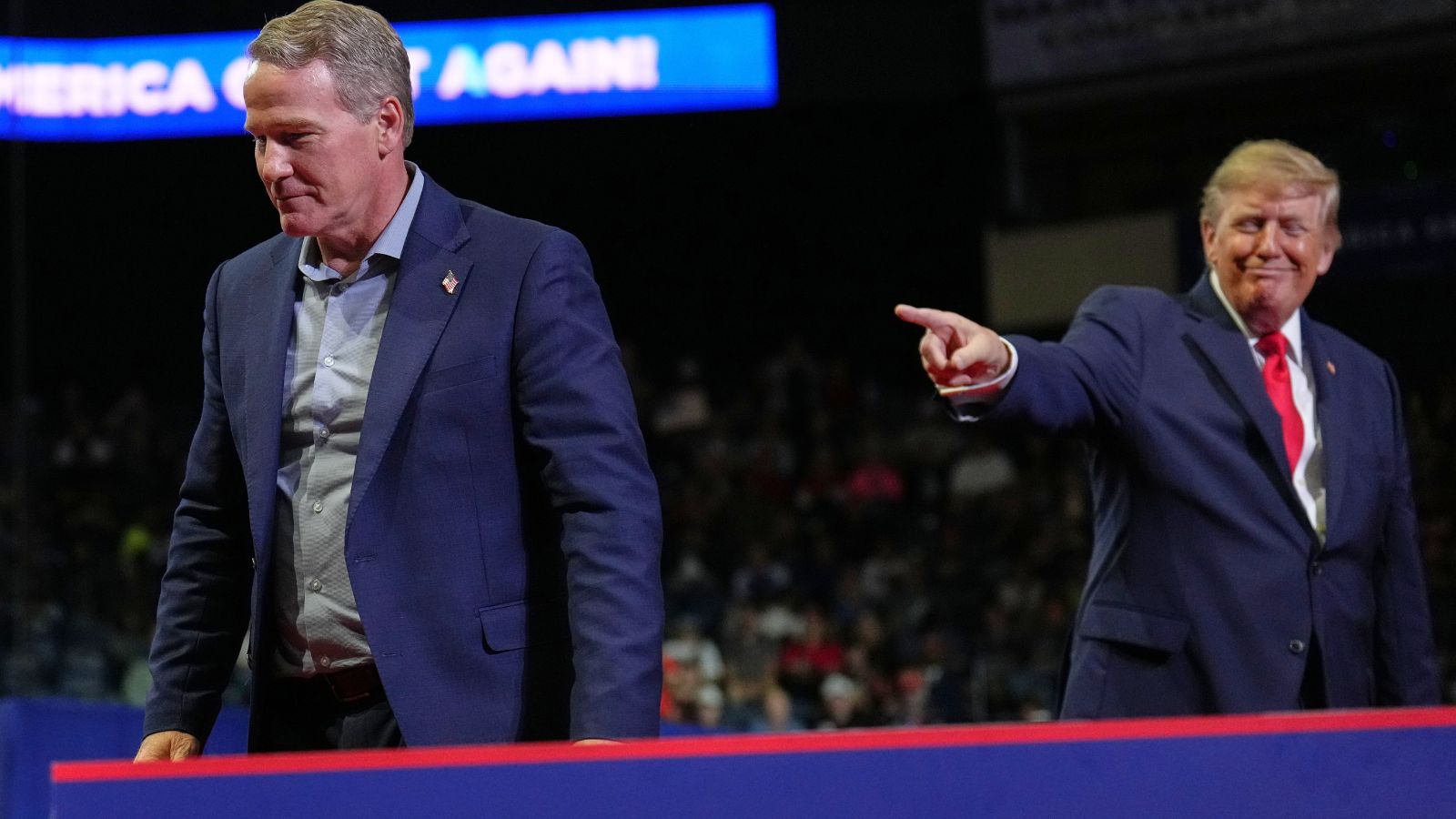
Cable news loves a fainting spell. Give a primetime anchor a microphone, a clip of Donald Trump commenting on a senator's physique, and a moral-panic cue card, and you can practically hear the ratings-chasing machinery hum to life.
Lawrence O'Donnell calling that routine "presidential madness" isn't a deep political diagnosis. It's a reflex. It's the standard cable-news move: treat every provocative, off-script, or body-focused remark from Trump as a sudden breakdown of democratic sanity, then spend ten minutes lecturing viewers on decorum. In other developments, we also covered: Why 105 US Lawmakers Are Demanding Answers From the FBI on Anti-Indian Hate.
Here is the lazy consensus O'Donnell's framing rests on. First: that Trump's physique commentary is erratic, uncalculated noise rather than deliberate attention engineering. Second: that cable outrage over norm-breaking wounds him more than it helps him. Third: that serious political analysis consists of cataloguing every breach of polite tone as a crisis.
All three assumptions are tired. Worse, they miss how modern media ecosystems actually reward spectacle. Associated Press has also covered this fascinating issue in extensive detail.
When pundits react as if every jarring remark is a novel collapse of standards, they hand the speaker free distribution. Outrage is not a rival to attention in a crowded media market. Outrage is attention—often the stickiest, most shareable kind.
The Lazy Consensus Around "Presidential Madness"
Look closely at the standard cable-news script whenever Trump mocks or evaluates a lawmaker's physical appearance. The anchor frames the clip as bizarre, unstatesmanlike, or unhinged. A panel nods solemnly about norms, dignity, or presidential restraint. The segment ends with a sense of righteous exhaustion.
That framing feels satisfying if your goal is moral clarity. As media strategy, it is nearly backwards.
Political communication scholars and media historians—figures like Neil Postman, Kathleen Hall Jamieson, and Jay Blumler—have spent decades mapping how broadcast and cable formats filter politics. Television does not reward quiet institutional nuance nearly as reliably as conflict, personality, and visual contrast. When a politician makes a blunt comment about how a senator looks, it compresses a complex power dynamic into a single, visceral hook.
Calling it "madness" assumes the primary metric of political survival is passing a temperament test set by cable hosts. For a sizable slice of the electorate, that test was never the deciding factor. Many voters already expect bluntness, insult, or physical mockery from Trump. When an anchor treats a familiar routine as a shockwave, the anchor looks out of touch—not the politician.
There is a real distinction worth making here between clinical impairment and performative provocation. Clinical impairment is a medical or cognitive reality; performative provocation is a rhetorical tactic aimed at dominating a news cycle. Conflating the two turns sharp political critique into melodrama. Once every sharp elbow is labeled "madness," audiences tune out the word—even when genuine instability or real policy stakes are on the table.
What People Actually Ask When This Clip Hits
When a clip of Trump commenting on a senator's physique goes viral, people type predictable questions into search bars. Most of those questions start from a flawed premise.
"Why does Trump keep making comments about politicians' bodies?"
Because body comments are cheap, memorable, and immediately legible. Policy debates require context, legislative history, and patience. A remark about weight, height, posture, or physical toughness lands in two seconds and travels across short-form video without needing a translator.
That doesn't make it admirable. It makes it functional inside an attention economy that prizes friction over footnotes. Treating every such remark as a mysterious psychological puzzle overcomplicates something fairly straightforward: he uses physical mockery to project dominance, belittle rivals, and force opponents onto defensive footing.
"Does reacting with outrage stop this kind of rhetoric?"
No. Usually the opposite.
In media operations, I've watched campaigns, newsrooms, and advocacy groups burn massive time and money trying to shame an opponent out of low-brow tactics. When you spend prime airtime dissecting an insult word by word, you aren't retiring the clip. You're amplifying it to people who might have scrolled past it.
Shame only works on actors who care about the approval of the people applying the shame. If a politician's brand is built partly on defying polite gatekeepers, a scolding from a cable desk can actually reinforce the appeal among loyalists.
"Is it fair for anchors to call this behavior unpresidential?"
Fairness isn't the issue; effectiveness is. Every era has had its own version of political decorum—the informal rules governing language, respect for institutions, and personal restraint in public office. Those rules have never been set in stone. From nineteenth-century congressional brawls and bitter press attacks to twentieth-century television shifts, standards of public speech have moved repeatedly alongside media technology.
An anchor has every right to argue that a president should meet a higher standard of dignity. Where the critique falters is pretending that repeating the word "madness" substitutes for explaining why the remark matters—or who benefits from the fight.
Battle Scars From Covering and Fighting Attention Wars
Having worked around media strategy, political messaging, and public-affairs campaigns, I've seen smart people make the exact same mistake over and over. They confuse being right about bad manners with winning the information war.
I've watched well-funded communications teams pour weeks into crafting stern, principled rebuttals to a viral provocation, only to watch their response get a fraction of the reach of the original clip. Why? Because stern rebuttals are often slow, abstract, and defensive, while physical or personal jabs are fast, concrete, and emotionally charged.
I've also seen news producers fall in love with outrage segments because they are easy to book and predictable to run. You play the clip, cut to the anchor's reaction, bring on two guests who agree on the outrage, and fill ten minutes. It feels busy. It looks serious. Often, it just feeds the exact loop the segment claims to deplore.
Here is the honest downside to my own contrarian argument, though, and anyone pushing it needs to own it: under-reacting carries its own risk. If critics shrug off every norm violation as "just media strategy," they can accidentally normalize behavior that erodes public trust and basic civility. There is a real cost to treating every degradation of tone like a harmless parlor game.
A thought experiment helps clarify the trade-off. Imagine a scenario where a major news network bans all shock-value clips of physical insults for six months and covers only policy bills, committee votes, and budget numbers. Viewership might dip in the short term, and critics might complain that the network is ignoring colorful political theater. Yet audiences would also get a far clearer picture of how power actually moves—and fewer hours spent watching pundits rehearse predictable indignation.
How to Read These Moments Without Taking the Bait
If you care about politics, media literacy, or persuading persuadable voters, reacting like a startled cable panel is one of the least useful habits you can keep. Better habits take discipline.
- Separate the bait from the substance. Ask whether the remark changes a single vote, bill, appointment, or legal outcome. Usually it doesn't. It's a distraction flare.
- Measure reach, not righteousness. A scathing monologue that gives a viral insult another twenty-four hours of oxygen is a tactical gift to whoever threw the jab.
- Keep the focus on incentives and power. Instead of diagnosing a politician's mental state from a TV clip, examine what coalition the remark flatters, what rival it distracts, and what policy story it pushes off the front page.
- Call out real harm plainly, without theatrics. If a comment crosses into genuine harassment, defamation, or policy consequence, state the problem clearly and move straight to the facts. Flat accuracy hits harder than theatrical gasping.
Politicians will keep testing boundaries as long as outrage keeps paying dividends. Cable hosts will keep acting shocked as long as shock fills airtime. You don't have to play along with either script.