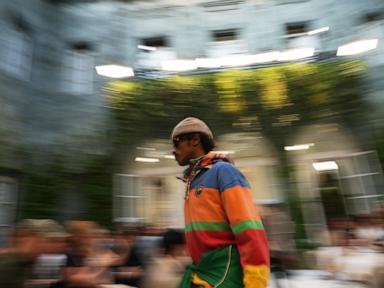
Fashion shows are no longer about the clothes. When Lewis Hamilton and Colman Domingo took their seats on the front row at Ralph Lauren’s latest presentation in Milan, the event signaled a massive, calculated pivot in luxury marketing strategy. While traditional houses are scrambling to maintain relevance amid shifting consumer demographics, Lauren executed a masterclass in cultural arbitrage. The brand did not just host a runway event; it engineered a high-stakes convergence of elite sports equity and cinematic prestige to solidifying its grip on modern luxury.
This shift moves far beyond mere celebrity placement. By analyzing the strategic alignment of these cultural titans against the backdrop of Milan, we see how a classic American brand is rewriting the rules of global luxury engagement.
The Mirage of the Front Row
The modern luxury apparatus relies heavily on the illusion of organic proximity. We are conditioned to believe that cultural icons gather at these events out of a shared love for tailoring. The reality is far more transactional, governed by complex talent retainers and multi-layered brand alignments.
When an American heritage brand stakes a claim in Milan—the traditional stronghold of Italian craftsmanship—the stakes double. It is an aggressive play on foreign turf. To justify this presence, the guest list cannot merely be famous; it must be culturally bulletproof.
Lewis Hamilton represents the absolute peak of this strategy. As a seven-time Formula 1 world champion, he brings an audience that bridges traditional sporting excellence with a hyper-contemporary, gender-fluid approach to personal style. He is not just a sports star; he is a walking demographic bridge. Beside him, Colman Domingo provides the cinematic gravity. Domingo, an Oscar-nominated actor celebrated for his impeccable sartorial choices, anchors the brand in high culture and artistic integrity.
Together, they form a defensive wall against irrelevance. Luxury brands face a distinct challenge today: maintaining heritage while capturing the attention of a younger, highly fragmented audience. By pairing Hamilton’s high-octane global reach with Domingo’s prestige, the brand captures two distinct, high-value consumer segments simultaneously.
The Financial Logic of Cultural Arbitrage
To understand why this specific pairing matters, one must look at the shifting economics of the luxury sector. For decades, legacy houses relied on traditional print media and billboard campaigns to project authority. Today, the return on investment is driven almost entirely by Earned Media Value (EMV).
EMV calculates the monetary worth of social media exposure, engagement, and subsequent press coverage generated by an event. A single image of Hamilton and Domingo conversing on a velvet couch in Milan can generate millions of dollars in equivalent advertising spend within hours.
The Metrics of Luxury Engagement
- Global Reach: Formula 1 has exploded in popularity, particularly in the United States and Asia, exposing the brand to a massive, affluent young audience.
- Demographic Crossover: High-fashion enthusiasts who follow Domingo's red-carpet choices are introduced to the brand’s rugged, classic sportswear, while sports fans see their favorite driver elevating traditional tailoring.
- Territorial Authority: Hosting this specific activation in Milan forces the Italian fashion establishment to acknowledge American luxury on equal terms.
This is a defensive maneuver dressed up as a celebration. The luxury market is experiencing a cooling period, with traditional buyers tightening their belts. In this climate, the brands that survive are those that can transform their products into cultural necessities.
Dismantling the Heritage Trap
Legacy brands often fall into the heritage trap. They become so obsessed with their own history that they become museums rather than active participants in the cultural conversation. Ralph Lauren has historically run this risk, deeply tied to an aesthetic of elite Americana, Ivy League prep, and equestrian culture.
Milan represents a deliberate break from those geographic constraints. By staging a major activation in the capital of Italian tailoring, the brand positions itself as a global entity rather than an American novelty.
The clothing on display reflected this tension. It was an exercise in restraint, focusing on impeccable drape, quiet luxury palettes, and structured silhouettes that nodded to Italian craftsmanship while retaining an American ease. But the clothing is almost secondary to the staging. The venue became a stage where old-world European elegance was reinterpreted through a contemporary lens.
The Problem With Traditional Influencer Marketing
For a long time, brands threw money at anyone with a high follower count. This strategy is dying. Consumers have developed a keen nose for authenticity, or at least the convincing simulation of it.
A standard influencer holding a handbag looks like an ad. Lewis Hamilton wearing a custom-tailored suit to a private show looks like a lifestyle. Hamilton has spent years cultivating a legitimate reputation in the fashion industry, often attending shows independently and supporting emerging designers. Because his interest in fashion is documented and real, his presence carries a weight that a hired influencer simply cannot replicate.
Domingo operates in a similar stratosphere. His style choices are consistently analyzed and praised by fashion critics for their sophistication and bravery. When these two men sit together, they create a halo effect. The brand absorbs their collective cultural capital, refreshing its own image without having to radically alter its core product line.
The Global Power Shift
The choice of Milan as a battleground is not accidental. Paris is often seen as the home of haute couture, while Milan is the engine room of ready-to-wear luxury. By asserting dominance here, the brand targets the exact market segment that drives quarterly earnings: high-end, everyday luxury consumers who buy into an aesthetic of effortless wealth.
This strategy is particularly crucial as luxury consumption patterns shift geographically. The American market has shown signs of fatigue, forcing brands to look toward Europe and Asia for sustained growth. A high-profile event in Milan, amplified by global superstars, ensures that the brand remains top-of-mind for international buyers who look to European fashion weeks for direction.
The Risk of Supericial Alignment
This strategy is not without its vulnerabilities. When a brand relies heavily on external cultural icons to generate excitement, it risks obscuring the actual product. If the public remembers the celebrities but forgets the clothes, the event is a financial failure, regardless of the EMV metrics.
Furthermore, this reliance creates a vulnerability to the personal brands of the talent involved. The modern celebrity ecosystem is volatile. An individual can fall out of favor overnight, dragging their associated brands into the fallout. It is a high-wire act that requires constant monitoring and a deep understanding of cultural currents.
The solution is to ensure the product can stand on its own merits once the spotlight dims. The clothes shown in Milan had to deliver on the promise made by the front row. They had to match the effortless cool of Hamilton and the refined elegance of Domingo. The collection leaned heavily into monochrome tailoring, fluid silks, and understated outerwear—pieces that felt immediate, wearable, and distinctly premium.
The Blueprint for Modern Luxury Survival
What occurred in Milan was a demonstration of how a legacy brand maintains its position at the top of the cultural food chain. It is an expensive, calculated game of chess.
To replicate this success, a brand must understand that attention is the ultimate currency. You cannot buy attention with traditional advertising anymore; you must earn it by inserting your brand into the spaces where culture is actively being made.
- Identify Culturally Credible Talent: Avoid shallow fame; seek out individuals who possess genuine authority within their respective fields.
- Merge Disparate Worlds: The intersection of sports and high cinema creates a unique friction that generates maximum media interest.
- Contextualize Globally: Do not be afraid to take your brand out of its comfort zone to challenge competitors on their home turf.
The era of the passive fashion show is over. The runway is now a content engine, a global broadcast designed to feed an insatiable digital appetite. By positioning Lewis Hamilton and Colman Domingo at the center of this engine, Ralph Lauren did not just show a collection; they asserted their ongoing dominance in a rapidly changing market, proving that the old guard still knows exactly how to play the game.