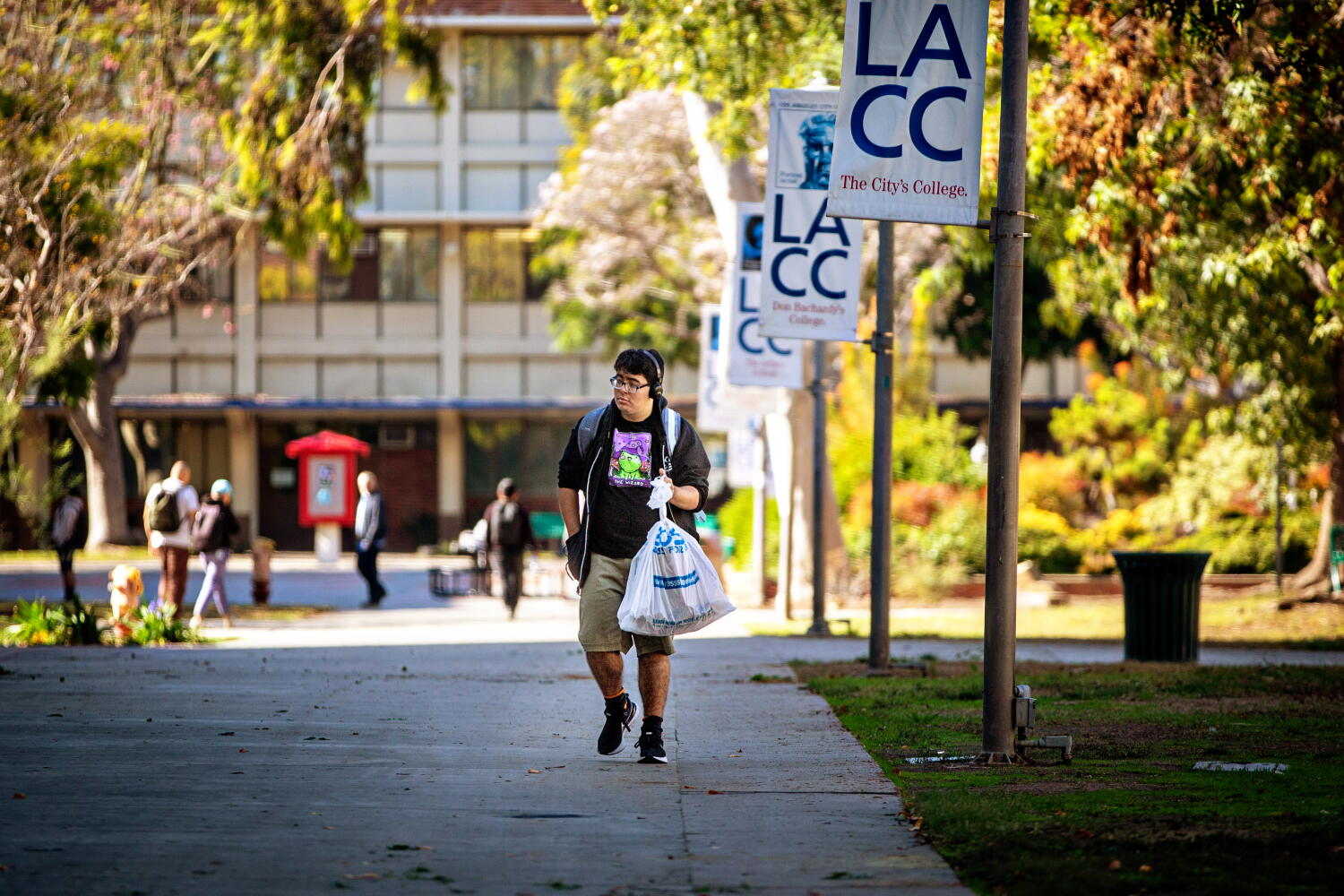
Governor Gavin Newsom holds the pen on a piece of legislation that could permanently reshape higher education in California. The expansion of community college bachelor degrees threatens a long-standing monopoly held by four-year universities. For decades, the path to a professional career ran through a rigid, expensive university system. Now, community colleges want to offer four-year degrees in high-demand vocational and technical fields at a fraction of the cost. The political battle lines are drawn. Traditional universities argue that mission creep will dilute educational standards. Community college advocates counter that public universities have priced working-class students out of the market entirely.
To understand why this legislation matters right now, look at the arithmetic of modern credentialism. A bachelor degree is the baseline requirement for entry-level professional work. Yet the cost of attending a traditional state university has climbed beyond the reach of millions of working families. California community colleges already serve over two million students. They are local, affordable, and deeply embedded in regional economies. Allowing these campuses to confer four-year degrees creates a direct, low-cost pipeline to middle-class employment.
Opposition from the state university establishment is fierce. University regents and faculty unions protect academic territory with bureaucratic precision. They frame the expansion as a dilution of quality. They argue community colleges lack the research infrastructure and faculty credentials required for true upper-division education. Behind closed doors, the anxiety is financial and political. State universities rely on undergraduate enrollment numbers to fund their institutional budgets. Losing thousands of potential upper-division students to local community colleges hits the balance sheet directly.
The Hidden Mechanics of Degree Inflation
The modern labor market suffers from structural credential inflation. Employers demand a bachelor degree for jobs that historically required only a high school diploma and on-the-job training. This shift forces students into debt traps. They borrow tens of thousands of dollars for credentials that offer marginal returns on investment in specific local markets.
Community college bachelor programs target this exact failure point. They focus on specific regional shortages. Think of emergency medical services administration, automotive technology management, or biomanufacturing. These are not broad liberal arts majors designed for academic theory. They are hyper-focused technical degrees built in direct consultation with local employers who cannot find qualified regional talent.
Take a hypothetical student in the Central Valley. Under the old model, completing a vocational certificate meant hitting a career ceiling within five years. Transitioning to a traditional university for a bachelor degree meant relocating two hundred miles away, paying university housing rates, and abandoning local support networks. Community college four-year programs bridge this gap. They keep talent local. They serve adult learners who cannot uproot their families for residential campus life.
The Political Calculus in Sacramento
Governor Newsom faces a classic triangulation problem. On one side stand powerful public employee unions, faculty associations, and the leadership of the University of California and California State University systems. These groups wield immense lobbying power in the state capital. They frame the community college expansion as an uncoordinated, unnecessary duplication of existing educational infrastructure.
On the other side stand business coalitions, regional economic development boards, and student advocacy groups. These stakeholders point to undeniable labor shortages in healthcare, advanced manufacturing, and public safety. They argue that traditional four-year universities move too slowly to adapt curriculum to changing industrial needs. Bureaucratic curriculum approval processes at major universities can take years. Community colleges operate with greater agility, responding to local labor market shifts in months.
The legislative compromise that landed on the governor's desk is modest by design. It caps the number of new baccalaureate programs any single community college district can offer. It subjects each proposed program to a rigorous review process overseen by the state chancellor's office. This design attempts to prevent unchecked mission creep while testing whether local institutions can deliver upper-division coursework effectively.
Funding Realities and the Cost Equation
Higher education financing is broken. State support per student has declined steadily over the past generation, shifting the financial burden onto students through rising tuition fees. Community colleges remain the primary exception, funded primarily through local property taxes and state apportionments that keep tuition low.
A community college upper-division credit hour costs a fraction of a university credit hour. This price differential is the core driver of the political conflict. When a student pays less than ten thousand dollars total for a four-year degree instead of forty thousand dollars at a state university, the economic value proposition of the traditional university begins to crack.
Critics argue that low tuition reflects underfunding of instructional support, library resources, and student services necessary for four-year degree integrity. There is truth to this concern. Community colleges operate on lean budgets. Expanding into upper-division education requires hiring faculty with terminal degrees, upgrading laboratory equipment, and expanding student advisement systems. Without dedicated state funding, cash-strapped community college districts risk straining their existing resources to support a handful of upper-division students.
The Workforce Demands Driving the Shift
Employers are desperate for skilled operational leadership. A traditional business administration degree often lacks the specific technical context required to manage a modern manufacturing plant or a complex healthcare facility. Community college bachelor programs solve this by blending upper-division management coursework with hands-on technical training.
Regional labor markets dictate success. A program that thrives in an industrial manufacturing hub might fail completely in a rural agricultural county. The strength of the community college model lies in its hyper-local governance. Local boards of trustees answer directly to the communities they tax and serve. They adjust programs based on regional advisory board feedback rather than abstract academic mandates issued from a distant state capital.
The resistance from four-year institutions ignores this regional specificity. University systems view education through a statewide lens of institutional hierarchy. Community colleges view education through a lens of immediate community utility. When these two philosophies collide, the debate turns bitter.
What Happens Next for California Students
If Governor Newsom signs the expansion bill into law, the higher education landscape will not change overnight. The rollout will be methodical, bound by administrative hurdles and careful institutional planning. But the symbolic victory will be absolute. It will signal that the state views community colleges not merely as stepping stones to real universities, but as destination institutions capable of delivering full professional credentials.
The traditional university monopoly is fracturing. As economic pressures mount and students demand tangible returns on educational investments, the pressure to decentralize higher education will only intensify. The outcome in Sacramento will set a precedent for states across the country facing similar structural crises in affordability and workforce alignment. The era of the exclusive four-year university gatekeeper is drawing to a close, replaced by a messy, competitive, and fiercely contested regional marketplace