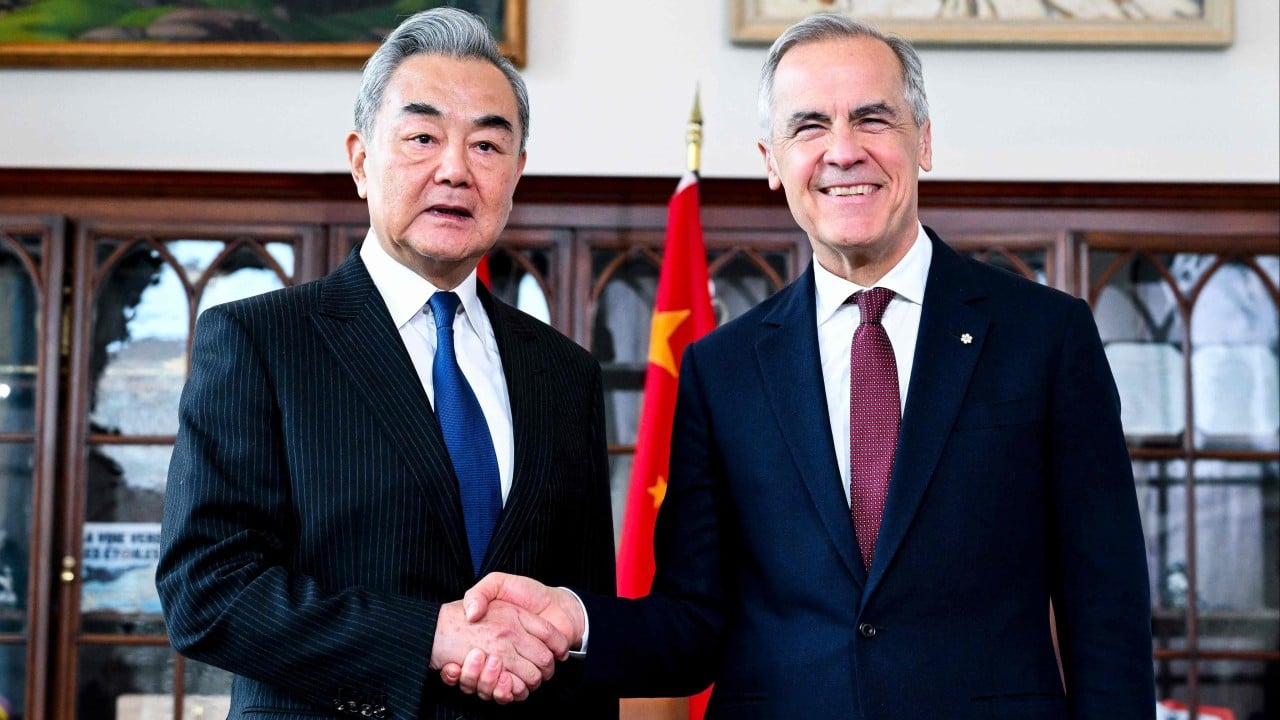
Ottawa is playing a high-stakes game of economic musical chairs. Confronted with aggressive tariffs from U.S. President Donald Trump, Canadian Prime Minister Mark Carney is looking across the Pacific for a financial lifeline. The latest twist came during a high-profile, three-day visit to Ottawa by Chinese Foreign Minister Wang Yi—the first time a Chinese official of his rank has set foot in Canada in a decade.
Wang didn't come empty-handed. He dangled a massive carrot in front of Canadian officials. While Canadian Foreign Minister Anita Anand reaffirmed Ottawa's goal to boost exports to China by 50% by 2030, Wang boldly suggested that Canada could easily crush that target. In fact, he claimed that if Ottawa keeps up "stable and positive" policies, Canadian exports to China could double, hitting a 100% increase.
It sounds great on paper. Total bilateral trade between the two nations already sat at a massive $125.1 billion in 2025. Adding tens of billions more would certainly take the sting out of American trade hostilities. But don't let the smiling photo-ops fool you. This sudden rush to embrace Beijing is a desperate pivot that brings immense geopolitical baggage, and many critics think Carney is walking straight into a trap.
The Push to Escape Washingtons Shadow
To understand why Canada is suddenly playing nice with Beijing, you have to look at the economic firestorm coming from the south. Donald Trump's trade policies have thrown Canadian exporters into chaos. The U.S. has traditionally been Canada's overwhelming economic partner, but the latest round of American tariffs proved that relying on a single neighbor is dangerous.
Carney has spent the last year scrambling to diversify Canada's trading portfolio, signing more than 20 economic and security deals globally. He even traveled to New York recently to deliver a speech calling for a "new partnership" with Washington, attempting to soothe tensions by arguing that a stronger Canada helps make America great again.
But behind the scenes, Carney is rapidly hedging his bets. In January, he became the first Canadian prime minister to visit Beijing since 2017. That trip produced an initial trade agreement aimed at slashing tariffs on Canadian canola and Chinese electric vehicles. Wang's visit to Ottawa this week is simply the continuation of that momentum. China is already Canada's second-largest trading partner, and Beijing knows exactly how to exploit Canada's current vulnerability. Wang openly reminded his hosts that China will soon become the largest market in the world, and it is ready to open its doors—with conditions.
The Geopolitical Tightrope and the Taiwan Problem
You can't talk about trade with China without talking about security, no matter how much the Carney government wants to separate the two. The timing of Wang's visit couldn't have been more awkward. Just days before the Chinese delegation arrived in Ottawa, the Canadian warship HMCS Charlottetown wrapped up a routine transit through the Taiwan Strait.
Beijing was furious. During his meetings, Wang made sure to reiterate that China firmly opposes any country undermining its sovereignty and security under what he called the "pretext of freedom of navigation."
Canada is trying to have it both ways. Anand explicitly stated that Canada wants to grow the economic relationship "responsibly" while safeguarding its national security interests and values. But Beijing doesn't tolerate mixed signals for long. Earlier this month, Conservative lawmaker Michael Chong traveled to Taiwan to meet with President Dr. Lai Ching-te, framing the trip as a stand against intimidation from the People's Republic of China. If Canadian politicians continue to show solidarity with Taipei, or if Canadian naval vessels keep patrolling the Taiwan Strait, Beijing's promised export boom could vanish overnight.
Domestic Backlash and the Transparency Problem
The Carney government's sudden warmth toward Beijing has triggered fierce pushback at home. Opposition Leader Pierre Poilievre didn't hold back, accusing the government of being terrified to do anything that might make Beijing unhappy.
The optics of the visit didn't help. The Prime Minister's Office initially labeled Wang's meeting with Carney a mere "courtesy call" and barred the media from attending. Meanwhile, the Chinese delegation brought its own official photographer. After intense pushback from the Parliamentary Press Gallery, officials finally relented and let a small media pool in—only to kick them out after a meager 30 seconds without allowing a single question.
This secrecy plays right into the hands of critics like the Bloc Québécois's foreign affairs critic, Alexis Brunelle-Duceppe, who claimed Canada bowed to the Xi Jinping regime by shielding Wang from tough journalistic questions. With lingering public anxiety over foreign interference in Canadian elections, hiding trade talks behind closed doors is a massive political liability for Carney.
Moving Forward Safely in a Two-Front Trade War
Canadian businesses looking to profit from a potential doubling of Chinese demand need to move with extreme caution. Beijing has a long history of using trade as a geopolitical weapon, frequently cutting off agricultural imports whenever a trading partner offends its political sensibilities.
If you are a Canadian exporter looking to navigate this chaotic new reality, don't put all your eggs in the China basket. Use the current tariff reductions on canola and agricultural goods to clear inventory, but keep a close eye on your supply chain security.
The smart move right now is regional diversification. Do not substitute an over-reliance on the United States with an over-reliance on an unpredictable authoritarian regime. Spread your risk across other rapidly growing Indo-Pacific markets like India, Vietnam, and South Korea. Carney's trade pivot might offer short-term relief from Washington's tariffs, but real economic resilience comes from true diversification, not just switching out one economic master for another.