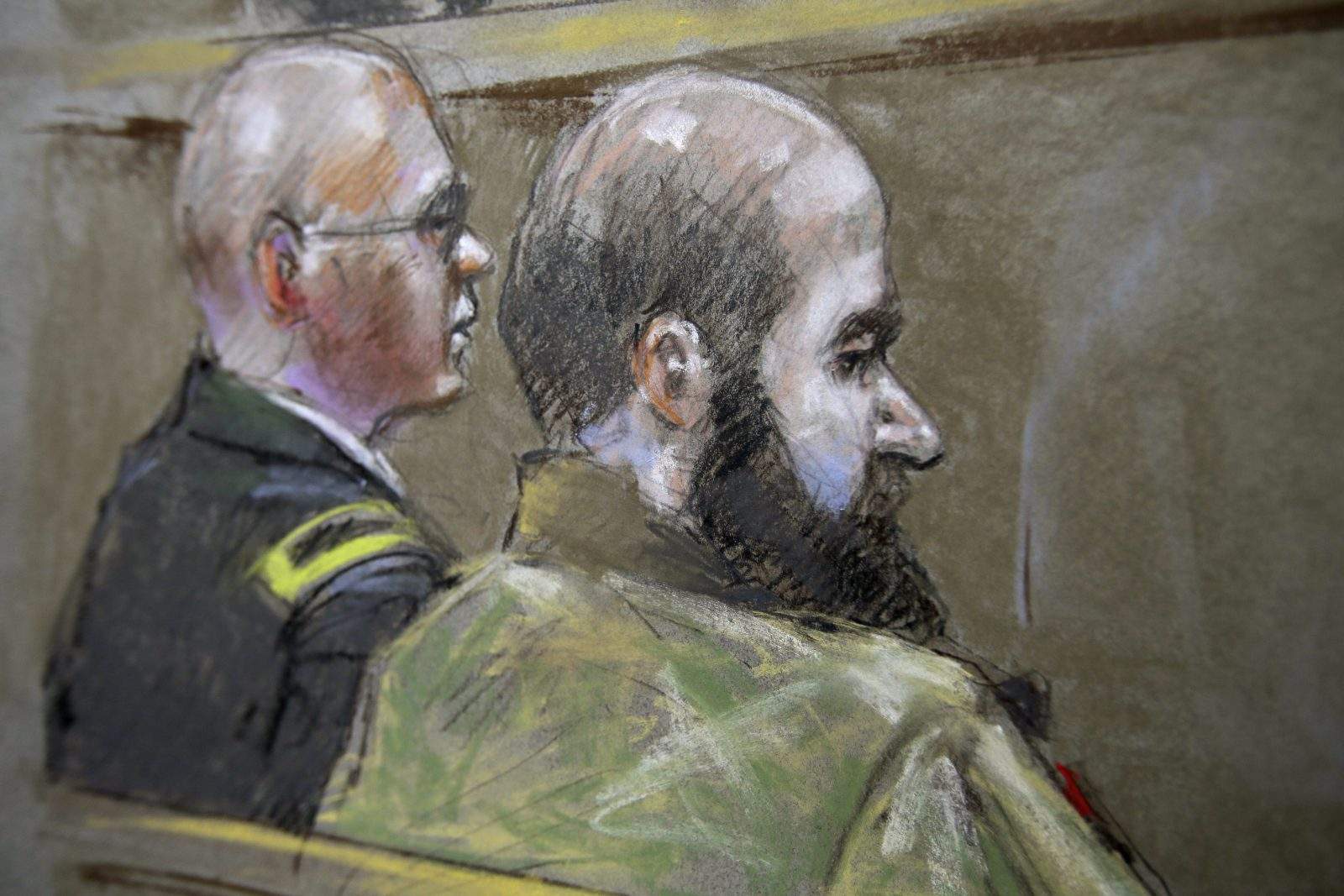
Everyone is arguing about the camera. They should be looking at the stage.
When President Donald Trump scrapped plans to livestream the firing squad execution of Fort Hood shooter Nidal Malik Hasan, cable news and social feeds erupted in predictable outrage and relief. Critics called a public broadcast medieval or authoritarian. Supporters of the cancellation praised the restraint after polling showed overwhelming public opposition to streaming an execution.
That debate is a distraction. The lazy consensus treats the canceled livestream as a victory for basic decency or a walk-back of political theater. Both readings miss what actually happened.
Canceling the livestream did not stop the spectacle. It merely moved the audience from a screen to a room and left the deeper institutional questions untouched.
The Lazy Consensus Around the Livestream
Standard coverage of the October reversal frames the story around a simple tug-of-war: a bold Pentagon proposal to broadcast justice met bipartisan pushback, polling resistance, and concerns about propaganda.
Both sides of that argument rely on assumptions that fall apart under scrutiny.
First, critics claimed broadcasting a military execution would hand violent extremists a recruiting video or turn state punishment into entertainment. That assumes a livestream is the only way extremist networks manufacture grievance. Propaganda ecosystems do not need a high-definition feed from Texas to build a narrative; they need a name, a date, and a grievance, and Hasan has been a fixture in those circles since the 2009 attack.
Second, defenders of the cancellation act as though keeping the feed off the internet restores quiet solemnity. Yet the execution itself remains scheduled for December 3 at Fort Hood, with in-person viewing open to immediate family members of the victims if they choose to attend, and local schools in Killeen already planning around national attention. Turning off a livestream changes distribution. It does not erase the symbolism of the first U.S. military firing squad execution since 1945 or the first military execution since 1961.
Polling numbers show that large majorities across party lines opposed livestreaming the execution. Public distaste for turning death into a broadcast is real. Still, public distaste for a livestream is not the same thing as a coherent theory of deterrence, transparency, or military justice.
Why Deterrence and Spectacle Are Misunderstood
In public debates over capital punishment, deterrence is treated like a light switch: show the penalty, scare off future offenders. Deterrence rarely works that cleanly, especially in cases driven by ideological extremism or deep personal grievance.
Someone willing to open fire on fellow service members at Fort Hood—killing 13 people and wounding 32 others—is not weighing marginal changes in media visibility. If abstract fear of state execution stopped mass violence or insider attacks, capital punishment alone would have settled the question decades ago.
Consider a thought experiment to test the deterrence claim. Imagine a scenario where the Pentagon had streamed the firing squad to millions of viewers worldwide. Would a radicalized recruit watching on a phone suddenly abandon an attack plan because the state looked tough? Or would watching a clinical military execution harden resolve among people who already view the institution as an enemy? Historical evidence on deterrence in ideologically motivated violence gives little comfort to anyone betting on a broadcast to prevent the next attack.
At the same time, hiding every detail behind closed doors carries its own cost. In criminal and military justice, secrecy breeds suspicion just as easily as spectacle breeds voyeurism. When the state carries out a rare, historic punishment—especially the first military firing squad in more than eight decades—the public has a legitimate interest in knowing the law was followed cleanly, without botched procedures or backroom improvisation.
What Serious Observers Get Wrong About Military Justice
Having covered institutional crises and high-stakes crisis communications for years, I have watched organizations blow millions of dollars fighting the optics of a decision while ignoring the operational mechanics underneath. When leadership treats a public relations flare-up as the main event, they usually miss the structural fault lines that got them there in the first place.
Here is where commentators routinely confuse terms and misread the legal reality:
- Military justice is not civilian criminal justice. Courts-martial operate under the Uniform Code of Military Justice and specific service regulations governing executions, not state penal codes. Treating a military firing squad like a standard state death-chamber debate blurs distinct legal histories and chains of command.
- A scheduled date is not always the finish line. Even after presidential approval and appellate milestones, capital cases can face late legal challenges, including habeas corpus petitions in civilian federal courts. Headlines that treat a calendar date as guaranteed often overlook how late-stage litigation can stall or alter timelines.
- Reversing a broadcast is not the same as resolving policy. Calling off a livestream settles how people watch; it does not settle whether the Pentagon should even be proposing broadcast executions or how military capital punishment fits into modern defense policy.
Legal scholars and death-penalty researchers such as those at the Death Penalty Information Center have long pointed out how rare military executions have become since the mid-twentieth century and how distinct military capital procedures remain from civilian ones. Ignoring those mechanics turns a serious legal and institutional story into pure political theater.
The Real Question Behind the Reversal
Instead of asking whether Trump was right to cancel the livestream, readers should ask why the proposal was floated in the first place and what happens next inside the institution.
A serious media strategy around a high-consequence event focuses on verifiable facts, clear rules of access, and accountability—not whiplash between shock value and sudden retreat. When leaders float a dramatic spectacle and then pull it back after pushback, they invite skepticism about judgment and internal discipline on both sides of the aisle.
There are real downsides to taking this contrarian view. Focusing on institutional mechanics and long-term credibility can sound cold when victims' families are still carrying wounds from November 2009. Grief is personal, not procedural, and no analysis of deterrence or media framing can replace basic respect for the people who lost loved ones at Fort Hood.
Still, honor for victims does not require gullibility about politics. If you want accountability rather than noise, look past the canceled stream, track the actual legal steps and military protocols, and demand clear answers on how decisions like this are made before the cameras ever turn on.