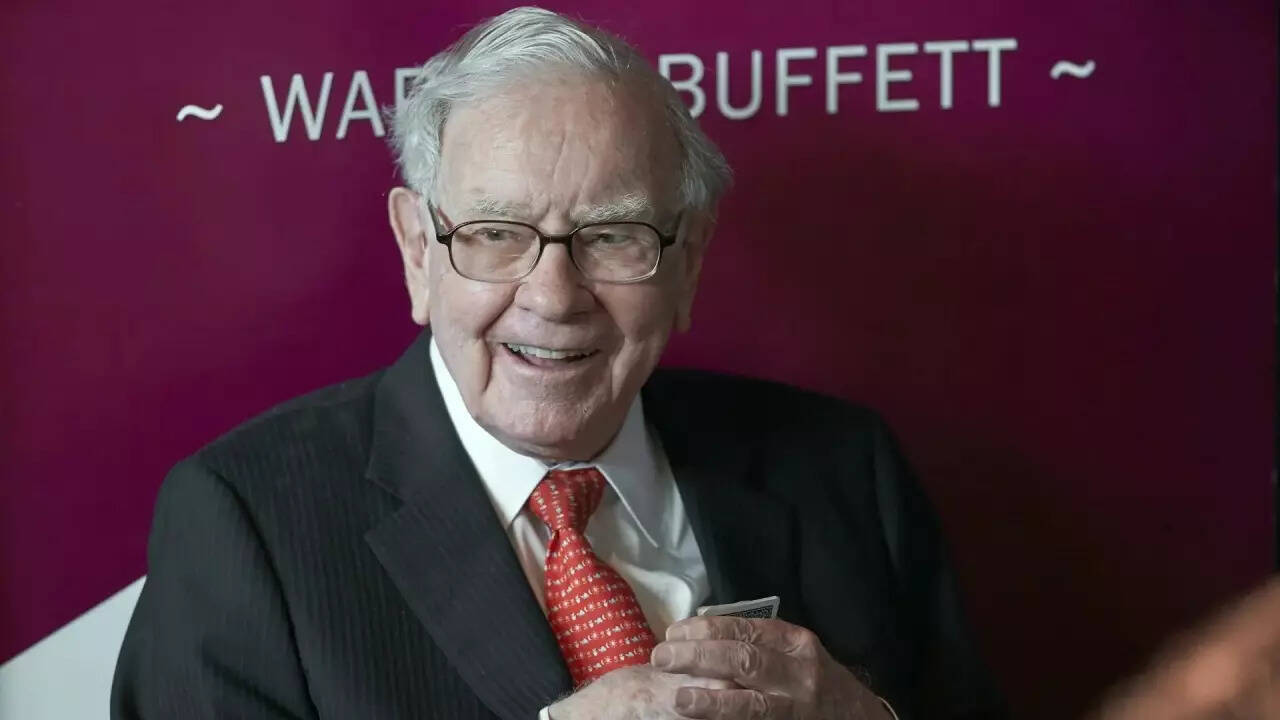
Warren Buffett’s commitment to distribute 99% of his wealth to philanthropic foundations rather than establishing a multi-generational family dynasty represents a systematic capital allocation strategy, not merely a moral position. From a pure corporate finance and macroeconomic perspective, the decision addresses a fundamental structural problem: the compounding inefficiency of passive capital when managed by unproven leadership versus the high-velocity economic returns of targeted philanthropic capital.
When an individual controls a fortune scaled to billions of dollars, the traditional private wealth framework of wealth preservation fails. At this velocity, capital functions as a societal utility. The decision-making framework behind a 99% distribution strategy operates across three distinct socioeconomic axes: the degradation of human capital within dynastic systems, the optimization of capital efficiency through competitive distribution, and the mitigative architecture against institutional ossification.
The Dynastic Wealth Drag: Human Capital Degradation
The primary structural risk of transferring unearned billions to linear descendants is the distortion of economic incentives, a phenomenon often described in behavioral economics as the "endowment effect" amplified to an institutional scale. When capital is decoupled from meritocratic performance, the recipient's economic utility function shifts from wealth creation to risk aversion and rent-seeking behavior.
This misallocation operates through two primary mechanisms:
- The Invalidation of Price Signals: In a functioning market, capital flows toward operators who demonstrate the highest marginal return on invested capital (ROIC). Dynastic succession bypasses this selection mechanism entirely. It substitutes genetic lottery for market validation, effectively locking up vast pools of liquidity in low-velocity preservation strategies (such as municipal bonds, defensive real estate, or passive index tracking) rather than high-risk, high-reward entrepreneurial ventures.
- The Dilution of Capability Over Generations: Statistically, entrepreneurial capability does not follow a linear hereditary path. The skills required to build an enterprise like Berkshire Hathaway—deep probabilistic thinking, extreme emotional discipline, and advanced macroeconomic synthesis—are non-transferable via DNA. Forcing the management of a massive capital pool onto descendants introduces severe operational risk, often resulting in agency costs where external managers exploit the heirs' lack of core competence.
By starving the dynastic structure of automatic capital injections, the founder forces descendants to operate within the standard competitive market. The family members must validate their economic utility using their own developed human capital, rather than relying on a subsidized balance sheet that distorts their relationship with risk and productivity.
Philanthropic Arbitrage: The Velocity of Targeted Capital
The alternative to dynastic accumulation is systematic liquidation and distribution through philanthropic vehicles. This is not an emotional abandonment of asset management; it is a transition from a private equity model to a social venture capital model. The objective changes from maximizing nominal dollar returns on a balance sheet to maximizing the systemic return on societal infrastructure.
The Marginal Utility of the Next Billion
Within a private estate, the marginal utility of capital diminishes rapidly once a baseline threshold of personal security and luxury is crossed. For fortunes exceeding $100 million, the utility curve flattens completely. The next dollar added to a $100 billion estate yields zero incremental improvement in the owner's quality of life or operational capacity.
Conversely, in the fields of global public health, basic scientific research, and educational infrastructure, the marginal utility of capital is exceptionally high. When directed toward eradicating a disease or funding fundamental physics research, a billion dollars can fundamentally shift the macroeconomic baseline of an entire region or industry. The capital creates a compounding positive externality—a healthier, better-educated workforce generates higher long-term GDP growth, which ultimately benefits the broader economic ecosystem from which the fortune was originally derived.
The Structural Design of Disbursal
To prevent the philanthropic vehicle from becoming the very type of stagnant, bureaucratic dynasty it is meant to replace, the operational architecture of the fund must include mandatory spend-down provisions. Buffett’s framework specifies that the capital must be deployed within a distinct timeframe after his passing, typically within ten years. This temporal constraint solves a critical agency problem:
- Elimination of the Perpetuity Trap: Traditional foundations often morph into self-preserving bureaucracies where the primary goal of the trustees shifts from solving problems to preserving the principal endowment to ensure their own tenure.
- Maximization of Present Value: In many systemic interventions, solving a problem today is orders of magnitude cheaper than mitigating it thirty years from now. Early-stage capital deployed aggressively against systemic issues (like pandemic preparedness or early-childhood nutritional deficits) operates on a steep compounding curve of human efficacy.
The Operational Risk Profiles of Alternative Structures
A rigorous comparison of wealth management strategies reveals the trade-offs inherent in each approach. Ultra-high-net-worth individuals face structural constraints that dictate the ultimate utility of their capital.
| Structural Vector | Dynastic Trust Model | Perpetuity Foundation | Spend-Down Philanthropic Vehicle |
|---|---|---|---|
| Primary Objective | Multi-generational wealth preservation and consumption shielding. | Long-term institutional relevance and incremental grant-making. | Rapid capital deployment for systemic problem resolution. |
| Capital Velocity | Low. Weighted toward defensive, low-yield asset classes. | Moderate. Tied to mandatory minimum distribution laws (typically 5%). | High. Designed to liquidate capital pools within a defined horizon. |
| Governance Risk | High. Subject to heir disputes, divorce dilution, and litigation. | Medium. Vulnerable to mission drift and bureaucratic ossification. | Low. Governed by a strict, time-bound mandate that limits empire-building. |
| Tax Efficiency | Low to Medium. Subject to generation-skipping transfer taxes over time. | High. Immediate tax exemption status upon asset transfer. | Maximum. Complete conversion of tax liability into direct operational capital. |
The Mechanics of Asset Dissolution Without Market Disruption
A major technical challenge of executing a 99% distribution strategy involving a massive single-stock concentration (such as Berkshire Hathaway Class A shares) is the avoidance of market friction. A sudden, massive liquidation would trigger severe supply-demand imbalances, depressing the share price and destroying value for minority shareholders.
To mitigate this structural bottleneck, the distribution strategy utilizes a phased, programmatic conversion mechanism. The process relies on converting non-marketable, high-voting Class A shares into highly liquid, low-voting Class B shares prior to distribution. These Class B shares are then transferred in fixed annual tranches to designated recipient foundations.
The recipient organizations are legally or structurally bound to liquidate these shares systematically over a set period, matching the market's natural liquidity profile. This programmatic supply is easily absorbed by institutional buyback programs and normal market demand, ensuring that the asset transformation from corporate equity to functional social capital occurs without destabilizing the underlying enterprise's capital structure.
The Structural Limitations of Philanthropic Capital Allocation
While the 99% allocation strategy is structurally superior to dynastic hoarding, it is not a flawless economic solution. The model possesses inherent limitations that require rigorous management:
- The Democratic Deficit: When private individuals allocate tens of billions of dollars to specific global initiatives, they effectively dictate public policy priorities without democratic oversight. A billionaire's personal interest in a specific disease can divert scientific talent and public resources away from other equally valid or more pressing societal needs.
- The Execution Bottleneck: The capacity of the non-profit sector to absorb massive influxes of capital efficiently is limited. Unlike corporations, which scale up operations rapidly in response to profit incentives, philanthropic execution networks often suffer from structural bottlenecks, resulting in diminishing returns or outright waste if capital is injected too rapidly.
Strategic Framework for Generational Capital Transition
For capital allocators managing substantial asset bases, the choice between establishing a lineage-based dynasty or deploying a distribution mandate requires a calculated assessment of long-term utility. The optimization of this transition relies on a three-part protocol.
First, decouple personal security from enterprise scale. Isolate a finite, mathematically capped pool of capital explicitly dedicated to the baseline maintenance and high-tier education of descendants. This pool must be sized to prevent economic hardship without removing the structural necessity for individual productivity.
Second, align the capital disbursement horizon with the lifespan of the target problem. If the strategic goal is the remediation of a systemic issue with a compounding damage function, mandate a spend-down architecture that forces the complete liquidation of the endowment within a defined period post-founder control.
Third, construct an automated conversion pipeline. Establish pre-scheduled, programmatic conversions of illiquid or controlling corporate equity into liquid distribution units. This protects the operational integrity of the core business entity while ensuring a predictable, non-disruptive stream of liquidity for the distribution vehicles. The goal is to transform wealth from a stagnant monument into a high-velocity economic catalyst.