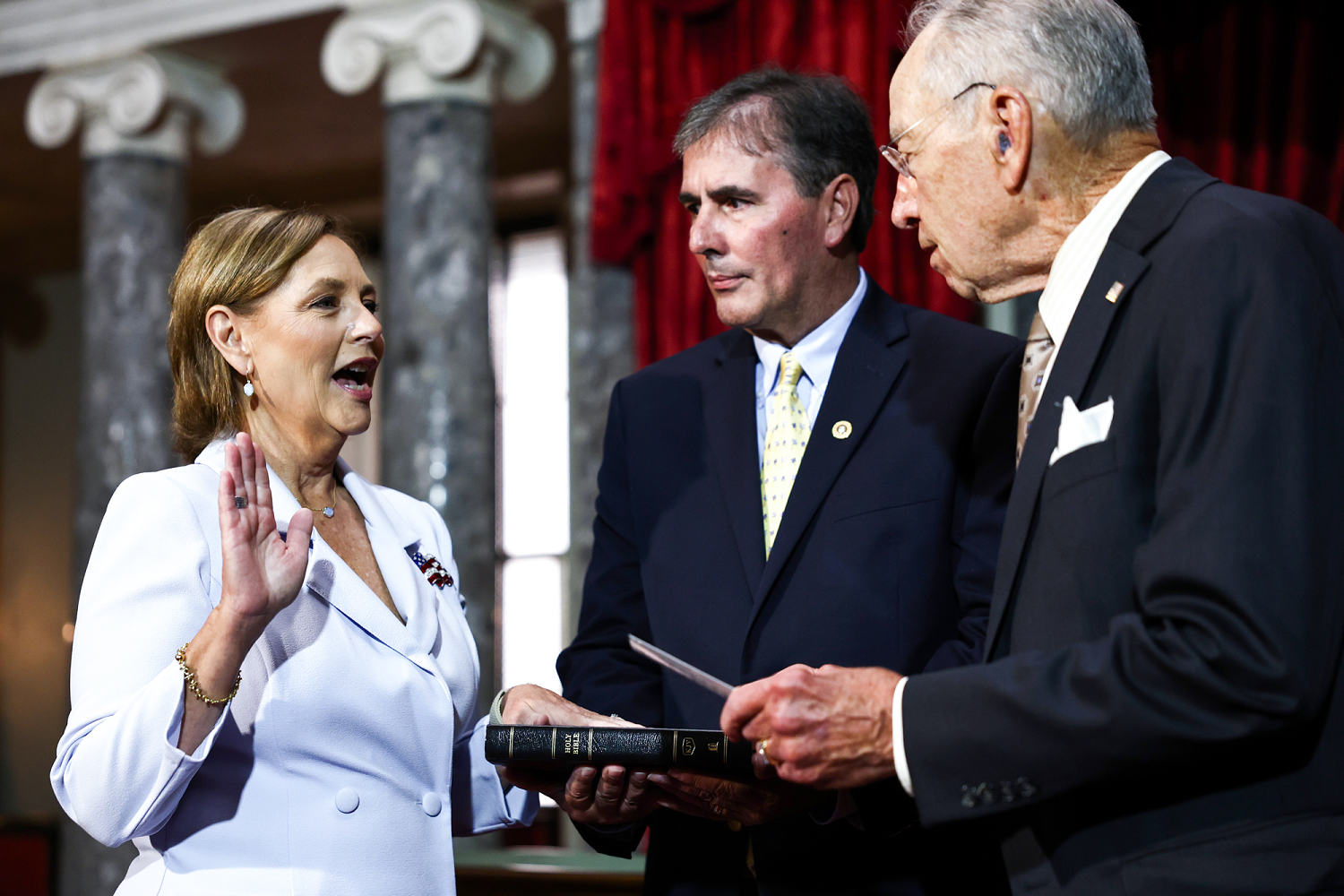
The political vacuum created by the sudden death of Senator Lindsey Graham has altered the structural equilibrium of South Carolina’s Republican establishment. When Governor Henry McMaster appointed Graham’s sister, Darline Graham Nordone, to fill the seat on an interim basis, the move was widely evaluated as a low-risk, ceremonial transition designed to preserve stability through the January expiration of the current term. However, Donald Trump’s subsequent public endorsement urging her to enter the August 11 special primary for a full six-year term shifts the race from an orderly succession into a high-stakes stress test of brand equity transfer in modern politics.
To evaluate the probability of this endorsement achieving its strategic objective, we must dismantle the mechanism of hereditary political capital and analyze the friction points within South Carolina's electoral architecture.
The Tri-Partite Asset Structure of Hereditary Candidacies
Political successions involving non-elected family members rely on a specific mechanism: the transfer of an established brand asset to an unvetted proxy. This asset transfer consists of three distinct pillars, each operating under a different constraint.
1. Residual Name Recognition and Emotional Capital
The late senator occupied a seat in federal office for more than two decades, securing his final primary victory just one month prior to his death. The Graham name carries nearly universal penetration within the state's electorate. By endorsing Darline Graham, the executive apparatus attempts to capture the immediate wave of emotional capital, transforming grief into turnout. This operates as a defensive political moat, artificially compressed into a compressed time frame.
2. Turnkey Donor Networks and Institutional Infrastructure
A modern Senate campaign requires extensive logistics, data operations, and finance committees. Because the filing window opens on July 21 and the primary occurs on August 11, independent candidates face an acute capital mobilization bottleneck. A Graham-branded campaign solves this structural constraint by inheriting the existing fundraising lists, political consultants, and local endorsement networks built over five consecutive statewide campaigns.
3. The Presidential Imprimatur as a Total Subsidy
The third pillar is the absolute consolidation of the populist base via executive endorsement. By shifting his position from a preferred caretaker candidate like Representative Russell Fry to an explicit "Complete and Total Endorsement" of Graham, Trump aims to clear the field. In a deep-red state where primary voters correlate heavily with the presidential base, this intervention functions as an external equity injection, instantly establishing a polling floor for a candidate who has never held public office.
Supply-Side Politics: The Operational Bottlenecks of a Compressed Primary
While the asset structure favors the Graham campaign on paper, the execution of this strategy faces significant structural friction. The primary constraint is the timeline dictated by South Carolina statutory law.
[July 11: Vacancy] ➔ [July 21: Filing Opens] ➔ [Aug 11: Special Primary] ➔ [Aug 25: Runoff]
This compressed 21-day window between the opening of the filing period and the primary vote creates distinct operational challenges:
- The Runoff Threshold Constraint: Under South Carolina election law, a primary candidate must secure an absolute majority (50% + 1) to avoid a head-to-head runoff election on August 25. In a crowded field featuring established state actors—such as Representative Nancy Mace, Representative Ralph Norman, or Lieutenant Governor Pamela Evette—the probability of vote dilution is exceptionally high.
- The Federal Compliance Contradiction: A major structural risk lies in the collision between state schedules and federal election laws. The Uniformed and Overseas Citizens Absentee Voting Act (UOCAVA) requires states to dispatch ballots to military and overseas voters at least 45 days before a federal election. For an August 11 primary, that deadline was June 27—a date preceding the incumbent's death. This creates an unresolved legal and administrative bottleneck for state election commissioners, exposing the entire process to potential statutory challenges.
- The Policy Variance Vulnerability: Lindsey Graham’s political identity was anchored in traditional, interventionist foreign policy hawkishness and institutional negotiation. Darline Graham's professional background rests entirely within state-level public administration, specifically directing vocational rehabilitation and blindness-prevention programs. Because she lacks a documented legislative voting record, her campaign must rapidly define her policy alignment. Any perceived divergence between her brother's traditionalist platform and Trump’s populist agenda could alienate segments of the state's fractured Republican coalition.
Strategic Forecast and Market Realignment
The entry of Darline Graham into the special primary fundamentally alters the risk-reward calculus for ambitious down-ballot Republicans. For figures like Nancy Mace or Ralph Norman, launching a primary challenge against a newly grieving family brand backed by a presidential endorsement carries immense political risk. A loss damages their current structural standing, while a aggressive campaign risks alienating the core voters they need for future state-level runs.
The second-order effect of Trump's endorsement will likely be the tactical withdrawal of mainstream institutional challengers, leaving only ideological outliers to contest the seat. If Graham accepts the nomination challenge, the race will transition from an open, multi-candidate policy debate to a binary referendum on the legacy of the Graham name and the absolute authority of the presidential endorsement. The optimal play for the state party apparatus is to expedite the consolidation of fundraising infrastructure behind Graham within the next 72 hours, effectively starved-out competing campaigns before the July 21 filing deadline.