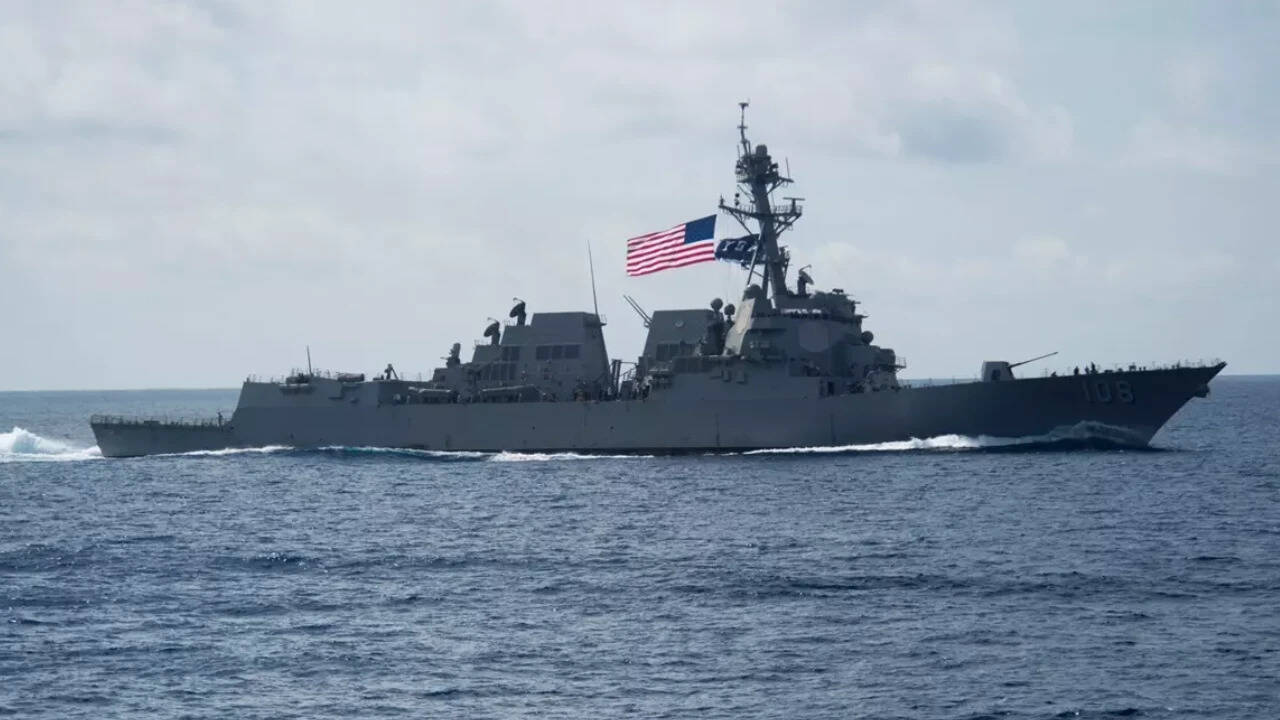
The headlines write themselves because the script has been running on autopilot for thirty years. A carrier strike group rotates out of a flashpoint. A presidential in-law boards a flight to the Middle East to deliver a portfolio of promises or iron out a back-channel deal. The media treats these movements as tectonic shifts. They breathlessly analyze the tonnage of the incoming warship and decode the facial expressions of diplomatic envoys stepping off a tarmac.
It is all theater.
If you think swapping the USS Washington for the USS Lincoln alters the calculus of deterrence in the Indo-Pacific or the Persian Gulf, you are buying the PR brochure handed out by defense attachés. If you believe a real estate developer turned envoy can shortcut a century of structural hostility with a handshake and a five-star hotel dinner, you are confusing motion with progress.
Let us dismantle the lazy consensus.
The Carrier Fallacy
Military analysts love to count hulls. They point to the flight deck of a Nimitz or a Ford class carrier and treat it as an unassailable floating sovereign city of unstoppable force. They tell you that rotating a fresh strike group into a theater signals resolve to adversaries and reassurance to allies.
I have watched strategists in Washington stare at spreadsheets of naval assets like they are playing a grand game of Risk, completely detached from the fiscal and operational reality of modern maritime warfare.
A supercarrier is not a magic wand. In an era of hypersonic anti-ship missiles, dense satellite constellations, and layered littoral defense networks, a seventy-thousand-ton nuclear-powered carrier is less of a projection platform and more of a very expensive, highly visible target. Swapping out the Washington for the Lincoln does not change the physics of the missile equation. An adversary sitting on a coastline armed with precision guidance does not look at a new name painted on the stern of a carrier and suddenly recalculate their risk tolerance. They look at it and see a stationary chess piece moving one square to the left.
The conventional wisdom insists that presence equals deterrence. History suggests otherwise. Deterrence fails not because you have one less carrier in the neighborhood, but because your adversary has calculated that your appetite for a prolonged, attritional conflict is zero. Shuffling floating airfields around the ocean blue does nothing to change that underlying calculation. It just burns fuel, strains maintenance schedules, and wears out sailors for the sake of a photo-op.
The Illusion of the Envoy
Then we have the diplomatic side of the ledger. Whenever negotiations stall or regional tensions hit a boiling point, the executive branch dispatches a high-profile emissary—often someone entirely outside traditional diplomatic channels, operating with a direct line to the Oval Office.
The narrative goes like this: professional diplomats are too bogged down by institutional inertia and protocol; what is needed is a dealmaker, an outsider who can bypass the bureaucracy, look a foreign leader in the eye, and hammer out a grand bargain over backgammon or scotch.
I have seen administrations blow millions of dollars and countless hours of diplomatic capital on these high-stakes personality-driven missions, only to watch the agreements disintegrate the moment the envoy's plane wheels up.
Diplomacy is not a corporate merger. You cannot browbeat or charm sovereign actors into abandoning core security interests because you brought a slick negotiation style to the table. Structural conflicts persist because the incentives for conflict outweigh the incentives for peace for the actors involved. When an envoy sits across the table from a leader like Benjamin Netanyahu or regional counterparts, they are not dealing with a stubborn counterparty who just needs the right financial incentive or clever formulation. They are dealing with political survival, existential threat perceptions, and domestic coalitions that would tear any leader apart for making unilateral concessions.
Treating complex geopolitical standoffs as real estate transactions is a category error of monumental proportions. A dealmaker looks for leverage; a sovereign leader looks at their survival. When those two worldviews collide, the dealmaker always folds first because they have an election to return to or a business to run, while the local leader has an army and a history to answer to.
The Real Drivers of Power
If carrier swaps and backroom envoy meetings are mere distractions, what actually moves the needle?
Supply chains, domestic industrial capacity, and sustained economic resilience.
While Washington obsesses over whether the Lincoln or the Washington is sailing through a particular strait, the real strategic competition is happening in shipyards that can actually repair hulls, in rare earth mineral processing plants, and in the quiet laboratories where algorithmic defense systems are written. The United States Navy currently faces severe maintenance backlogs, dry dock shortages, and recruitment deficits. Shuffling ships between regional commands does not solve the fact that the industrial base cannot sustain a high-intensity, multi-theater war of attrition.
Focusing on the visible symbols of power while ignoring the invisible decay of the foundations is a recipe for strategic irrelevance.
Adversaries do not fear our hardware; they test our staying power. They watch our political polarization, our national debt, and our attention span. When they see a nation that treats foreign policy like a reality television series—where every week brings a new character, a new carrier deployment, and a new dramatic summit—they do not see strength. They see a superpower with an attention deficit disorder.
Actionable Strategy for a Noisy World
Stop reacting to the noise. When you read about high-level meetings or naval rotations, ignore the breathless commentary about historical turning points. Look at the structural inputs.
- Track industrial output, not deployments: A country building dry docks and securing semiconductor supply chains is winning the real game. A country moving existing toys from one box to another is just rearranging deck chairs.
- Discount personal diplomacy: Treat any peace deal brokered by a special envoy as provisional until institutional buy-in from local security establishments matches the rhetoric at the podium.
- Accept the limits of force projection: Recognize that multi-billion-dollar surface action groups are increasingly vulnerable in enclosed seas. The future belongs to distributed, asymmetric capabilities, not floating status symbols.
The sooner we stop treating geopolitical theater as actual strategy, the sooner we can start asking the hard questions about what it takes to maintain real leverage in a multipolar world.
Until then, enjoy the carrier transit updates. They make great television, and they change nothing.