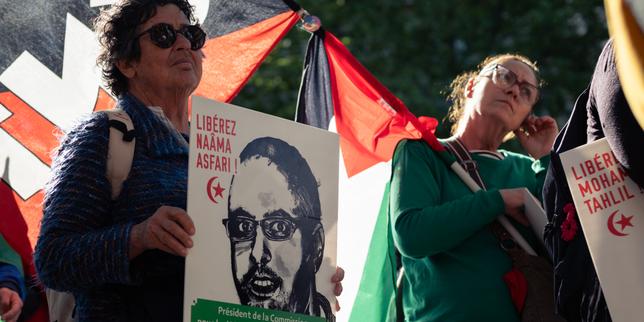
Fifteen years behind bars changes a man. For Sahrawi activist Naama Asfari, it’s turned into a desperate, silent battle for survival. Locked away in Morocco’s Kenitra prison since 2010, Asfari reached a breaking point on June 8, 2026, when he launched an unlimited hunger strike. He isn't asking for special privileges. He’s asking for what the United Nations says is already his: freedom.
If you haven't followed the geopolitical chess match over Western Sahara, Asfari's name might not ring a bell. But his hunger strike isn't just about one man. It shines a harsh light on a deeply broken judicial process and international mechanisms that have teeth but choose not to bite.
The Reality Behind the Gdeim Izik Convictions
To understand why Asfari is starving himself, we have to look back to November 2010. Thousands of Sahrawis had set up the Gdeim Izik protest camp just outside Laayoune to demand social and economic rights. Asfari was a prominent voice, acting as a spokesperson for the movement.
The day before Moroccan forces violently dismantled the camp, authorities snatched Asfari. During the subsequent chaos, eleven Moroccan security officers were killed. In the aftermath, Morocco pinned the blame heavily on Asfari and 23 other activists.
A military court handed Asfari a 30-year sentence in 2013, which a civilian appeals court upheld in 2017. The core issue? The entire prosecution rested on confessions. Organizations like the Association of Friends of the Sahrawi Arab Democratic Republic (AARASD) and Front Line Defenders have repeatedly pointed out that these confessions were extracted under severe physical duress.
International human rights bodies agree. In 2016, the UN Committee Against Torture (CAT) officially condemned Morocco for its treatment of Asfari, explicitly noting that his conviction relied on statements obtained via torture. Yet, nearly a decade after that ruling, nothing has shifted.
When UN Rulings Gather Dust
The immediate trigger for Asfari's latest hunger strike is Morocco’s total dismissal of UN Working Group on Arbitrary Detention Opinion No. 23/2023. This panel reviewed the case of the Gdeim Izik prisoners and concluded what activists had claimed for over a decade: the detentions are completely arbitrary.
The UN panel formally called for the immediate release of the prisoners and recommended appropriate compensation. But international law works on a voluntary basis when dealing with stubborn regional powers. Morocco simply ignored the opinion.
This isn't Asfari's first time refusing food. He used short, 48-hour warning strikes in May 2026 to signal his intent. Because those warnings yielded zero response from prison administrators, he transitioned to an open-ended strike. Now, human rights groups report his health is in freefall.
The human toll extends beyond the prison walls. His wife, Claude Mangin, has spent years fighting French and Moroccan bureaucracy just to see him. She even staged her own month-long hunger strike in France back in 2018 after Moroccan authorities repeatedly blocked her from entering the country.
What This Means for Human Rights Accountability
The total gridlock in Asfari's case exposes a glaring flaw in the international human rights framework. UN committees can investigate, document, and issue blistering reports. They can declare a detention illegal. But they cannot force a sovereign nation to open a prison cell door.
Morocco continues to position itself as a reliable security and economic partner for Europe, particularly France. Because of these strategic alliances, European governments rarely apply real diplomatic pressure over Western Sahara or the treatment of Sahrawi political prisoners. The geopolitical calculation routinely trumps human rights concerns.
Right now, Asfari’s fellow Gdeim Izik detainees are launching solidarity strikes, but the clock is ticking against his physical health. The Ligue pour la Protection des prisonniers politiques sahraouis documented systemic medical neglect in a scathing report titled Pas de traitement... Pas de visite... Pas de justice.
If you want to support accountability, direct engagement matters more than passive awareness. You can contact your local representatives to ask why UN Working Group opinions are ignored in bilateral diplomatic talks. Supporting NGOs like Front Line Defenders or ACAT (Action by Christians for the Abolition of Torture), which actively track and fund legal representation for Sahrawi prisoners, keeps the international spotlight on cases Morocco would prefer the world forgot.