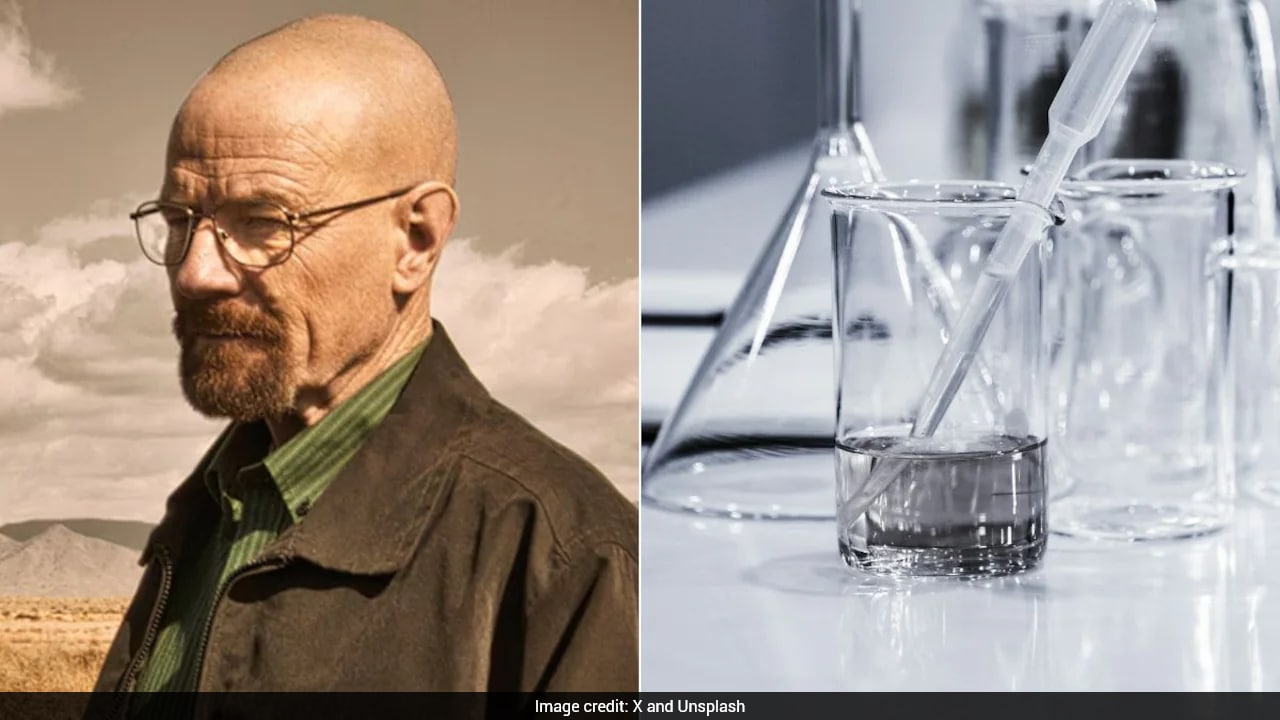
Headlines around the globe lit up with a predictable dose of schadenfreude when authorities paraded a retired chemistry professor and his graduate student accomplice for allegedly manufacturing synthetic narcotics on an industrial scale. The media instantly reached for the lazy, low-hanging fruit. Every copy desk from New York to Tokyo reached into the pop culture drawer and branded the bust a real-life chapter of the famous AMC television drama.
It makes for great clickbait. It satisfies our collective craving for narrative symmetry. But it is entirely, blindingly wrong about how the underground chemical economy actually operates. In other news, read about: The Map and the Mud The Fracture Point of a Fragile Peace.
When the public reads about an academic turning rogue in a makeshift laboratory, they assume we are witnessing the collapse of a sophisticated enterprise. They think law enforcement has severed a major artery of the global narcotics trade. That assumption exposes a fundamental misunderstanding of modern chemistry, supply chains, and market economics.
The Myth of the Mastermind
For decades, sensationalist journalism has sold us the myth of the lone-wolf chemist. We love the trope of the brilliant scientist toiling away with glassware, perfecting a crystal-clear product that commands a premium. It provides a human face to an otherwise faceless criminal enterprise. The Washington Post has also covered this fascinating topic in extensive detail.
I have spent years analyzing illicit supply chains and grey-market logistics. The reality on the ground is far more mundane and exponentially more resilient than any courtroom drama suggests.
A retired chemistry professor operating a clandestine lab is not an irreplaceable kingpin. He is a boutique artisan in a market dominated by industrial-scale commodity production. The true engine of the contemporary synthetic drug trade does not rely on academic genius or secret formulas found in dusty university basements. It relies on open-source literature, easily accessible chemical precursors traded on legitimate global B2B platforms, and automated synthesis equipment that requires little more than vocational training to operate.
When police seize a professor's lab, they seize a rounding error.
The lazy consensus says that arresting the brain stops the operation. History tells us the exact opposite. The demand curve does not care about the credentials of the producer. If a high-purity synthesis method becomes public knowledge, the knowledge survives the arrest. Within forty-eight hours, another laboratory fills the vacuum, often using cheaper, more efficient protocols shared on encrypted messaging channels.
The Precursor Problem Nobody Wants to Discuss
If you want to understand why arresting academic chemists is performative theater, look upstream.
The real vulnerability in the synthetic drug ecosystem has never been the person holding the stirring rod. It is the supply chain of precursor chemicals. Modern designer drugs—whether synthetic cathinones, fentanyl analogues, or methamphetamine variants—are built using multi-use industrial chemicals. These are the same compounds used to manufacture plastics, treat textiles, and produce legitimate pharmaceuticals.
Governments love parading elderly academics before the cameras because it looks like a victory. It requires zero geopolitical friction. You do not have to pressure foreign trade partners, regulate massive multinational chemical conglomerates, or overhaul customs inspection protocols at major container ports. You just kick down a lab door, seize some beakers, and hold a press conference.
Meanwhile, multi-ton shipments of dual-use precursors move freely across borders disguised as industrial solvents or agricultural additives. The regulatory framework governing precursor chemicals is Swiss cheese, riddled with loopholes designed to protect corporate shipping velocity at the expense of public safety.
Focusing law enforcement resources on academic deviants is like trying to drain an ocean with a cocktail straw while leaving the damn wide open.
Decentralization Beat Hierarchy
We are witnessing the Uberization of illicit manufacturing.
Traditional drug cartels used to require rigid, vertically integrated hierarchies. They controlled the fields, the cartels, the transport routes, and the distribution networks. Today, the synthetic market operates on a decentralized, modular model.
One group handles precursor sourcing through shell companies. Another group provides turnkey, remote-controlled reaction vessels that can be monitored via smartphone from three continents away. A third group manages distribution through decentralized darknet marketplaces and courier services that look indistinguishable from standard e-commerce logistics.
In this environment, an academic working in a provincial laboratory is an anomaly, not a linchpin. Most contemporary illicit synthesis has moved away from the need for advanced doctoral degrees. Automated temperature controls, standardized catalysts, and plug-and-play reactor units have commoditized the chemistry. You do not need a Heisenberg when the synthesis protocol is an open-source PDF downloaded from a chemistry forum.
By treating these arrests as major structural victories, we actively misinform the public about the nature of the threat. We create a false sense of security, convincing taxpayers that the system is successfully hunting down the masterminds, when in reality, the system is swatting at gnats while an industrial manufacturing base hums along uninterrupted.
The Real Cost of Security Theater
Every dollar spent on high-profile investigations targeting boutique producers is a dollar diverted from systemic interventions that actually alter market dynamics.
If governments were serious about curbing the synthetic drug epidemic, they would stop chasing academic anomalies and start imposing strict, traceable chain-of-custody mandates on industrial chemical manufacturers. They would require real-time auditing of precursor exports and force multinational logistics firms to take liability for the cargo they carry.
Of course, that approach requires political will, international cooperation, and economic friction. It is much easier to flash a mugshot of a disgraced professor, invoke a popular television show, and call it a day.
The next time you see a headline celebrating the capture of a real-life Walter White, remember what is actually happening. You are watching a magic trick. The performer wants you to look at the dramatic flash in the pan so you do not notice the massive, automated factory operating in plain sight just down the road.