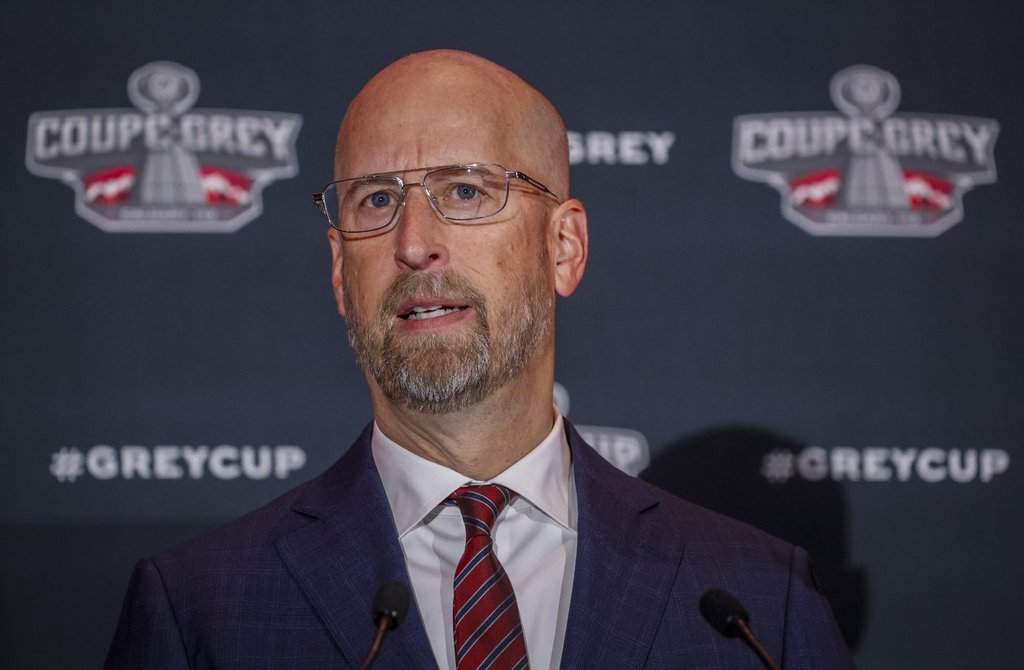
Ben Major wears the white cap for the Grey Cup. That single personnel decision by the Canadian Football League officiating department carries more weight for the outcome of the championship than almost any tactical wrinkle devised by a head coach during the two-week buildup. When Major steps onto the turf as the head referee, the league is making a calculated bet on consistency, rulebook precision, and high-pressure temperament in an environment where a single blown call alters franchise histories.
Most casual viewers treat the officiating announcement as a routine administrative footnote. They are wrong. In Canadian football, where three downs compress the margin for error and unique rules governing motion, yards, and kicking create constant gray areas, the referee acts as both traffic cop and constitutional judge. Selecting Major is not a participation trophy for a long career; it is a direct response to the specific tactical pressures modern CFL offenses and defenses bring to the title game.
The Anatomy of a Grey Cup Referee Selection
Getting the whistle for the Grey Cup requires surviving a ruthless, season-long grading gauntlet that happens entirely out of public view. Unlike fans who judge officials based on a single slow-motion replay broadcast from three angles, the CFL officiating command center evaluates every single snap of the regular season and playoffs. Every position on the seven-person crew—from the down judge watching the line of scrimmage to the side judge tracking deep routes—receives a grade for positioning, mechanics, and rule application.
The head referee sits at the center of that storm. Ben Major did not earn this assignment simply by avoiding obvious blunders. He earned it by demonstrating command over the pace of the game.
In the CFL, the 20-second play clock is a relentless metronome. Unlike the NFL, where teams have 40 seconds to huddle, substitute, and read defenses, Canadian football moves at a sprint. The referee must spot the ball, signal the clock, verify defensive substitutions, and clear the path before the quarterback begins his cadence. If a referee hesitates for even two seconds, the rhythm of an entire offensive drive collapses. Major has built a reputation across the league for keeping that machinery running without drawing attention to himself.
The Grading Matrix Nobody Sees
To understand why Major got the nod over other veteran white hats, you have to look at how the league measures officiating success. The evaluation breaks down into three distinct tiers:
- Accuracy under chaos: Calling holding or pass interference when 24 players are moving at full speed on a 65-yard-wide field requires spatial awareness that cannot be taught in a classroom. Evaluators track missed calls just as heavily as phantom flags.
- Crew management: A Grey Cup crew is an all-star assembly, not a regular-season unit that works together every week. The referee must unify seven distinct personalities and officiating styles into a single cohesive unit within days.
- De-escalation: Championship games boil over. Coaches scream on the sidelines; players jaw after the whistle. A referee who loses his cool or responds with emotional, retaliatory flags ruins the broadcast and compromises competitive integrity.
Major excels in the third category. Veteran players across both the East and West Divisions frequently note that Major communicates clearly on the field. He explains what he saw, tells linemen where their hands are straying before throwing the flag, and refuses to let sideline theatrics dictate his whistle.
The Unique Pressures of the Canadian Rulebook
Officiating the Grey Cup presents structural challenges that simply do not exist in American football. The wider field—65 yards compared to 53 and a third—creates massive horizontal spaces where infractions happen far away from the ball. Meanwhile, unlimited backfield motion means receivers are hitting the line of scrimmage at full speed before the snap, turning routine pass plays into high-velocity collisions.
When Ben Major stands behind the offensive backfield, his primary field of vision covers the quarterback, the tackle box, and the motioning receivers crossing behind the line. Illegal procedure and offside calls become razor-thin judgments when three receivers are sprinting toward the line simultaneously. Throw a flag too early, and you kill a thrilling explosive play. Swallow the whistle, and you hand the offense an unfair timing advantage that leaves defensive backs helpless.
Then there is the kicking game. Because the CFL does not allow fair catches, the no-yards penalty is one of the most contentious and game-altering calls in professional sports. When a punt hangs in the air, covering defenders must give the returner a five-yard halo until the ball is touched. Judging five yards in real time while players are sprinting 20 miles per hour is a nightmare. While the downfield officials carry the primary responsibility for tracking the halo, Major has to synthesize their input, confirm whether the ball was touched, and enforce the proper 5-yard or 15-yard penalty—all while coaches are screaming for a challenge flag.
The Replay Bunker Paradox
Modern officiating does not happen in a vacuum. Every major decision Major makes on the field is shadowed by the CFL Command Centre in Toronto. That dynamic has fundamentally changed what it means to be a championship referee.
In decades past, the referee's word was final. Today, Major operates inside a hybrid system where on-field judgment meets centralized video review. Coaches can challenge almost anything, including pass interference and roughing the passer, while the Command Centre routinely buzzes down to overturn missed infractions or correct administrative errors.
This creates a subtle psychological trap for lesser officials. Some referees become hesitant, subconsciously waiting for Toronto to bail them out on tough calls, or worse, throwing questionable flags just to trigger an automatic review on scoring plays and turnovers. That hesitation breeds inconsistency. Players lose track of what is legal, and games bog down into tedious, three-hour-and-forty-minute slogfests punctuated by commercial breaks and headset conferences.
Major avoids that trap by calling the game as if replay does not exist. He makes decisive, real-time judgments based on what he sees on the grass, trusting his mechanics and letting the replay system serve as a safety net rather than a crutch. When Toronto does intervene, Major delivers the announcement cleanly, resets the spot, and gets the ball back in play without letting the delay freeze the players on the field.
The All-Star Crew Dilemma
One of the least understood aspects of the Grey Cup is that the seven officials on the field have rarely worked together as a complete unit during the regular season. Throughout the year, crews travel together, developing non-verbal cues, shared tendencies, and mutual trust. For the championship, the league scraps those units and selects the highest-graded individual at each position.
Imagine taking seven elite musicians from different orchestras, handing them a complex score on Wednesday, and asking them to perform a flawless symphony on Sunday night in front of a sold-out stadium and millions of television viewers. That is Major’s exact assignment.
As the head referee, Major is responsible for establishing the crew's baseline philosophy before kickoff. How tight will they call hand-fighting downfield? What constitutes a late hit on a sliding quarterback? How much leeway do offensive tackles get on their kick-slide before a holding flag comes out? If the back judge is calling a tight game while the field judge lets players battle, the secondary falls into chaos. Major’s primary job during Grey Cup week is aligning six other alpha officials onto a single wavelength so that a hold in the first quarter is still a hold in the fourth.
What History Tells Us About Championship Whistles
CFL history is littered with Grey Cups remembered as much for officiating controversies as for athletic brilliance. Ask any long-time fan about the 2009 Grey Cup, and the conversation inevitably turns to the too many men on the field penalty against Saskatchewan that handed Montreal a second chance at a game-winning field goal. Bring up the 1996 Snow Bowl, and people still debate missed pass interference calls in the driving blizzard.
Those moments leave permanent scars on franchises and fanbases. They also illustrate why the league prioritizes stability over novelty when assigning the white hat. The CFL cannot afford an official who wilts when 50,000 fans are booing a spot or when a coach throws his headset in disgust.
Consider a hypothetical scenario late in the fourth quarter. A trailing team drives inside the opponent's 20-yard line with under a minute remaining. On third down, a receiver goes down in the end zone amid heavy contact from a defensive back. No flag hits the turf. The stadium erupts, the offensive coordinator slams his play sheet, and the broadcast cuts immediately to the referee's face. In that exact second, the referee’s posture, facial expression, and immediate communication with his back judge dictate whether the game maintains its credibility or descends into an ugly spectacle. Major has spent years proving he will not blink in that spotlight.
The Invisible Standard of Excellence
There is a cruel irony built into Ben Major’s profession. If he performs his job at an elite level during the Grey Cup, nobody will remember his name by Tuesday morning. Fans will talk about the winning quarterback's fourth-quarter composure, the defensive coordinator's timely blitzes, or a spectacular special teams return.
The only way a referee becomes a household name after a championship game is through catastrophe. Every time Major steps behind the center, raises his arm to wind the clock, or announces a penalty into his wireless microphone, he is walking a tightrope with no margin for error.
The league’s decision to put the whistle in his hands reflects a clear understanding of what the championship demands. Modern CFL offenses are too fast, defensive schemes are too disguised, and the stakes are too high for an experimental choice. Ben Major represents the safest, sharpest pair of eyes the league can put on the field when the season comes down to sixty minutes of football.