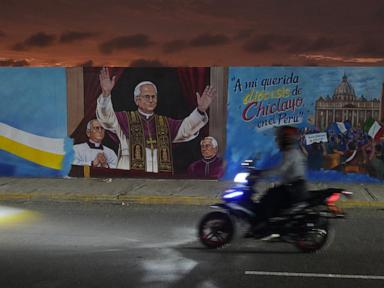
Pope Leo XIV stepped onto Peruvian soil to a hero's welcome, a homecoming steeped in decades of missionary history and fierce national pride. While television cameras captured tens of thousands of faithful lining the streets from Lima to Chiclayo, the visit represents far more than a nostalgic reunion. For the former Robert Francis Prevost, who spent years serving as a priest and bishop in northern Peru before rising to the papacy, this trip is a high-stakes diplomatic maneuver. He is returning to a country fractured by political paralysis, economic inequality, and deep institutional distrust, using his rare dual identity to navigate a crisis that neither the Vatican nor Lima can easily solve.
The surface narrative is simple enough. An American-born Augustinian friar moves to Peru in the 1980s, falls in love with the people, earns Peruvian citizenship, leads the Diocese of Chiclayo, and eventually ascends to the Chair of Saint Peter. When he comes back, the country throws a party.
It makes for great television. It also misses the real story.
The Architecture of a Dual Identity
To understand why this visit carries such immense geopolitical weight, you have to look at how rare Leo XIV's background actually is. The Catholic Church has spent centuries balancing European administrative dominance with the demographic reality of the Global South. When Pope Francis took the helm in 2013, he shifted the center of gravity toward Latin America. Leo XIV represents an even more complex synthesis. He possesses the administrative fluency of a North American churchman combined with the lived, dusty-boots experience of a Peruvian diocesan bishop.
During his years in Chulucanas, Trujillo, and later Chiclayo, he wasn't operating from a gilded office. He was dealing with the daily realities of rural poverty, infrastructure collapse, and the lingering trauma of the Shining Path insurgency. He learned to navigate the specific rhythms of Peruvian society, where local parish life often functions as the only reliable social safety net.
That history buys him a level of credibility that no career Vatican diplomat could ever manufacture. When a standard papal envoy arrives in South America, locals see an outsider reading from a prepared script. When Leo XIV speaks in Spanish with the familiar cadence of the northern coast, people listen differently. They view him as one of their own who happened to get the biggest job in the world.
Yet this intimacy cuts both ways. Familiarity breeds expectations, and the expectations weighing on this trip are staggering.
A Country in Perpetual Crisis
Peru is not simply celebrating a favorite son. The nation is grasping for any symbol of stability after years of relentless political turmoil.
Over the past decade, Peruvians have watched a dizzying parade of presidents impeached, imprisoned, or forced out of office amid sprawling corruption scandals. Congress routinely suffers from single-digit approval ratings. Public trust in the judiciary, the police, and the executive branch has cratered. For millions of citizens, the state feels less like a governing body and more like an extractive machine designed to enrich a narrow political class in Lima while leaving the provinces to fend for themselves.
Against this backdrop, the Catholic Church remains one of the few institutions with nationwide reach and residual moral authority. Even that authority, however, has taken a beating.
The Peruvian Church has spent the last several years embroiled in bitter internal conflicts, most notably the fallout surrounding the Sodalitium Christianae Vitae, a Peru-based lay society plagued by decades of physical, psychological, and sexual abuse allegations alongside financial corruption. Before becoming pope, Prevost played a direct role in the Vatican's efforts to investigate and dismantle the group's entrenched power structures. He knows where the bodies are buried, metaphorically and institutionally.
Now, as pontiff, he returns to a local hierarchy still divided between progressive bishops aligned with social justice initiatives and conservative factions that fiercely resisted Vatican intervention. The cheering crowds in the plazas mask a quiet, intense power struggle inside the sacristies.
The Geopolitics of the Chiclayo Stop
Every papal itinerary is a coded message. Where a pope goes, who he meets, and which communities he prioritizes tell you far more than his official homilies ever will.
By centering a massive portion of this journey on northern Peru—specifically Chiclayo and surrounding communities rather than restricting himself to the diplomatic corridors of Lima—Leo XIV is making a calculated statement about decentralization.
Peru suffers from an acute case of centralism. Wealth, political power, and media attention are overwhelmingly concentrated in Lima. Meanwhile, northern regions like Lambayeque, Piura, and La Libertad regularly bear the brunt of climate disasters, such as the devastating El Niño flooding that repeatedly wipes out crops, bridges, and entire neighborhoods. When the waters rise, government relief is notoriously slow to arrive. Local parishes, by contrast, are usually the first to set up soup kitchens and emergency shelters.
By returning to Chiclayo, Leo XIV is deliberately shifting the spotlight away from the presidential palace and onto the periphery.
Consider the optics of a pope standing in a northern provincial plaza versus standing beside embattled politicians in the capital. In Lima, every handshake with a government official is instantly weaponized by rival political factions. If the pope smiles at a cabinet minister, opposition media frames it as an endorsement of a deeply unpopular administration. If he appears cold, the government accuses the Church of meddling in domestic politics.
In Chiclayo, the narrative changes entirely. The focus moves to grassroots resilience, agricultural survival, and community solidarity. He doesn't have to endorse the politicians because he is directly validating the citizens who have survived despite those politicians.
The Evangelical Challenge
There is another, less romantic reason the Vatican is investing heavy diplomatic capital in this homecoming. The Catholic Church is fighting a fierce battle for survival across Latin America.
For decades, Protestant evangelical and Pentecostal movements have steadily eroded Catholic dominance in Peru. In sprawling urban shantytowns and remote Andean villages alike, storefront evangelical churches offer immediate community, charismatic worship, and direct personal support that traditional Catholic parishes often struggle to match.
A papal visit is the ultimate counter-offensive. Nothing in the evangelical world can replicate the sheer scale, historical pageantry, and global media saturation of a Roman pontiff walking through local streets.
For a week, Catholicism reclaims the public square. People who haven't attended Mass in years show up to catch a glimpse of the motorcade. Families pass down stories of the day the pope blessed their neighborhood. It is a massive psychological reset designed to remind a drifting flock that the Catholic Church is not a distant European relic, but a living, breathing part of their own national identity.
Still, pageantry has a short half-life. Once the security barricades come down and the Vatican press corps boards its charter flight back to Rome, local priests are left with the same structural problems. They still face acute clergy shortages, underfunded parishes, and a younger generation increasingly detached from organized religion. A emotional homecoming can slow the demographic bleed, but it cannot reverse it on its own.
Navigating the Minefield of State Relations
No matter how carefully the Vatican choreographs the itinerary, a papal trip is an official state visit. Leo XIV cannot avoid the Peruvian government entirely, nor would Vatican diplomacy allow him to try.
The Holy See operates on a doctrine of institutional engagement. It deals with governments as they are, not as it wishes they were, because the Church needs legal protections, tax exemptions, educational agreements, and visa approvals to keep its schools, hospitals, and charities running.
Yet this creates a profound ethical dilemma for a pope who built his reputation on standing with the marginalized.
Imagine a hypothetical scenario where a deeply unpopular administration uses a papal photo-op to pass controversial legislation the following week, implicitly borrowing the Church's moral authority to quiet public dissent. This happens constantly in Latin American politics. Leaders wrap themselves in religious symbolism precisely when their democratic legitimacy is at its weakest.
Leo XIV's challenge is to engage the Peruvian state firmly enough to push for human rights, anti-corruption reforms, and environmental protection, while maintaining enough distance that he cannot be used as a political prop.
His rhetoric during the visit reflects this tightrope walk. Rather than calling out specific politicians by name—a move that would trigger an immediate diplomatic rupture—he relies on sharp, unmistakable critiques of systemic corruption, extractive economic models, and institutional indifference. Everyone in Peru knows exactly who he is talking about. The message lands without crossing the formal line into partisan interference.
The Mining and Environmental Flashpoint
Nowhere is this tension sharper than in Peru's extractive industries.
Peru's economy depends heavily on mining—copper, gold, silver, and zinc. These exports keep the national macroeconomic numbers looking respectable on paper. On the ground, however, mega-mining projects are the single greatest source of social conflict in the country.
Indigenous and rural communities frequently clash with multinational mining corporations and the security forces deployed to protect them. The disputes center on water contamination, land rights, and the perception that billions of dollars in mineral wealth are being dug out of the Andes while local villages still lack clean running water and basic healthcare.
For years, the Catholic Church in Peru has found itself caught directly in the crossfire. Many local bishops and priests actively support environmental defenders, providing legal aid and documenting human rights abuses during protests. Pro-business elites and conservative politicians routinely attack these clerics as anti-development agitators.
Because Leo XIV understands the geography and social fabric of northern Peru—a region rich in both agriculture and mining—his words on environmental stewardship carry extraordinary weight. When he speaks about protecting water sources and respecting local communities, he isn't reciting abstract Vatican theology. He is speaking directly to conflicts playing out a few miles down the road from where he used to celebrate Sunday Mass.
What Comes After the Applause
National celebrations are intoxicating, especially in countries starved for good news. For a few days, Peruvians can set aside their cynicism, put on their national colors, and watch the world look at their country with admiration rather than pity.
That emotional lift is real, and it shouldn't be dismissed. Collective pride matters in a society battered by years of institutional failure.
Nevertheless, the true measure of Pope Leo XIV's return will not be found in crowd estimates or emotional television broadcasts. It will be visible six months from now in the quiet, unglamorous work of the Peruvian Church.
Will the local episcopate finally unite around transparent accountability for past abuses, or will old factions wait out the papal visit and return to business as usual? Will dioceses receive the structural support they need to serve growing urban peripheries where evangelical churches are thriving? And will Peruvian political leaders feel genuine moral pressure to address the structural inequalities that drive millions of citizens into despair, or will they simply frame their signed papal photographs, hang them on their office walls, and carry on as before?
History suggests that politicians have a remarkable capacity to applaud a prophet while ignoring every word he says. Leo XIV knows Peru well enough to understand that the hardest work begins the moment the crowds go home.