Everyone in Washington and Brussels is panicking over the wrong headline.
When news broke that Chinese geological teams were conducting an in-depth investigation of Turkey’s massive Beylikova rare earth deposit in Eskişehir, the geopolitical commentariat immediately defaulted to its favorite, laziest script. Pundits screamed about Beijing’s predatory resource grab. Think tanks churned out frantic memos warning that China was swallowing up the world's second-largest rare earth reserve—estimated at roughly 694 million tons of ore—before Western supply chains could even get their boots laced. Meanwhile, you can read other developments here: Why MrBeast Taking 55% of Ball 2 Changes the Creator Toy Industry Forever.
They are looking at the chess board upside down.
China is not inspecting Beylikova because Beijing desperately needs Turkish rocks. China already controls roughly 60 percent of global rare earth mining and nearly 90 percent of global processing and refining. Beijing’s state-backed champions are crawling all over central Anatolia for a much colder, far more calculated reason. They are there to lock down the midstream bottleneck, dictate the metallurgical standards before a single Western engineering firm steps foot on site, and ensure that Turkish ore never becomes an independent lifeline for European electric vehicle makers or American defense contractors. To see the complete picture, check out the recent article by Harvard Business Review.
If you think this story is about mining, you have already lost the plot.
The "Rare" Earth Lie That Keeps Fooling Investors
Let’s clear up the foundational ignorance that ruins almost every mainstream financial article on this sector. Rare earth elements are not rare. Cerium is more abundant in the Earth’s crust than copper. Neodymium is more common than lead. Even the heavy rare earths—dysprosium and terbium, the elements that actually keep permanent magnets from losing their charge inside scorching-hot EV motors and F-35 fighter jets—exist in commercially viable concentrations across North America, Australia, Scandinavia, and Brazil.
The scarcity is an illusion. The real choke point is ugly, toxic, capital-intensive chemistry.
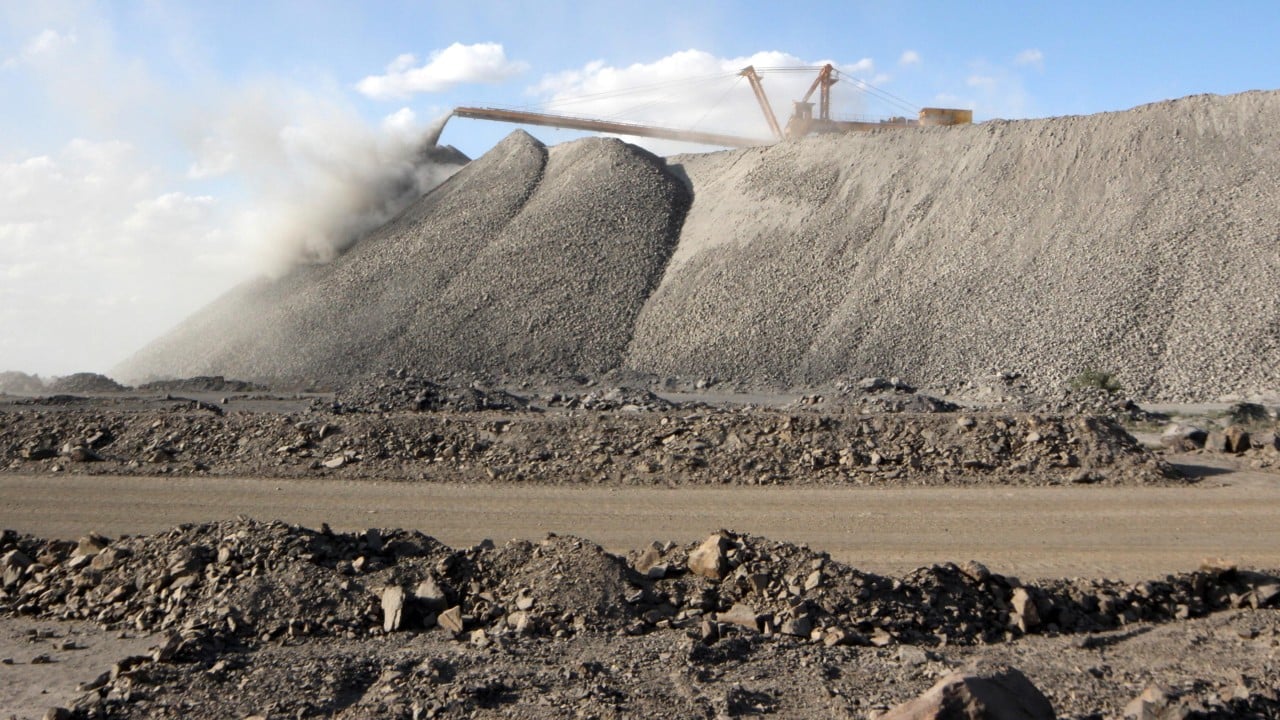
Digging ore out of the ground in Eskişehir is the easy part. You use excavators, haul trucks, and standard crushing circuits. Any competent mining outfit from Canada to Kazakhstan can manage it. What happens next is where Western supply chain dreams go to die.
To turn crushed rock into separated rare earth oxides—and eventually into sintered neodymium-iron-boron (NdFeB) magnets—you have to dissolve the ore in massive vats of hydrochloric and sulfuric acid. You have to run hundreds of stages of solvent extraction using mixer-settlers calibrated to microscopic tolerances. You generate thousands of tons of acidic wastewater, chemical sludge, and low-level radioactive tailings laden with thorium and uranium.
I have sat in boardrooms where private equity directors burned through tens of millions of dollars funding junior mining projects in North America, convinced they had found the next great geopolitical hedge. Every single one of those projects hit the exact same brick wall. They had gorgeous geological assays and zero viable path to permitting a separation plant. Nobody in Western Europe or North America wants a radioactive chemical refinery built next to a watershed.
China’s real monopoly isn't geology. It is the willingness to absorb environmental carnage at industrial scale while subsidizing chemical engineering talent for forty years.
What Beylikova Actually Contains (And Why That Matters)
When Turkey’s Ministry of Energy and Natural Resources announced the discovery of 694 million tons of rare earth ore at Beylikova, the press treated the tonnage as if Ankara had stumbled onto a vault of pure gold bullion.
Stop looking at gross tonnage. Start looking at the basket price and the mineralogy.
The Beylikova deposit is dominated by light rare earth elements—specifically cerium and lanthanum—alongside barite and fluorite. In the current global market, cerium and lanthanum are chronically oversupplied. Because you cannot mine high-value neodymium and praseodymium without digging up massive quantities of cerium and lanthanum alongside them, producers routinely dump light rare earths at razor-thin margins just to clear warehouse space.
Imagine a scenario where a butcher has to buy an entire cow just to sell the tenderloin, and the market is already drowning in ground beef. That is the exact economic reality of light-heavy rare earth deposits like Beylikova.
To make Beylikova commercially profitable without endless state subsidies, an operator has to extract every fraction of a percent of neodymium and praseodymium while simultaneously monetizing the barite and fluorite byproducts. That requires custom-tailored hydrometallurgical flowsheets. You cannot buy an off-the-shelf processing plant from a catalog. You have to design the chemical separation circuit around the exact mineralogical quirks of that specific Turkish ore body.
And who just spent months running deep geological and metallurgical diagnostics on those exact mineralogical quirks? Chinese engineers.
The Trojan Horse of Technical Standards
Western commentators love framing Sino-Turkish resource talks as a simple cash-for-offtake transaction. Beijing writes a check, Ankara ships raw concentrate to Inner Mongolia, and the West loses another round.
That is a kindergarten-level reading of industrial strategy.
When Chinese geological institutions and state-linked enterprises like China Northern Rare Earth Group or Shenghe Resources conduct deep technical due diligence on a foreign deposit, they aren't just checking ore grades. They are writing the technical blueprint for how that deposit will be built, processed, and financed.
Here is how the trap snaps shut:
- Flowsheet Lock-In: Once Chinese metallurgists design the pilot processing plant for Beylikova’s specific ore chemistry, every piece of downstream equipment—from roasting kilns to solvent extraction cells—gets spec'd to Chinese industrial standards. If Turkey later decides to pivot toward European buyers, retrofitting that plant for Western chemical specs costs nearly as much as building a new facility from scratch.
- Intellectual Property Asymmetry: Turkey wants technology transfer. Ankara has explicitly stated it does not want to export raw ore; it wants to refine oxides and manufacture high-value products domestically. Beijing knows this. So China offers to build the refining capacity inside Turkey—while retaining tight control over the proprietary chemical reagents, automation software, and senior process engineers required to keep the plant from seizing up.
- Price Suppression as a Weapon: If a Western-backed consortium tries to finance a competing refinery in Europe to process Turkish concentrate, China only has to open the spigot in Baotou or Ganzhou for six months. By flooding the market with artificially cheap neodymium-praseodymium oxide, Beijing crashes global prices below the Western project's debt-service threshold. Western banks pull their credit lines. The project dies. China buys the distressed assets at thirty cents on the dollar.
We have already watched this exact movie play out with Mountain Pass in California. MP Materials owns one of the richest rare earth mines on the planet, yet for years after its revival, it had to ship its mineral concentrate across the Pacific to China for processing because domestic separation capacity simply did not exist. Even with massive Pentagon backing, disentangling that midstream dependency has been a grueling, multi-year slog.
Why Turkey Is Playing Both Sides (And Why It Might Work)
Before you write off Ankara as a naive victim walking into Beijing’s web, give Turkish statecraft the credit it deserves. Turkey is not making a mistake. Turkey is executing a ruthless arbitrage play.
Ankara has spent the last decade watching the European Union demand green supply chains while dragging its feet on customs union modernization and capital investment. European automakers desperately need non-Chinese rare earth magnets to comply with the EU Critical Raw Materials Act, which mandates that no single third country supply more than 65 percent of the bloc's annual consumption of any strategic raw material by 2030.
Right now, Europe’s dependency on China for rare earth permanent magnets sits above 90 percent. Brussels has set a legal target it has zero physical infrastructure to meet.
Turkey sits directly on Europe’s doorstep, inside the EU Customs Union for industrial goods, with cheap industrial labor, established automotive manufacturing hubs, and 694 million tons of rare earth ore sitting in Eskişehir.
By inviting Chinese technical teams to thoroughly map and validate Beylikova, Ankara achieves three things simultaneously:
- Instant Geological Credibility: Western institutional investors are notoriously risk-averse when it comes to greenfield mining projects in emerging markets. Having the world's undisputed rare earth superpower validate the deposit's commercial viability de-risks the asset overnight.
- Maximum Leverage Over Brussels and Washington: Nothing gets the U.S. State Department or the European Commission on a plane to Ankara faster than photos of Chinese geologists shaking hands with Turkish energy officials. Turkey is using Beijing as a stalking horse to force Western development banks and European OEMs to put real money on the table.
- Forced Technology Transfer: Unlike African lithium or cobalt producers that allowed Chinese firms to strip-mine raw ore and ship it out in bulk carriers, Turkey has the industrial base and political muscle to demand local refining. Ankara knows Beijing would rather build a joint-venture refinery on Turkish soil than watch the European Union fund one there instead.
The Brutal Truth About Western Supply Chain Delusions
Whenever a story like this hits the wire, people immediately ask: Why doesn't the United States or Europe just outbid China for Turkey's rare earths?
Because Western capital markets are structurally allergic to how strategic commodities actually work.
A publicly traded Western mining company has to answer to quarterly earnings calls, ESG rating agencies, and institutional shareholders who demand predictable free cash flow within 36 months. Building a rare earth mine and integrated separation facility takes seven to ten years, requires upwards of $1 billion in upfront capex, and faces brutal commodity price volatility manipulated by a state-backed competitor that does not care about quarterly return on equity.
Look at Lynas Rare Earths in Australia—the only significant non-Chinese producer of separated rare earths in the world. It took Lynas over a decade, massive Japanese government financing through JOGMEC, and bitter regulatory battles over its cracking and leaching plant in Malaysia just to survive. Even today, Lynas represents a fraction of global output.
Meanwhile, Washington passes legislation throwing a few hundred million dollars in grants at domestic magnet startups and declares victory. That is rounding-error money in heavy metallurgy. Until Western governments guarantee floor prices for separated oxides—effectively acting as buyers of last resort to neutralize Chinese price dumping—no private Western bank will ever outbid Beijing on a project like Beylikova.
Where My Contrarian Thesis Could Break
I will be the first to admit the flaw in my own argument. My thesis assumes Beijing remains rational and prioritizes long-term midstream control over immediate geopolitical retaliation.
If trade tensions between Washington, Brussels, and Beijing escalate into full-scale export embargoes—building on the export controls China already slapped on gallium, germanium, graphite, and rare earth processing technologies—Beijing could abandon the long game entirely. Instead of helping Turkey build a domestic refinery that might eventually leak separated oxides into European defense supply chains, China could walk away from Beylikova altogether and starve the project of technical expertise, banking on the bet that Turkey lacks the chemical engineering base to crack the ore alone.
If that happens, Beylikova doesn't become a Chinese asset or a European savior. It becomes a multi-billion-dollar hole in the ground.
Stop Watching the Mines. Watch the Acid Vats.
If you are an investor, a supply chain executive, or a policymaker trying to track who actually wins the critical minerals war, stop reading press releases about giant ore discoveries. Tonnage in the ground means nothing.
Watch three things over the next eighteen months in Eskişehir:
- Who supplies the solvent extraction engineering. If the engineering, procurement, and construction (EPC) contracts go to Chinese state-affiliated institutes, Beijing owns the choke point regardless of whose flag flies over the mine gate.
- Where the thorium goes. Watch how Turkey permits and manages the radioactive tailings from Beylikova’s pilot plant. Environmental bottlenecks—not geopolitical treaties—are what actually kill rare earth timelines.
- Who signs the first binding magnet off-take agreements. Until a European automaker like Volkswagen, Stellantis, or Renault puts hard capital into a Turkish refining joint venture, all the talk in Brussels about "de-risking" from China is pure theater.
China isn't in Turkey to steal rocks. Beijing is there to make sure that when Europe finally decides to build electric vehicles without Chinese magnets, the chemical blueprint still belongs to China.