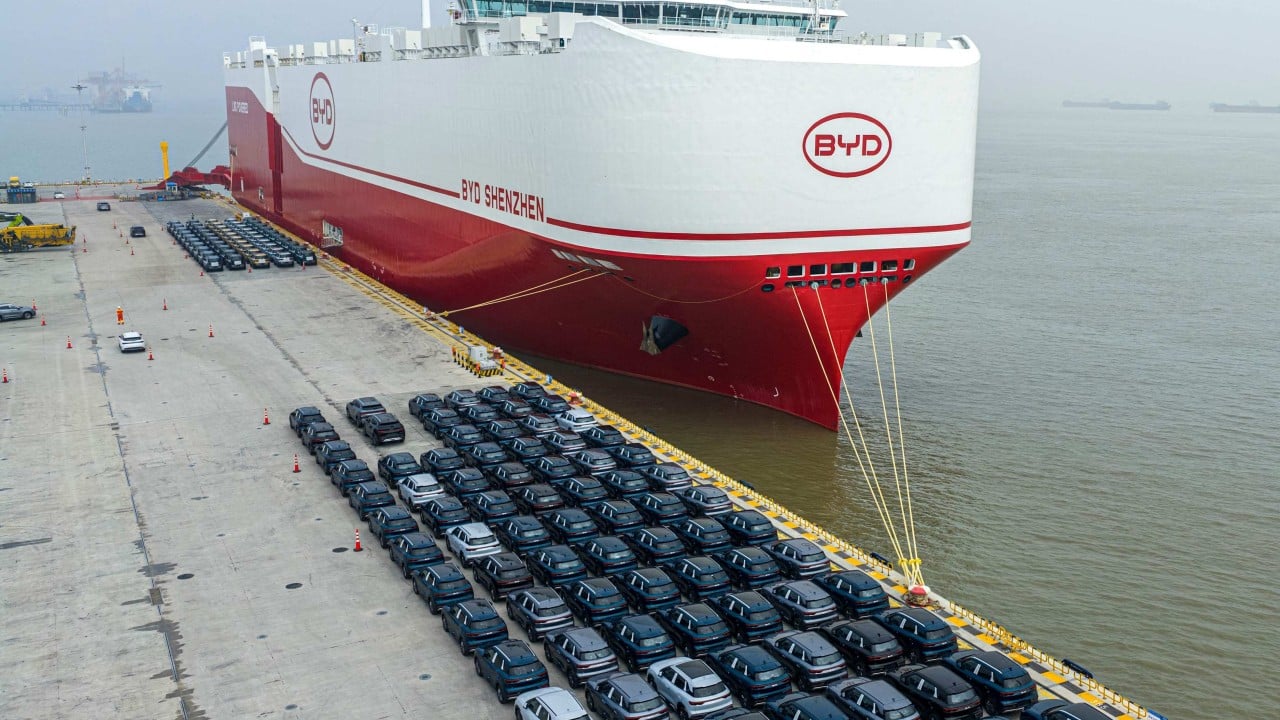
Wall Street loves a tidy narrative. Citi analysts recently published a forecast claiming Chinese automakers will comfortably swallow 15 to 30 percent of the European car market by 2035. The logic sounds bulletproof on paper: lower production costs, a monopoly on battery supply chains, and aggressive pricing.
It is lazy thinking. It treats the automotive industry like a spreadsheet where cost equals victory. You might also find this related story interesting: Intelligence Asymmetry And The Turkey Aircraft Switch A Risk Calculus Breakdown.
I have watched executives burn millions chasing phantom market shares based on these exact linear projections. They look at cheap sticker prices and assume European consumers will simply abandon a century of brand loyalty, dealer networks, and emotional connection. They miss the structural walls, regulatory moats, and psychological friction standing squarely in the path of the cheap electric vehicle invasion.
Chinese brands will not capture 30 percent of Europe. They will hit a hard ceiling long before that, bruised by the realities of a market that operates on entirely different rules than Shanghai or Shenzhen. As highlighted in latest articles by CNBC, the implications are notable.
The Margin Trap Nobody Wants to Talk About
Look past the headline manufacturing cost advantage. When a Chinese vehicle lands on European shores, the economics shift violently.
Shipping, localized compliance, customs duties, and the mandatory establishment of a parts supply chain eat margins alive. European Union tariffs are not static numbers; they are moving targets designed to protect domestic employment. Brussels understands that letting foreign capital hollow out Stuttgart and Turin is political suicide.
Furthermore, a cheap car in China relies on a domestic ecosystem of hyper-dense charging networks, heavily subsidized municipal infrastructure, and software integration tailored for domestic tech giants like Tencent and Alibaba. Replicating that user experience in rural France or northern Germany requires massive capital expenditure.
When you add the cost of building a dealer network from scratch—because European buyers still expect physical showrooms and immediate servicing rather than digital-first app purchases—the price advantage shrinks to the point of irrelevance.
The Brand Equity Illusion
Silicon Valley made the fatal mistake of assuming hardware specs dictate consumer choice. Traditional automakers spent decades learning that cars are luxury goods, identity markers, and emotional purchases.
Citi analysts assume a European buyer sitting in a Volkswagen or a BMW will trade down to an unfamiliar badge simply because the screen is two inches wider and the monthly payment is fifty euros lower. That is a fundamental misunderstanding of the European consumer mindset.
Europeans buy heritage, design narrative, and resale value. The secondary market rules the European continent. If a car loses 60 percent of its value in three years because the brand might pivot its export strategy or pull out of the region due to geopolitical friction, leasing companies will refuse to touch it. Without institutional leasing support, volume sales flatline.
Imagine a scenario where a Chinese manufacturer achieves a 10 percent market share, hits a wave of anti-dumping regulations, and decides to restructure its international footprint. Residual values crater. Used car lots overflow with orphaned inventory that nobody knows how to repair. European buyers are deeply risk-averse when it comes to long-term asset depreciation. They will pay a premium for safety and predictability.
Software Is Not a Seduction Tool Here
Proponents of the Chinese market takeover point to in-car entertainment, autonomous driving suites, and slick user interfaces as the ultimate weapon.
This argument reveals a profound ignorance of regulatory realities.
Europe’s General Data Protection Regulation and strict cybersecurity mandates are hostile to software architectures designed in ecosystems where data flows freely back to central servers. Adapting an operating system to comply with European privacy laws requires rewriting core codebases from the ground up.
By the time these vehicles clear regulatory hurdles, European legacy groups—slow, lumbering, but fiercely protective of their home turf—will have closed the software gap. They are already partnering with domestic tech firms to build localized interfaces that respect privacy laws and integrate smoothly with local mapping and payment infrastructure.
The Real Threat Is Not Importation, It Is Contamination
Does this mean Chinese automakers are irrelevant in Europe? Absolutely not. But their real impact will not look like a traditional market conquest.
The real play is manufacturing inside the fortress.
Smart Chinese firms are already abandoning the direct-import model. They are looking to acquire distressed European manufacturing plants, partner with legacy brands, or build local assembly hubs to bypass tariffs and neutralize political resistance.
BYD is setting up production in Hungary. Other manufacturers are quietly scouting idle facilities across Eastern Europe. This is not about flooding Europe with cheap cars shipped from Tianjin. This is about Trojan-horse localization.
Yet, even inside the fortress, cultural friction remains high. Labor unions in Germany and France will not roll out the red carpet for foreign management styles that clash violently with European labor laws and works councils.
The Flawed Assumptions Behind the 30 Percent Myth
Let us dismantle the core metrics driving these inflated analyst reports.
- The Cost Fallacy: Lower battery cell costs do not equal lower retail prices once distribution, marketing, compliance, and warranty servicing are localized.
- The Infrastructure Myth: Assuming public charging networks can absorb millions of new budget vehicles without significant grid upgrades ignores the grid strain already plaguing parts of Western Europe.
- The Dealer Deficit: Selling cars without an entrenched, trusted service network is a recipe for catastrophic PR failures when early adopters need emergency repairs.
The narrative of an inevitable Chinese automotive takeover ignores history. Japanese manufacturers faced identical protectionist panic in the 1980s, followed by Korean brands in the 2000s. Both eventually plateaued at sustainable market shares once they were forced to manufacture locally and compete on brand equity rather than pure price disruption.
Stop treating the European car market as a naive sponge waiting to absorb cheap imports. The regulatory walls are thick, the consumer loyalty is sticky, and the math on foreign margins does not pencil out past the early adopters.
The next decade will not see a red flag flying over Munich. It will see a brutal, grinding war of attrition where the survivors are those who blend into the local soil, not those who try to conquer it from afar.