The mainstream financial press loves a simple narrative. When news broke that Chinese authorities detained two Japanese citizens under suspicion of smuggling rare earth elements, the media immediately deployed its standard playbook. They painted it as another predictable chapter in the geopolitical trade war. It was framed as Beijing flexing its regulatory muscles, tightening its monopoly, and bullying foreign buyers.
That narrative is completely wrong. It misses the structural reality of the global critical minerals market.
The arrest of these individuals is not a routine story about black-market crime or diplomatic friction. It is an exposure of the quiet hypocrisy underlying the global technology sector. For over a decade, Western and Japanese advanced manufacturing has survived on a dirty secret: they talk a big game about building clean, independent, ethical supply chains, but they secretly rely on the Chinese gray and black markets to keep their production costs from skyrocketing.
When Beijing cracks down on illegal exports, it is not just punishing smugglers. It is pulling the plug on the hidden life support system of global high-tech manufacturing.
The Myth of the Innocent Foreign Buyer
The lazy consensus asserts that foreign electronics manufacturers are the victims of Chinese resource nationalism. We are told that these companies are desperately trying to source materials within the bounds of a highly restrictive, state-controlled quota system.
The reality inside the boardrooms of top-tier component manufacturers is far more cynical.
I have spent years analyzing the movement of critical materials through East Asian supply networks. I have sat in rooms where executives look at the official Chinese export quotas, look at their own production targets for high-performance electric vehicle motors and wind turbines, and knowingly look the wrong way when a third-party broker offers them off-quota material at a discount.
China controls roughly 70 percent of global rare earth mining and over 90 percent of its magnet production. To manage this dominance, Beijing utilizes a strict dual-quota system that dictates exactly how much material can be mined and processed domestically each year. This system is designed to stabilize global prices and protect domestic reserves.
But quotas create artificial scarcity. When official export channels dry up or become prohibitively expensive due to tariffs and environmental taxes, a secondary market emerges. This is not a ragtag operation run by amateur criminals. It is a highly sophisticated, multi-billion-dollar gray market that feeds the insatiable appetite of global industrial giants.
The Gray Market Is a Corporate Feature Not a Bug
To understand why Japanese nationals would risk decades in a Chinese prison to smuggle these materials, you have to look at the economic mechanics of high-grade permanent magnets.
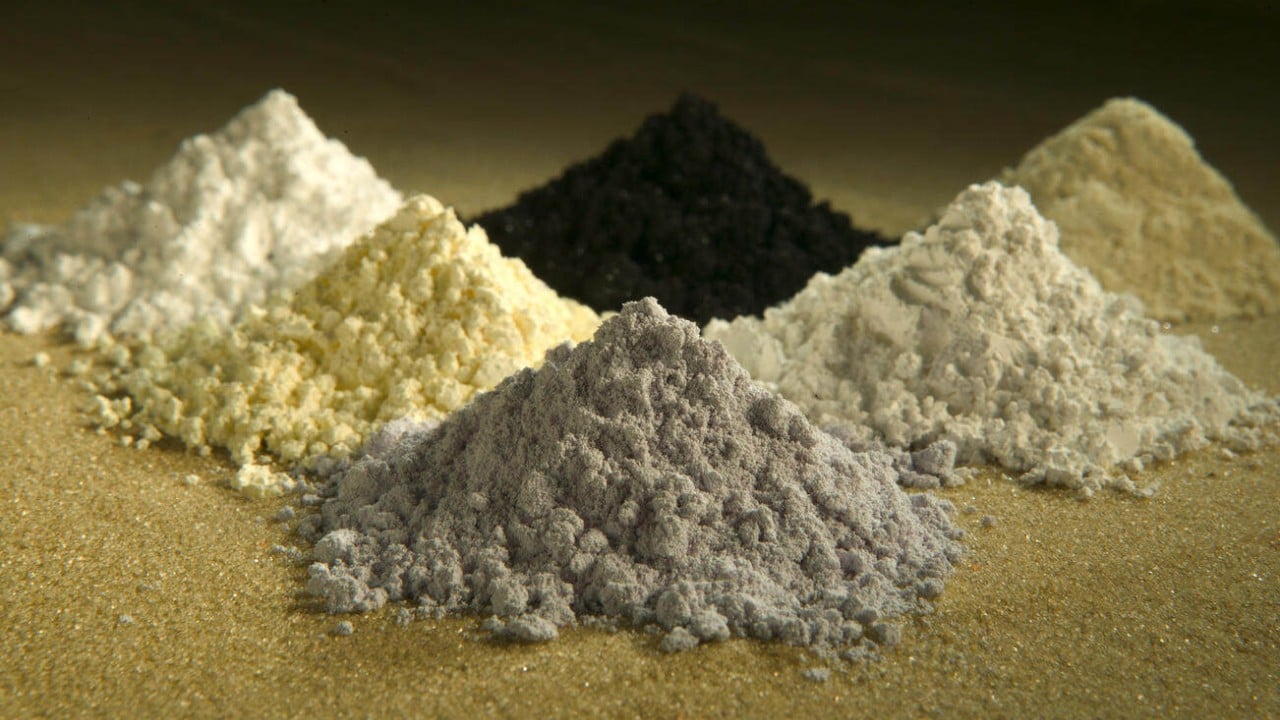
Elements like Neodymium ($\text{Nd}$), Praseodymium ($\text{Pr}$), and Dysprosium ($\text{Dy}$) are the lifeblood of modern hardware. Without them, you cannot build the lightweight, highly efficient synchronous motors required for modern electric vehicles or advanced robotics.
[Official Chinese Mines] ---> [State Processing Centers] ---> [High Tariffs/Strict Export Quotas] ---> [Expensive Legal Tech Supply Chain]
                                      |
                                      v (Leakage)
                             [Unregulated Processing] ----> [Black/Gray Market Channels] ------> [Discounted Global Tech Manufacturing]
Imagine a scenario where a Japanese tier-one automotive supplier needs five metric tons of high-purity Neodymium-Praseodymium oxide to meet a quarterly delivery deadline for an automotive client. If they buy through the official, state-sanctioned channels, they face heavy regulatory scrutiny, export compliance delays, and a premium price tag that erases their manufacturing margins.
Alternatively, they can work through an intermediary network that sources "un-ticketed" material—mined from illegal, unregulated operations in southern China or routed through porous borders in Southeast Asia—and documentation is forged to make the material look like a benign alloy.
The buyers know exactly what they are doing. They get their critical inputs, they preserve their margins, and they pretend their supply chain is perfectly clean because the invoice came from a trading house in Tokyo, Osaka, or Singapore rather than a state-owned enterprise in Baotou.
Dismantling the Rarity Lie
The entire debate around this issue is poisoned by a fundamental misunderstanding of the science. Let us correct a massive piece of misinformation right now: rare earth elements are not rare.
Elements like Cerium and Neodymium are more abundant in the Earth's crust than copper or lead. The term "rare" is an artifact of 19th-century chemistry. The actual bottleneck has absolutely nothing to do with finding the rocks in the ground. The bottleneck is the nightmarish complexity and immense environmental degradation associated with separating and refining these elements into usable chemical purities.
To extract a single kilogram of pure Dysprosium, you must process tons of toxic, radioactive ore containing Thorium and Uranium. This requires thousands of stages of liquid-liquid solvent extraction, utilizing massive volumes of highly corrosive acids.
China did not achieve its monopoly through some geological miracle. It achieved it because for thirty years, Western nations chose to outsource the horrific environmental externalities of chemical refining to Chinese provinces like Jiangxi and Inner Mongolia. Western environmental regulations made domestic processing economically impossible.
Now, Western politicians preach the gospel of "friend-shoring" and "de-risking." They pass pieces of legislation like the European Critical Raw Materials Act or the U.S. Inflation Reduction Act, pouring billions of subsidies into local mining projects.
But building a mine is useless if you still have to ship the raw concentrate back to China to be refined. The West has built plenty of mines, but it has almost zero operational capacity for the high-end chemical separation and metallurgy required to turn those minerals into actual industrial magnets.
Why Western Alternatives Fail the Math Test
Let us look at the brutal economic math that the advocates for decoupling refuse to acknowledge.
A modern, environmentally compliant rare earth separation facility built in North America or Europe faces capital expenditures that are roughly three to five times higher than a comparable facility built in China. Furthermore, the operational expenses—driven by labor costs, hazardous waste disposal, and strict environmental compliance—make the final product uncompetitive on the open market.
Consider the following structural cost comparison for processing heavy rare earths:
| Cost Factor | Chinese State-Backed Facility | Western Independent Facility |
|---|---|---|
| Permitting & Environmental Alignment | Accelerated (Months) | Protracted (5–10 Years) |
| Waste Water Treatment Cost per Ton | Minimal/Subsidized | Exceptionally High |
| Capital Expenditure ($ per annual ton) | Base Rate ($X$) | $3X$ to $5X$ |
| Regulatory Compliance Overhead | Low to Moderate | High/Continuous |
When a Western company builds a subsidized processing plant, they find out very quickly that their end product costs 40 to 60 percent more than the Chinese equivalent.
Who pays that premium? The consumer electronics brand? The automotive manufacturer? No. They refuse to pay it because their customers will not tolerate a massive price hike for an electric vehicle or a smartphone just because the magnets inside were refined in Texas or Australia instead of Ganzhou.
So what happens? The supply chain reverts to water running downhill. It finds the path of least economic resistance. And that path leads directly back to the Chinese gray market. The smuggling of rare earths is the inevitable economic release valve for a global tech industry that demands cheap components while pretending to adhere to ethical sourcing standards.
The Real Target of Beijing's Crackdown
When Chinese security agencies arrest foreign nationals for smuggling these materials, they are not just stopping a couple of trucks or cargo containers. They are sending an explicit message to foreign boardrooms: the era of the wink-and-nod supply chain is over.
Beijing is currently consolidating its entire rare earth sector under massive, state-directed conglomerates like the China Rare Earth Group. This consolidation is designed to eliminate internal competition, completely eradicate illegal mining operations, and enforce absolute control over the global pricing mechanism.
By eliminating the gray market, China forces Western and Japanese buyers back into the official system. This means foreign companies must accept:
- Higher, state-mandated pricing.
- Complete transparency regarding where their components are going and what technologies they are being used to build.
- Vulnerability to sudden, targeted export restrictions whenever geopolitical tensions flare over Taiwan, the South China Sea, or semiconductor trade policies.
The black market was the only thing giving Western manufacturers a buffer against China’s official economic statecraft. By choking off these unofficial channels, Beijing is trapping global manufacturers inside the legal, regulated cage they built.
Stop Asking the Wrong Questions
Procurement departments and market analysts are asking the wrong questions. They are asking: How do we secure alternative supply chains that bypass China entirely?
That question is a delusion. You cannot bypass a country that has a thirty-year head start in materials science, chemical engineering, and infrastructural scale. You cannot replace China’s processing capacity in a three-year corporate strategy cycle, no matter how many government grants you receive.
The honest question companies must ask themselves is far more painful: Are we willing to pay double for our hardware components to guarantee true supply chain independence?
If the answer is no—and based on every quarterly earnings report I have ever reviewed, the answer is a resounding no—then companies must stop designing strategies based on political fantasy. They must accept that their high-tech products are inextricably bound to Chinese industrial policy.
The arrest of these Japanese nationals is a stark reminder that the global tech industry's clean, compliant image is an architectural facade. If you remove the gray market, the numbers do not work, the factories stop running, and the transition to a high-tech future grinds to a halt. The illusion of independence has fractured, and no amount of corporate public relations can piece it back together.