The steel hull of a Panamax tanker is roughly an inch thick. That is all that separates sixty million gallons of crude oil from the salt-heavy depths of the Strait of Hormuz. On the bridge of such a vessel, the air smells of ozone and burnt coffee. It is a quiet, rhythmic place until the radio crackles with a voice that shouldn't be there, or a radar screen blips with the signature of a fast-attack craft that wasn't there thirty seconds ago.
This is not a theoretical war room exercise. It is the lived reality of the merchant mariners who navigate the world’s most precarious maritime alleyways. While politicians in Washington and Tehran exchange threats that echo through marble halls, the actual weight of those words falls on the shoulders of sailors who know that a single spark in a narrow channel can rewrite the global economy overnight.
The current standoff between the United States and Iran has moved beyond the usual chest-thumping. We are witnessing a shift from sporadic harassment to a systematic preparation for a total maritime blockade. It is a chess match played with destroyers and suicide drones, where the board is a series of "choke points" that function as the jugular veins of modern civilization.
The Invisible Grip
Imagine the global economy as a human body. The ports are the organs, and the shipping lanes are the arteries. When those arteries are squeezed, the body doesn't just slow down. It begins to panic.
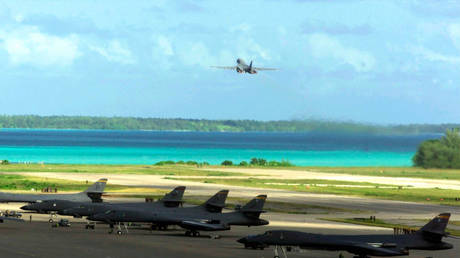
The United States military is currently positioning assets to do more than just "monitor" Iranian waters. The strategy is moving toward a functional blockade of Iranian ports—a move designed to starve the regime of its primary export revenue. But a blockade is a blunt instrument. It is an act of war in everything but name. To pull it off, the U.S. Navy relies on a massive presence in the Persian Gulf, a fleet that serves as a floating fortress.
But Iran has its own playbook.
Tehran’s counter-threat isn't just about defending its own shores. It’s about reaching out and touching the ports of its neighbors. If Iran can’t export, they’ve made it clear: no one else will either. They aren't looking to win a traditional naval battle against a superpower. They are looking to make the cost of doing business in the Middle East so high that the world begs for the blockade to end.
Consider the hypothetical case of the MV Serenity, a Japanese-owned tanker carrying fuel to Europe. In this escalating environment, the Serenity isn't just a ship; it’s a hostage. It doesn't take a fleet of battleships to stop it. A swarm of small, explosive-laden boats or a few well-placed naval mines can turn a routine transit into a catastrophe. When the insurance premiums for these vessels spike by 400 percent in a week, the blockade is already working, even if a single shot hasn't been fired.
The Geometry of Fear
The Strait of Hormuz is only 21 miles wide at its narrowest point.
Shipping lanes in the strait are just two miles wide in either direction. If you stand on the deck of a carrier, the Iranian coastline looks close enough to touch. This proximity creates a terrifying tactical reality. The U.S. Navy’s sophisticated Aegis combat systems are designed to track hundreds of targets from miles away. But those systems were built for the open ocean. In the cramped quarters of the Gulf, reaction times are measured in heartbeats.
A drone launched from a hidden coastal battery can reach its target before the alarms on a destroyer even finish their first cycle. This is the asymmetrical advantage Iran leans into. They don't need a thousand-foot aircraft carrier. They need a hundred "martyr boats" and a stockpile of cheap, effective missiles.
The U.S. response has been to increase the density of its "ghost fleet"—unmanned surface vessels that act as eyes and ears across the water. These are sleek, silver craft that skim the waves without a single human soul on board. They use AI to detect patterns in the water, looking for the telltale wake of an Iranian speedboat or the subtle shift in current that suggests a newly laid mine.
Yet, there is a fundamental human tension here. A machine can identify a threat, but it cannot weigh the geopolitical consequences of pulling the trigger. That burden still sits with a twenty-two-year-old sonar technician in a darkened room, squinting at a screen and wondering if the contact they’re seeing is a fishing boat or a weapon.
The Quiet Suffocation
Back on land, the stakes of this maritime maneuvering translate into a different kind of pressure. For the average Iranian citizen, the threat of a blockade isn't about naval glory. It’s about the price of medicine and the availability of grain.
A blockade of Iranian ports like Bandar Abbas doesn't just stop oil from going out; it stops the world from coming in. When the U.S. Navy patrols these waters, they are effectively turning off the faucet of a nation's lifeblood. It is a slow, grinding form of pressure. It doesn't have the cinematic explosion of a missile strike, but its impact is arguably more devastating over time.
This is where the "human-centric" narrative often gets lost in the headlines. We talk about "projecting power" and "deterring aggression," but we rarely talk about the dockworker in Dubai who watches the horizon with growing dread, or the truck driver in Bandar Abbas who can no longer find spare parts for his rig because the shipping containers are backed up in a port three countries away.
The invisible stakes are the quiet conversations in boardrooms in London and Singapore. Cargo owners are rerouting ships around the Cape of Good Hope, adding weeks to voyages and thousands of tons of carbon to the atmosphere. This isn't just a regional spat. It is a tectonic shift in how the world moves its goods.
The Shadow of the Sabotage
In the shadow of the official military movements lies a darker, more ambiguous layer of conflict: the shadow war.
Over the last few years, tankers have been "limpet mined" while at anchor. GPS signals have been spoofed, leading ships into hostile waters without the captains ever realizing they’ve veered off course. This is the new frontier of the blockade. You don't need to park a destroyer in the harbor if you can convince the world's shipping computers that the harbor is a ghost.
The U.S. military is currently engaged in a massive cyber-maritime effort to counter this. They are trying to build a digital "dome" over the Gulf, ensuring that the data flow remains as secure as the physical water. But in the world of electronic warfare, every shield eventually meets a sword that can pierce it.
The threat from Tehran to "close" Mideast ports isn't just about physical barriers. It’s about the psychological blockade. If they can prove that no port in the region—whether it’s in Saudi Arabia, the UAE, or Kuwait—is truly safe from their reach, they have won a strategic victory. They are telling the world that the price of U.S. protection is constant instability.
The Weight of the Water
There is a specific kind of silence that happens on a ship when the engines are cut. It is heavy. It is expectant.
Right now, the entire Persian Gulf is in that state of suspended animation. The U.S. is poised. Iran is threatening. The world’s economy is holding its breath.
We often think of history as a series of grand events, but it is actually a series of small, high-stakes moments. It’s the hand of a captain on a throttle. It’s the finger of a drone operator hovering over a button. It’s the calculations of an oil trader in Manhattan who decides that the risk of a "choke point" failure is finally too high to ignore.
The blockade isn't just a military maneuver; it is a test of will. It is a gamble that the other side will blink first before the pressure of the closed sea becomes too much to bear.
In the end, the sea doesn't care about borders or blockades. The water continues its tide, indifferent to the steel behemoths that sit upon it. But for those whose lives are tied to the movement of those ships, the blue expanse of the Gulf has become a minefield of uncertainty. The invisible stakes have never been higher, and the cost of a mistake has never been more permanent.
The ocean remains wide, but the world is getting smaller. We are finding out, in real-time, just how fragile our global connections truly are when the people holding the keys to the gates decide it’s time to lock the doors.