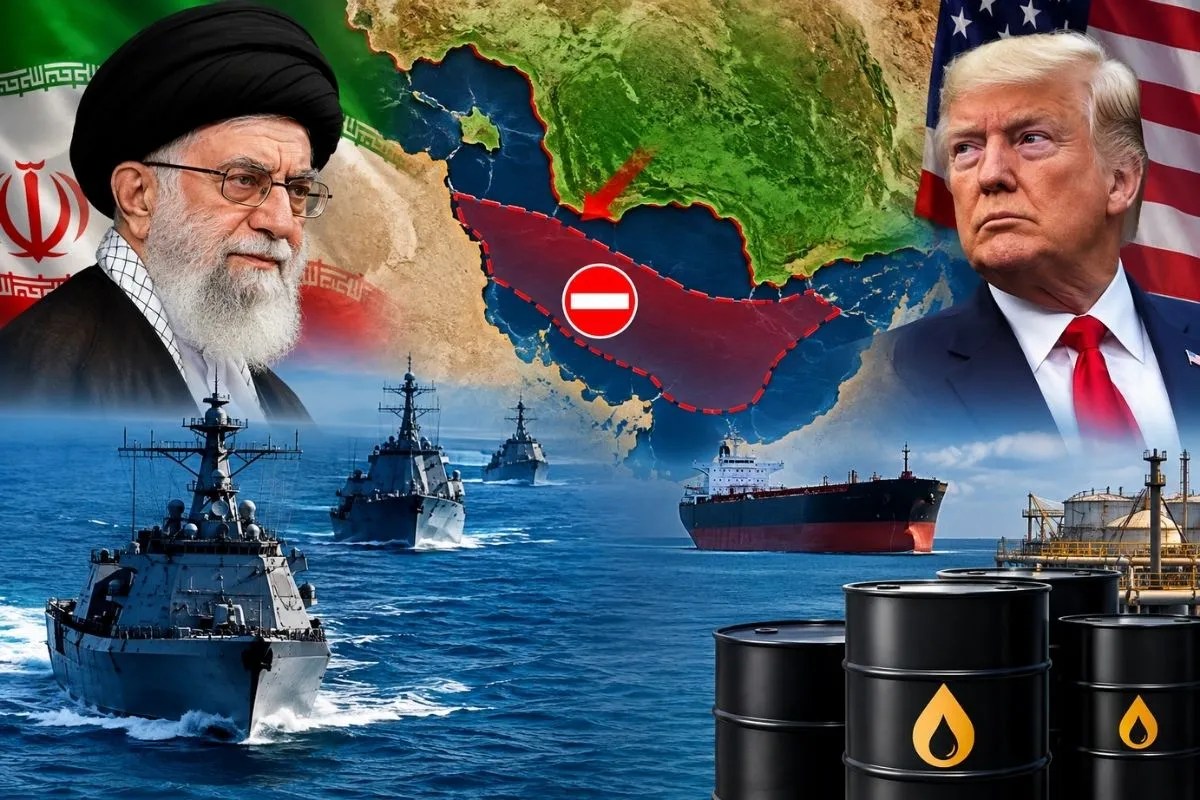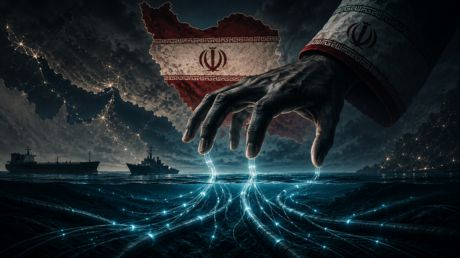
The global internet is not an ethereal cloud; it is a physical network anchored to the ocean floor by roughly 600 submarine fiber-optic cables. While public attention historically centers on the Strait of Hormuz as an energy transit artery, a far more acute vulnerability lies in the shallow seabed of this maritime corridor. Iran possesses the asymmetric capability to severely disrupt international data flows, but it cannot "cut off" global internet access. Instead, the strategic risk is defined by a highly concentrated, localized single point of failure that governs transcontinental data traffic between Europe, East Africa, and South Asia.
To evaluate the operational reality of this threat, the problem must be deconstructed into three analytical pillars: kinetic vulnerability mechanics, network topology elasticity, and the economic cost function of regional data isolation. Also making headlines lately: The Architecture of Technological Sovereignty: A Structural Analysis of Cross-Border Bloc Integration.
The Triad of Kinetic Vulnerability
Subsea cables are precision-engineered strands of glass and steel no thicker than a garden hose. They are optimized for data transmission efficiency rather than military survivability. In the shallow, constricted waters of the Persian Gulf and the Strait of Hormuz—which narrows to just 21 nautical miles—these cables are highly exposed to interdiction. Iran’s technical and military capability to execute targeted infrastructure degradation relies on three specific operational mechanisms:
- Commercial Anchor Dragging and Trawling Exploitation: Nearly 75 percent of all global subsea cable damage is caused accidentally by fishing equipment and maritime anchors. Iran can exploit this baseline vulnerability through deniable, gray-zone operations. Commercial vessels or state-controlled fishing fleets operating under non-attributable flags can deploy weighted, reinforced maritime plows to systematically sever cable lines in shallow choke zones. The precedent for this mechanism was demonstrated when a disabled commercial vessel dragged its anchor in the Red Sea, severing three major subsea cables and instantly knocking out 25 percent of the data traffic between Asia and Europe.
- Submersible Sabotage and Diver Interdiction: The Islamic Revolutionary Guard Corps Navy (IRGCN) operates a fleet of midget submersibles, including the Yono-class, alongside specialized clearance diving units. Because the average depth of the Strait of Hormuz is only 50 meters, deep-sea saturation diving equipment is unnecessary. Shallow-water deployment allows divers or unmanned underwater vehicles (UUVs) to place localized explosive charges or mechanical cutting tools directly onto cable housings.
- Regulatory and Legal Strangulation: Beyond physical destruction, Iran has introduced legislative frameworks to institutionalize its control over infrastructure traversing its territorial waters under the United Nations Convention on the Law of the Sea (UNCLOS). By demanding annual licensing fees, permit renewals, and the exclusive right for Iranian firms to manage maintenance, Tehran can effectively block international repair vessels from entering the corridor during a crisis.
Network Topology and the Alternative Routing Bottleneck
The claim that a localized disruption could permanently blind the global internet ignores the fundamental architectural law of IP networking: dynamic routing. If a path is severed, protocols automatically redirect packet traffic along alternative topological paths. The systemic danger is not total disconnection, but rather a severe capacity and latency crisis caused by structural bottlenecks. Further information into this topic are explored by Ars Technica.
                  [ Western Europe Hubs ]
                       /          \
                      /            \
          (Red Sea Corridor)    (Terrestrial Bridges)
                    /                \
                   /                  \
[ Strait of Hormuz Chokepoint ]    [ Trans-Siberian / Central Asian Paths ]
                   \                  /
                    \                /
                  [ South Asia / APAC Hubs ]
The transit corridor linking the Red Sea to the Gulf of Oman handles approximately 15 to 30 percent of total international internet traffic. Major cable systems like FALCON and the Gulf Bridge International (GBI) connect the Gulf Cooperation Council (GCC) states directly through these waters. When these pathways are compromised, data must be rerouted through three primary alternative backbones, each presenting distinct scaling limitations.
The first alternative is the Trans-Siberian and Central Asian terrestrial fiber networks. While these land-based lines offer low latency between East Asia and Europe, they possess rigid capacity ceilings and are subject to severe geopolitical gatekeeping by Russia and China. This creates a structural bottleneck for Western enterprise traffic.
The second option is the Cape of Good Hope maritime route. Rerouting data entirely around the African continent avoids Middle Eastern geopolitical flashpoints but introduces a major latency penalty. This path adds thousands of kilometers of physical fiber distance, increasing round-trip time (RTT) by 30 to 50 milliseconds. This latency inflation is catastrophic for high-frequency financial trading systems and real-time cloud synchronized industrial applications.
The third alternative is Low Earth Orbit (LEO) satellite constellations. While LEO networks provide resilient backup connectivity for localized installations, they lack the aggregate capacity required to absorb transcontinental backhaul traffic. A single modern subsea cable system can carry over 200 terabits per second (Tbps); the entire operational bandwidth of existing LEO constellations cannot scale to replace a multi-cable failure across an entire metropolitan or regional economy.
The Economic Cost Function of Digital Isolation
A coordinated disruption of subsea infrastructure within the Persian Gulf corridor triggers an immediate, compounded economic shock. This damage functions on two distinct vectors: financial transaction friction and automated industrial blindness.
The global financial architecture relies on subsea infrastructure to process an estimated $10 trillion in daily transactions. If the fiber systems feeding the financial centers of Dubai, Manama, and Doha are cut, international banking networks face instantaneous liquidity freezes and settlement failures. Cleared transactions cannot execute in real time, creating an immediate capital logjam that ripples through European and Asian clearinghouses.
Concurrently, the global energy sector faces operational degradation. Modern oil extraction, liquefied natural gas (LNG) processing, and maritime logistics rely on continuous, cloud-synchronized digital control systems. Severing the primary data arteries blinds these automated supply chains. While physical oil tankers might still pass through the Strait of Hormuz, the digital infrastructure required to coordinate their loading, scheduling, insurance validation, and automated safety systems becomes paralyzed. The result is a dual-shock crisis: the simultaneous constriction of physical energy assets and the digital infrastructure that manages them.
The Asymmetric Vulnerability Paradox
A critical limitation of Iran's leverage is the architectural asymmetry of its own network architecture. The domestic internet infrastructure of the southern GCC states—specifically the UAE, Qatar, and Bahrain—is heavily integrated into the global maritime cable matrix, hosting extensive hyperscale data centers and cloud zones.
In contrast, Iran’s digital economy is structurally decoupled from the Western internet backbone. Decades of international sanctions and the development of the domestic National Information Network (NIN) have forced Iran to rely primarily on terrestrial fiber connections routed northward through Russia, Turkey, and Azerbaijan.
Consequently, a total degradation of the Persian Gulf maritime cable corridor inflicts asymmetric financial damage. The southern Gulf nations and their international trading partners face severe economic disruption, while Iran’s internal digital architecture remains insulated from the physical blast radius. This structural imbalance transforms subsea cables into a highly effective tool for asymmetric deterrence.
Strategic Mitigations and Resiliency Architecture
To counter this vulnerability, international telecommunications consortiums and regional states are shifting capital away from purely maritime architectures toward hybrid infrastructure.
Traditional Path:  [Subsea Marine Corridor] -> [High-Risk Maritime Chokepoint] -> [Landing Station]
Resilient Hybrid:  [Subsea Segment] -> [Terrestrial Transit Bridge] -> [Diversified Sea Landing]
Network operators are prioritizing terrestrial transit bridges that cross the Arabian Peninsula overland. Systems like the SEA-ME-WE 6 project are designed to bypass high-risk maritime zones by landing on the eastern coast of Saudi Arabia and utilizing national fiber backbones to transit landward to the Red Sea. This terrestrial routing eliminates the single point of failure inherent in narrow waterways, though it exchanges maritime exposure for sovereign political risk across the transit states.
Simultaneously, the International Cable Protection Committee (ICPC) and regional security coalitions are deploying advanced threat-detection capabilities. Specialized maritime patrol assets and acoustic monitoring arrays are being integrated near cable landing stations to identify unauthorized loitering by commercial or military vessels. This data allows operators to pre-emptively alert repair fleets and prepare dynamic traffic rerouting protocols before a physical breach occurs.
The strategic play for enterprise organizations and sovereign entities is clear: infrastructure investments must prioritize geographic path diversity. Relying on the lowest-latency maritime route through geopolitical chokepoints is no longer a viable risk-adjusted strategy. True network resilience requires a diversified architecture that balances subsea capacity with hardened terrestrial paths, accepting higher operational costs in exchange for structural survivability.