The financial press is running the exact same playbook again.
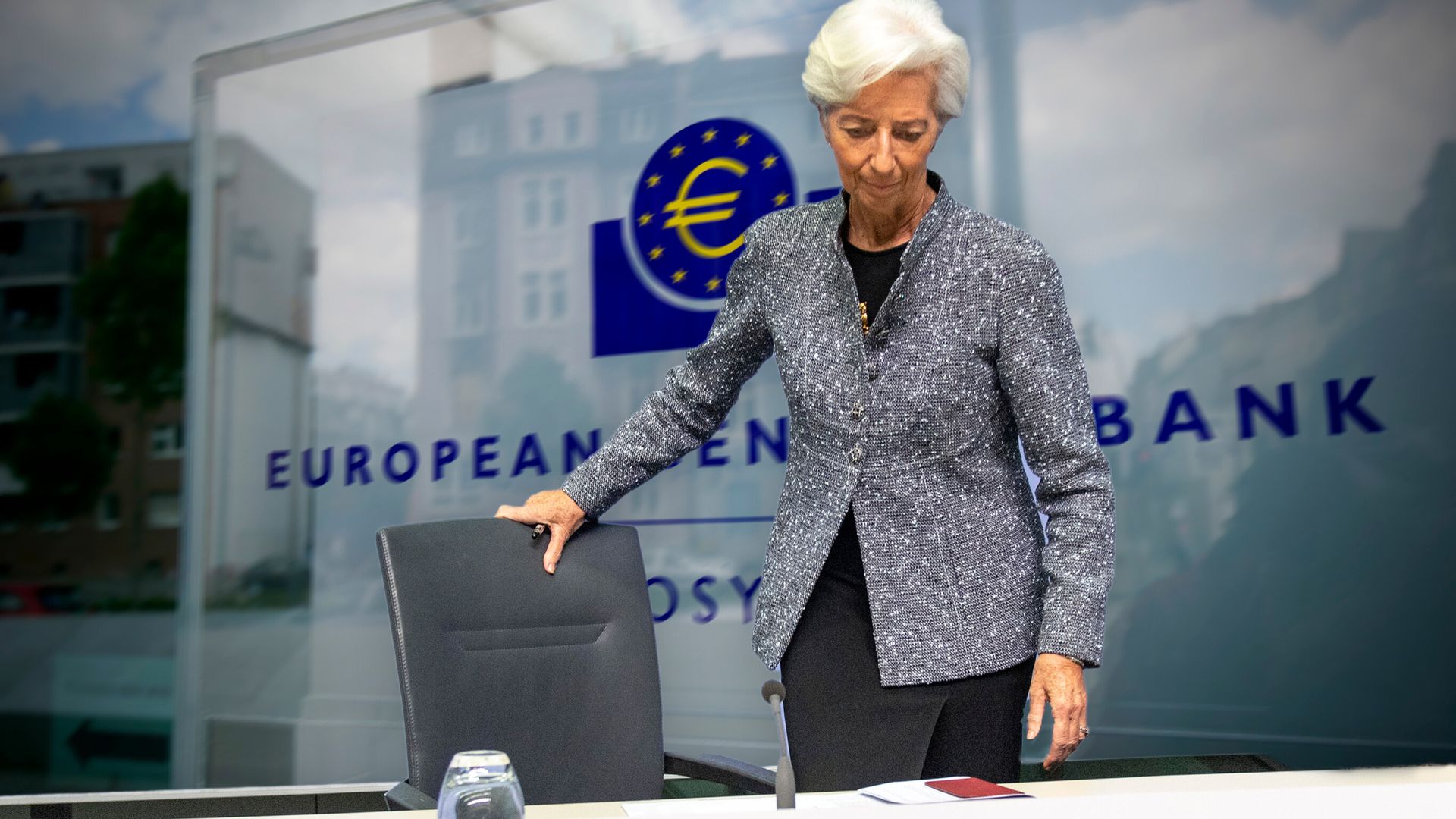
The headline machine is spun up, political pundits are reading tea leaves, and market commentators are hyperventilating over the prospect of Christine Lagarde stepping down from the European Central Bank to run for the French presidency. The standard narrative claims that a Lagarde exit would throw Frankfurt into chaos, trigger a monetary policy crisis across the Eurozone, and signal a seismic shift in Paris.
That narrative is completely wrong.
Focusing on whether Lagarde stands for election in France misses the underlying mechanics of institutional power in Europe. Central bankers do not drive macroeconomics through personal charisma; they are bound by structural constraints, balance sheet realities, and institutional momentum that no single politician—or former politician—can single-handedly alter.
The Technocrat Illusion: Leadership vs. Structure
The consensus assumes that monetary policy is an exercise in individual leadership. Change the figurehead at the top of the ECB, the logic goes, and the trajectory of rates, quantitative tightening, and inflation targets changes overnight.
I spent years analyzing central bank policy from the trading floor, watching institutions attempt to steer economies while pretend-managing the press. Here is the uncomfortable truth: the ECB is an institutional super-tanker. The person at the helm turns a wheel, but the rudder is welded to the structural reality of 20 distinct national economies bound by a single currency.
Lagarde’s background was always political, not technocratic. She is a lawyer and politician who took the top job in Frankfurt after leading the IMF. When she took office, critics warned she lacked the economic credentials of Mario Draghi or Jens Weidmann. Yet, ECB policy during her tenure didn't diverge wildly from institutional necessity. Why? Because the Governing Council—and more importantly, the economic engine room in Frankfurt—sets the parameters within which any president must operate.
If Lagarde steps down tomorrow to re-enter French politics, the ECB will not suddenly pivot. The yield spreads between Italian BTPs and German Bunds will still be dictated by structural fiscal imbalances, not who sits in the president's chair on Sonnemannstraße.
Why the French Presidency Myth Misunderstands Both Paris and Frankfurt
The speculation around Lagarde’s political ambitions in Paris relies on a fundamentally flawed premise: that a former ECB chief is an automatic frontrunner in French presidential politics.
Look at the mechanics of French elections:
- French voters consistently demonstrate deep skepticism toward international technocrats and globalist institutions.
- The domestic political landscape in Paris is driven by Purchasing Power (pouvoir d'achat), immigration, and public service delivery—areas where central banking achievements offer zero political capital.
- Transitioning from the quiet corridors of Frankfurt to the retail political combat of France’s two-round voting system is a brutal descent into partisan warfare.
To argue that Lagarde leaving the ECB early guarantees a successful presidential run ignores the recent history of French political realignment. Technocratic polish does not win votes in the rust belt of northern France or the turnout-critical suburbs of Paris.
The Real Risk Nobody Is Pricing In
While commentators obsess over who sits in the ECB presidency or who occupies the Élysée Palace, they ignore the true vulnerability facing European markets.
The real threat to Eurozone stability is not leadership turnover. It is the widening divergence between European fiscal policy and monetary mechanics.
Governments across the bloc are running persistent deficits while expecting the ECB to keep borrowing costs manageable without rekindling inflation. No combination of Lagarde remaining in Frankfurt or returning to Paris fixes this structural contradiction.
Consider the operational reality:
- Fiscal Fragmentation: Member states operate under radically different debt-to-GDP ratios while sharing a uniform interest rate environment.
- Transmission Failure: Rate decisions by the ECB impact borrowing costs in Spain or Greece differently than in Germany or the Netherlands, regardless of who reads the statement at the press conference.
- The Balance Sheet Trap: Trillions of euros in assets accumulated during years of quantitative easing cannot be unwound without exposing sovereign debt fragility.
These are hard mathematical realities. They do not bend to political ambition, media speculation, or executive resignations.
Stop Reading the Gossip. Look at the Balance Sheets.
Market participants wasting time calculating the political odds of a Lagarde candidacy are looking at the wrong metrics entirely.
If you want to evaluate European market stability, ignore the political rumor mill and monitor three specific indicators:
- The spread between 10-year Italian government bonds and 10-year German Bunds.
- Real wage growth across the core Eurozone economies relative to core inflation rates.
- The pace of balance sheet reduction under the ECB’s Asset Purchase Programme (APP) and Pandemic Emergency Purchase Programme (PEPP).
Whether Christine Lagarde stays at the ECB, moves back to Paris, or retires from public life altogether, those numbers dictate economic reality. The rest is political theater designed to fill airtime.