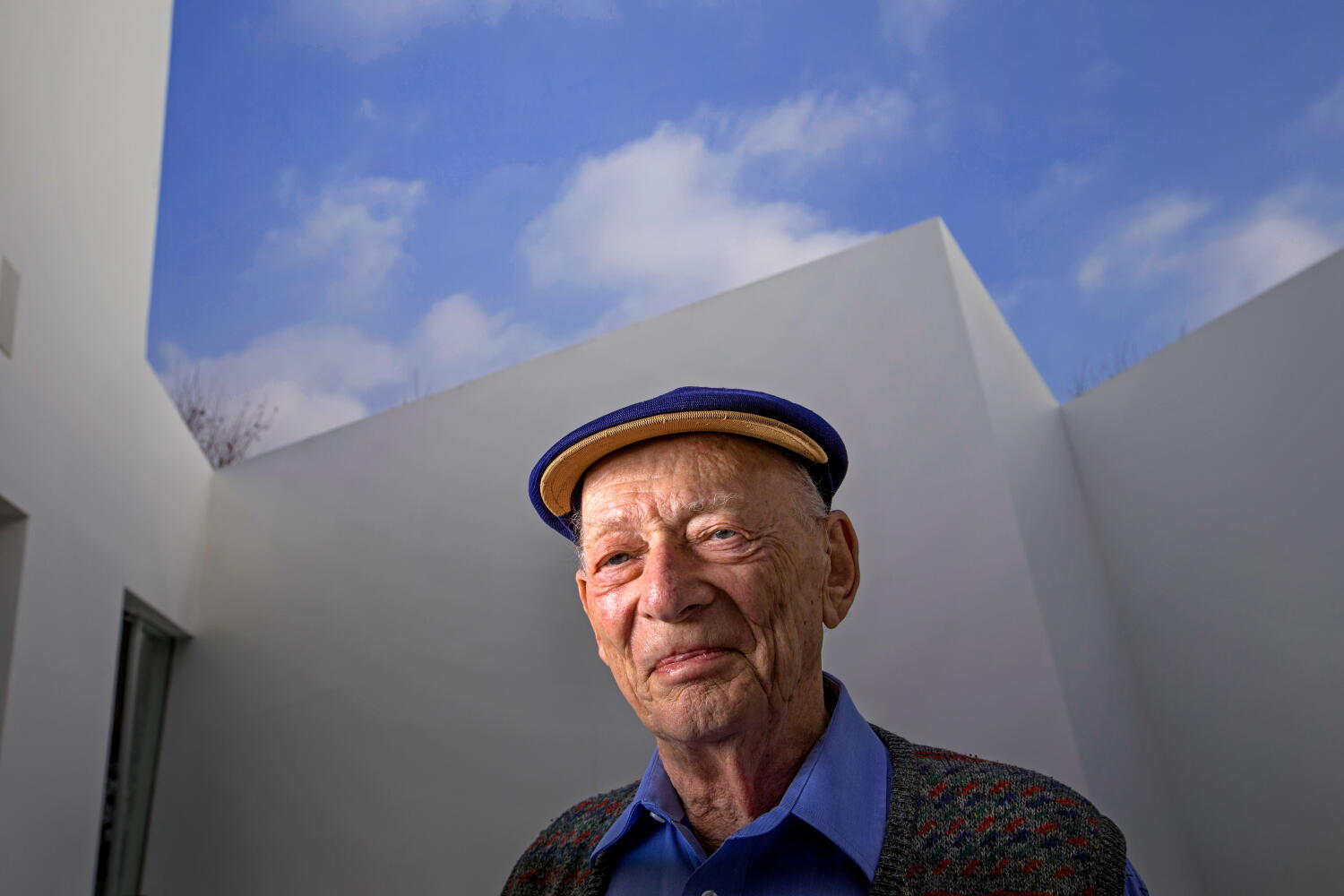
Standard obituary clichés love a neat label. "Acclaimed interpreter of Samuel Beckett." Clean. Tidy. Easy to file away between a headline about a lost TV sitcom star and a roundup of stage trivia.
Except that label is lazy. Worse, it gets the craft backward.
Alan Mandell lived ninety-eight years and spent decades on stages and screens across North America and Europe. Calling him primarily a Beckett interpreter makes him sound like a specialized technician—someone who showed up with a tuning fork for existential gloom, hummed a few notes of Waiting for Godot or Endgame, and packed up when the curtain fell. That framing mistakes a symptom of rigor for a narrow cage.
Beckett didn't want "interpreters" in the mushy, romantic sense of actors pouring personal angst over spare lines. Beckett wrote rhythmic scores packed with pauses, repetitions, physical beats, and deadpan timing. If you bring sloppy emotional indulgence to Beckett, the text collapses. If you bring precision, stillness, and ferocious attention to silence, the text breathes. Mandell understood that discipline—and that exact discipline is what made him capable of everything else he did, from Shakespeare to contemporary drama to screen work.
Most people ask the wrong question when an actor of Mandell's longevity dies. They ask how an artist stays relevant for decades without becoming a blockbuster name. That question assumes visibility equals mastery. It doesn't. In theater and screen work alike, fame measures distribution and marketing reach; craft measures what happens when a room full of strangers stops coughing.
The "Specialist" Trap in Modern Theater
Walk into enough rehearsal rooms or read enough arts coverage and you will see the same mistake repeated over and over. A performer nails one demanding playwright or one recognizable mode, and critics immediately stamp a permanent tag across their forehead.
I have watched regional theaters burn through grant money and audience goodwill by casting "specialist" actors who only know how to perform their own reputation. Give a performer a rigid identity too early—the gritty realist, the classical declaimer, the avant-garde minimalist—and they start acting as the label rather than listening to the scene in front of them.
Real theatrical mastery works the opposite way. It is structural, not decorative.
Consider two terms people routinely confuse in acting discussions: interpretation and execution. Interpretation is how you read a text's subtext, ironies, and thematic pressure points. Execution is the physical and vocal command required to deliver a beat cleanly eight times a week without blowing out your instrument or coasting on habit. Plenty of actors have big ideas about what a play "means." Far fewer can hold a silence for four beats while keeping every muscle alert and every thought sharp.
Samuel Beckett is famous precisely because he strips away cheap psychological excuses. A character in Beckett rarely gets a neat backstory monologue explaining why they feel miserable. You cannot hide behind "my character is going through a lot." You have the rhythm, the physical constraints, the humor buried inside bleakness, and the exact weight of the words on the page.
When an actor thrives in that environment, it isn't because they have a monopoly on despair. It is because they have timing, restraint, and stamina. That is why reducing Mandell solely to "Beckett interpreter" shortchanges both the playwright and the performer. Beckett isn't a niche detour from serious acting; Beckett is a stress test for fundamentals.
Silence Isn't Empty Space
Casual theatergoers often think quiet moments in a play are pauses for reflection. On stage, dead air is dangerous. If an actor goes slack during a silence, the audience checks out mentally and starts looking at the exit signs.
Effective stage silence has tension. It carries unfinished business, physical readiness, and subtext that hasn't been spoken yet. Mandell's reputation around Beckett's work—including his involvement with Beckett's own directing and productions—matters not because it turns him into a museum piece, but because Beckett cared obsessively about rhythm, pacing, and exactness.
Think about the difference between a musician reading a score accurately and a cover band improvising over a backing track. Beckett wrote with musical exactness. Actors who treat spare text as a blank canvas to project their own moods usually flatten the comedy and turn tragedy into whining. Actors who respect the architecture find surprising warmth, dry wit, and human grit inside sparse lines.
Why Longevity Without Hollywood Fame Confuses People
Whenever a veteran stage and screen actor passes away in their nineties, online comment sections fill up with two predictable reactions. One group asks why they weren't bigger household names. Another group treats obscurity as proof of noble martyrdom.
Both reactions miss how the industry actually functions.
Hollywood casting and mainstream visibility reward bankability, algorithm-friendly personas, and youth-skewed marketing cycles. Stage craft—especially classical repertory, ensemble theater, and demanding modern drama—rewards endurance, vocal reliability, adaptability across decades, and the willingness to work in rooms where nobody is handing out trailers.
A ninety-eight-year lifespan in this profession doesn't happen by accident. Staying active across generations requires adapting your physicality as your body ages while keeping your mind razor-sharp. In your thirties, you can sometimes power through a role on raw adrenaline and volume. In your seventies, eighties, and nineties, you survive on economy, truth, vocal control, and deep familiarity with how human beings actually behave.
Imagine a scenario where a young actor relies purely on high-energy intensity to carry every scene. At twenty-five, that intensity can look electric. Twenty years later, without precision and restraint, the same approach just looks exhausting. Now imagine a scenario where an actor builds their work around listening, timing, and exact physical choices. As age changes the voice and body, those fundamentals don't expire—they deepen.
That is the practical reality behind long working lives in theater. It isn't romantic myth-making; it is accumulated skill.
Dismantling Common "People Also Ask" Assumptions
When people search for an actor like Alan Mandell, their follow-up questions usually run along familiar grooves. Most of those questions start from shaky premises.
Why is Samuel Beckett considered so hard for actors to perform?
Because Beckett takes away familiar crutches. There is rarely a big emotional catharsis scene where a character shouts their feelings at the back row. Actors have to find humor inside bleakness, maintain strict rhythmic control, and stay completely present when nothing "big" is externally happening. Most actors don't fail Beckett because they aren't sad enough; they fail because they talk too fast, over-explain, or fear stillness.
Does being known for one playwright limit an actor's range?
Only if the actor or the industry lets it. Range isn't proven by doing ten wildly different accents; range is proven by serving whatever a text actually demands without dragging the same habits into every room. Precision in Beckett can sharpen comedy, clarify Shakespeare, and ground gritty contemporary realism. The danger isn't depth in one demanding area—the danger is mistaking a single label for the whole person.
What separates a working veteran actor from a celebrity?
A celebrity is famous for being recognizable; a working veteran is trusted to deliver. Celebrities can carry a project on name value alone for a stretch. Working veterans keep getting called back because directors, writers, and fellow actors know they show up prepared, listen closely, and make everyone else in the scene sharper.
What Heavy Hitters in Drama Actually Demand
Serious dramatic traditions—whether you look at classical theater, mid-century modernism, or rigorous ensemble companies—have always valued craft over posturing. Figures like Samuel Beckett, Harold Pinter, Bertolt Brecht, and Anton Chekhov differ wildly in style and worldview, yet they share one brutal demand: do not fake emotion.
Chekhov hides heartbreak inside mundane domestic banter and missed connections. Pinter builds menace out of polite small talk and sudden shifts in power. Beckett strips the world down to essentials—a road, a tree, an ashcan, a memory—and forces human beings to keep going anyway.
In all of those traditions, sentimentality is the enemy. The moment an actor tries to make the audience feel sorry for a character, the scene curdles. Real weight comes from honesty under pressure: a character trying to keep dignity intact, crack a joke, hold a line, or make sense of a moment that won't sit still.
Mandell's career spanned decades of theater, film, and television work, showing a life anchored in craft rather than chasing spotlight trends. Even when a performer becomes closely associated with a specific body of work, reducing an entire career to one neat headline is a shortcut for writers who don't want to look closer.
The Honest Cost of Being a Craft-First Actor
No contrarian argument is credible if it pretends there are no downsides. Choosing depth, stage discipline, and unflashy excellence over commercial chasing comes with real trade-offs.
First, financial stability is rarely smooth. Theater pay is notoriously uneven, and turning down loud, high-paying, or formulaic work to protect your standards can leave lean stretches. Second, public recognition stays narrower. If your highest standard is getting the room right rather than trending on social media, plenty of people who claim to love "entertainment" won't know your name until an obituary forces them to look you up. Third, typecasting can still bite you even when you have genuine range—if producers see you excel at one demanding style, they may keep offering variations of the same thing.
Those aren't imaginary drawbacks. Any actor who cares about serious work lives with them. Yet knowing the cost makes the choice clearer, not smaller.
How to Actually Judge an Actor's Legacy
If you want to understand what an actor like Alan Mandell contributed, stop counting fame points and start looking at three concrete things:
- Command of timing and silence. Watch whether a performer rushes to fill space or lets a moment land with weight. Anyone can yell a line; holding a beat cleanly takes real control.
- Resistance to cheap sentiment. Notice whether the actor begs for sympathy or plays the truth of the situation straight. Restraint usually hits harder than melodrama.
- Stay-power over decades. Look at whether their work stayed vital across changing eras and mediums rather than peaking in one brief flash and coasting on nostalgia.
Labels are convenient for headlines. Craft is what actually survives on stage. Stop flattening complex careers into single-phrase slogans—pay attention to the work itself.