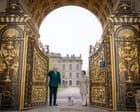
The traditional British stately home is facing an existential crisis disguised as a balance sheet. For generations, estates like Derbyshire’s Chatsworth House—the ancestral seat of the Dukes of Devonshire—have operated on a simple, transactional economic model. Tourists pay steep admission fees to marvel at Baroque painted ceilings and manicured gardens, and that cash flow maintains the crumbling stone facades. But that model is fracturing under the weight of shifting social expectations and a punishing cost-of-living climate.
Chatsworth House recently launched a pilot scheme offering free "community memberships" to local residents who meet specific socio-economic criteria. While presented as a benevolent gesture of community integration, this move is actually a calculated, strategic pivot designed to secure the estate's long-term survival in an era increasingly hostile to inherited wealth. Also making waves in this space: The Brutal Truth About the Drone Defense Cracks at America West Coast Bases.
The Cracking Financial Facade of the English Estate
Running a stately home is a phenomenally expensive business enterprise. Chatsworth, which spans over 35,000 acres and attracts hundreds of thousands of visitors annually, requires millions of pounds in yearly upkeep just to prevent structural decay. Historically, this was funded by agricultural rents and aristocratic endowments. Today, it relies heavily on the commercialization of heritage.
Standard adult tickets to access the house and gardens frequently push past £30. For a working-class family living in nearby industrial towns like Chesterfield or Sheffield, a day trip to Chatsworth is no longer a casual weekend outing. It is a luxury expense. More insights into this topic are covered by TIME.
By pricing out the local population, estates have inadvertently created an uncomfortable geographic and social apartheid. They have become playgrounds for affluent international tourists and wealthy domestic retirees, completely detached from the communities that sit right on their doorsteps.
This creates a distinct political vulnerability. When an institution is viewed as an elite enclave rather than a shared regional asset, it loses its social license to operate. In a political climate where tax exemptions for heritage assets and charitable trusts face growing scrutiny, staying exclusive is a dangerous long-term strategy. The community membership pilot is not just charity. It is a defensive moat built from public goodwill.
Securing the Social License to Operate
To understand why Chatsworth is altering its entry policy, one must look at the changing landscape of land ownership and public access in Britain. The "Right to Roam" movement is gaining significant political traction, with activists demanding greater public access to private green spaces. Large estates are frequently targets of this ire.
+-------------------------------------------------------------+
|               THE MODERN ESTATE SURVIVAL TRIANGLE          |
+-------------------------------------------------------------+
|                                                             |
|                       SOCIAL LICENSE                        |
|                  (Community Access & Goodwill)              |
|                             /   \                           |
|                            /     \                          |
|                           /       \                         |
|                          /         \                        |
|                         /           \                       |
|         FINANCIAL VIABILITY ------- POLITICAL PROTECTION    |
|          (Secondary Spend)          (Tax & Heritage Status) |
+-------------------------------------------------------------+
By proactively identifying low-income postcodes and offering free access, Chatsworth is attempting to neutralize criticism before it turns into policy or protest. They are converting passive neighbors into active stakeholders.
There is also a profound psychological shift at play here. When a local family receives free access to a historic site, their relationship with that space changes fundamentally. They no longer view it as a monument to their historical subjugation by feudal landlords. Instead, it becomes their park, their garden, and their gallery.
This sense of ownership is incredibly valuable to an estate. When a historic house needs planning permission for a controversial commercial development or seeks public funding for a major restoration project, it needs the vocal support of its neighbors. A community that feels valued will defend an estate; an excluded community will happily watch it get taxed out of existence.
The Hidden Economics of Free Admission
Giving away tickets feels like a financial loss on paper. The reality of visitor attractions tells a completely different story.
Primary ticket sales are only one part of the revenue generation engine for a modern heritage business. The real profit margins often lie in secondary spend: the gift shops, the farm shops, the cafes, the ice cream kiosks, and the parking lots.
Consider the mechanics of a typical visit. A family of four saved £80 on admission fees through a community membership program. Because they did not pay to get through the gates, their perceived disposable income for the day increases. They are significantly more likely to buy lunch at the estate cafe, purchase high-margin artisanal goods at the Chatsworth Farm Shop, or buy souvenirs for their children.
Furthermore, free entry drives repeat visits. A paying tourist visits Chatsworth once every few years. A local community member with a free pass might visit twelve times a year, buying a coffee or a snack on every single occasion. Over a twelve-month cycle, the secondary spend of a free member can easily outpace the one-time ticket revenue of a standard visitor. It is a classic loss-leader strategy repurposed for the cultural heritage sector.
The Footfall Multiplier Effect
- Increased Utilization: Maximizes use of the grounds during low-peak weekdays.
- Word-of-Mouth Marketing: Local users become ambassadors, bringing paying out-of-town relatives.
- Operational Efficiency: Keeps seasonal staff consistently utilized rather than dealing with extreme weekend peaks and weekday troughs.
Implementation Hurdles and the Risk of Tokenism
Executing this type of social pivoting is fraught with operational difficulty. The primary challenge lies in distribution and verification. How does a centuries-old estate identify and vet who qualifies for a community membership without creating an insulting, bureaucratic welfare-check system at the ticket booth?
If the qualification criteria are too loose, the estate risks cannibalizing its existing paying customer base. If the criteria are too strict or poorly communicated, the initiative fails to reach the targeted demographics, leaving the estate open to accusations of performing a hollow public relations stunt.
There is also the delicate issue of cultural friction. Stately homes have spent decades cultivating an atmosphere of quiet, curated refinement. Blending distinct socio-economic groups in a single space can sometimes challenge the expectations of traditional, high-paying visitors who expect an exclusive experience for their premium ticket price. Managing this balance requires exceptional operational tact and a total lack of condescension from estate staff.
A Blueprint for Heritage Survival
Chatsworth is not the first major institution to realize that the old financial models are broken, but its high profile makes this pilot a bellwether for the entire heritage sector. If successful, this initiative provides a clear blueprint for other struggling estates across the UK and Europe.
The era of the aristocratic estate operating as an island of insulated wealth is coming to a close. Survival now dictates a radical re-evaluation of what these properties owe to the geographic regions they occupy. True sustainability for historic houses lies not in the pockets of international billionaires or premium ticket holders, but in the deep, reciprocal integration of the estate into the daily lives of the local population.
The estates that survive the next half-century will be those that understand that access is no longer a luxury to be sold, but a currency of mutual survival.