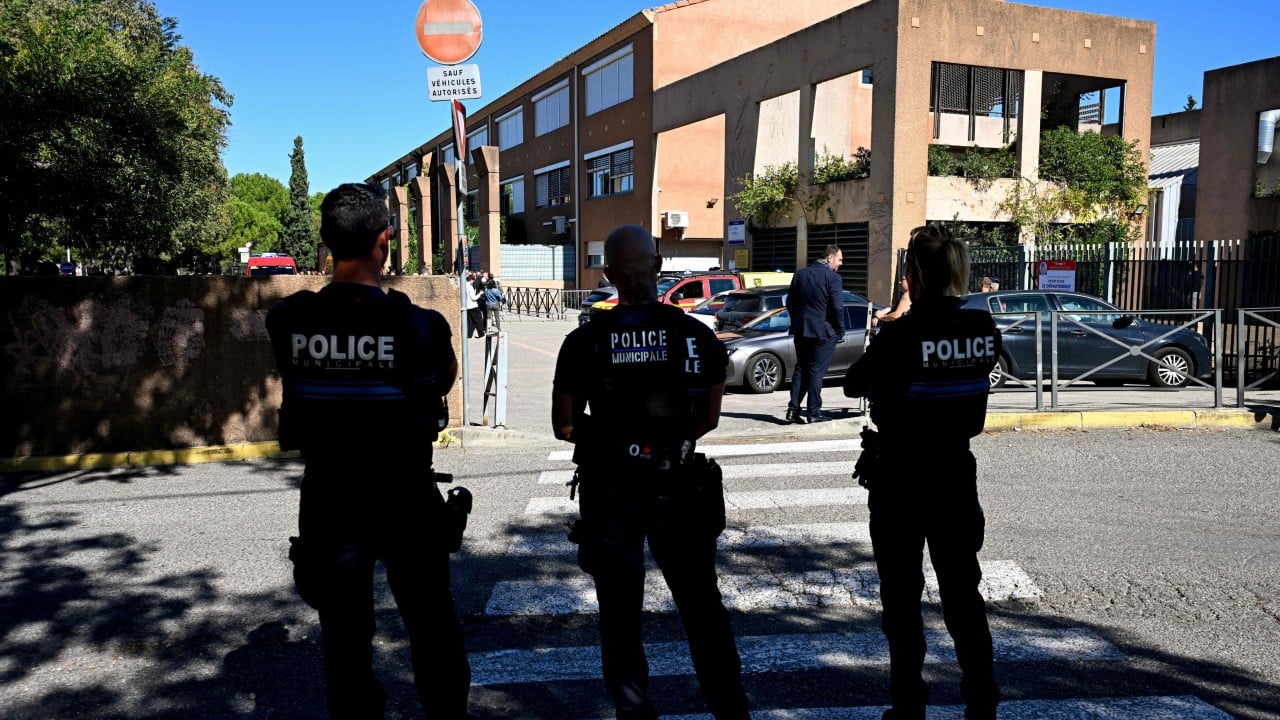
A 14-year-old student stands in a French detention cell, accused of opening fire on a principal and a teacher in an ordinary suburban high school. The incident sent shockwaves through a nation that prides itself on the egalitarian sanctity of its public education system, the Éducation Nationale. For decades, French society viewed American-style campus violence as an imported pathology, a distant horror confined to cable news bulletins across the Atlantic. That illusion shattered the moment a teenager pulled a trigger inside a European hallway.
Yet treating this tragedy as an isolated anomaly misses the larger systemic decay.
When a juvenile acquires a firearm and targets educational authorities, the investigation cannot stop at the suspect's age or the provenance of the weapon. We must examine the institutional pressure cookers that modern schools have become. Educators across France have spent years warning about escalating hostility, chronic understaffing, and the erosion of authority within classrooms. The rhetoric from political leaders often emphasizes republican values and increased security measures, but frontline personnel experience a daily reality of administrative abandonment.
To understand how a child reaches the point of armed violence against educators, we must look at the institutional pipeline.
The Breaking Point of Public Education
French public schools operate under immense bureaucratic centralization. Every curriculum, disciplinary guideline, and budgetary decision trickles down from the Ministry in Paris. This creates a disconnect between administrative theory and classroom reality. Teachers in troubled districts report feeling isolated when handling severe behavioral disruptions. Disciplinary boards move slowly. Support staff dedicated to psychological intervention remain chronically stretched thin.
When regular channels for addressing student crisis fail, frustration festers.
A fourteen-year-old does not wake up one morning and decide to assassinate school administrators without a lengthy accumulation of alienation. The psychological profile of juvenile offenders in violent incidents typically reveals a history of academic failure, social withdrawal, and exposure to radicalized or violent subcultures online. The internet acts as an accelerator for adolescent grievance, transforming private isolation into public catastrophe.
Security fencing and metal detectors offer superficial reassurance, but they treat symptoms rather than causes. France has historically resisted turning its schools into fortresses. The open, civic nature of the French collège and lycée is foundational to its pedagogical philosophy. Yet, as incidents of physical intimidation against teachers rise year over year, that philosophy faces an existential test. How do you maintain an open house of learning when the occupants no longer feel safe?
The Arms Pipeline and the Shadow Market
Another uncomfortable truth involves the availability of firearms. France maintains stringent gun control laws compared to the United States, making legal acquisition by minors virtually impossible. However, the illicit arms trade operating within urban peripheries tells a different story.
Illegal handguns circulate freely through criminal networks that also handle narcotics trafficking. When a teenager accesses a lethal weapon, it points directly to the porosity of borders and the expansion of black markets operating in plain sight near housing projects. Law enforcement agencies know the supply routes, but dismantling them requires intelligence resources that are currently overwhelmed by shifting criminal enterprises.
The investigation into this specific shooting will inevitably uncover how the weapon changed hands. Was it stolen from a family member with a legal collection? Was it purchased through encrypted messaging apps from local gangs? Each pathway exposes a different failure of state oversight.
Rebuilding the Social Contract
Public outrage following such events follows a predictable arc. Politicians express dismay, unions demand better protection, and pundits debate the merits of harsher juvenile sentencing. Within weeks, the news cycle shifts, and schools return to their routines with minimal structural reform.
This cycle ensures that the underlying vulnerabilities remain unaddressed.
Protecting educators and students requires more than emergency response protocols. It demands a fundamental reinvestment in the human infrastructure of the school system. Smaller class sizes, empowered local administration, and robust mental health intervention teams must replace empty ministerial slogans. If the state wishes to preserve its educational ideal, it must ensure that the classroom remains a sanctuary rather than a battleground.
The teenager in custody will face the justice system, but the society that produced him must answer harder questions about what it allowed to rot beneath the surface.