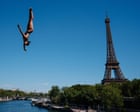
The media wants you to applaud. They want you to look at athletes executing twists and pikes over the Parisian waterway and cheer for urban environmental triumph.
Stop falling for it.
Pouring hundreds of millions of euros into purifying a historic urban river just so a handful of athletes can splash down for a few days of competition is an exercise in misplaced priorities. We are watching a masterclass in municipal PR masquerading as ecological progress.
Let us look past the cameras.
The Sanitation Illusion
For decades, the Seine functioned as an open sewer. Rainstorms overwhelm Paris's combined sewer system, dumping untreated wastewater straight into the river. To fix this for the global spotlight, the city built massive underground retention basins, like the colossal storage tank near Austerlitz station designed to hold millions of gallons of stormwater.
It sounds impressive on paper. It looks great in press releases.
Data tells a different story. Bacterial indicators like E. coli and intestinal enterococci fluctuate wildly based on weather patterns. Sunlight and temperature play massive roles in pathogen survival rates. A single heavy downpour undoes millions of dollars in filtration efforts within hours.
Athletes are forced to wait, practice sessions get canceled, and officials scramble to test water quality at dawn. That is not a reclaimed river. That is an outdoor water park operating on a prayer and heavy doses of chlorine-adjacent panic.
Misallocated Capital on a Grand Scale
I have watched organizations burn through massive budgets on vanity projects while foundational infrastructure rots. Paris spent roughly 1.4 billion euros on cleaning the Seine for public and competitive use.
Imagine a scenario where that exact capital went toward upgrading decentralized graywater recycling plants across every residential arrondissement in the city. Imagine modernizing the entire subterranean pipe network instead of building oversized holding tanks that act as temporary Band-Aids for storm surges.
Instead, the money chased a headline.
High diving is an extreme sport. Competitors accept risks of height, impact, and gravity. Adding biological roulette to the mix—hoping the runoff sensors read correctly before takeoff—adds zero athletic integrity. It introduces an unnecessary variable managed by political optics rather than common sense.
The Reality of Urban Waterways
Rivers running through dense metropolitan centers are working industrial arteries. They carry runoff from roads, chemical traces from tires, agricultural wash from upstream, and decades of heavy metals trapped in the benthic sediment.
You do not scrub centuries of urban abuse away with a multi-million-euro basin and a thumbs-up from the mayor.
When athletes dive into the Seine, they are participating in a theatrical performance designed to convince taxpayers that municipal governments can engineer nature into submission. Nature bats last. The moment a summer storm hits maximum capacity, those retention basins overflow, and the river reverts to its natural, polluted baseline.
Stop celebrating the symptom treatment while ignoring the systemic failure of our urban planning. Real environmental remediation takes generations of boring, invisible pipe-fitting, zoning enforcement, and industrial waste bans. It does not happen in time for a medal ceremony.
Next time you see a diver slicing through the surface of a famously murky European river against a backdrop of flashing strobe lights and cheering announcers, do not look at the water. Look at the balance sheet.