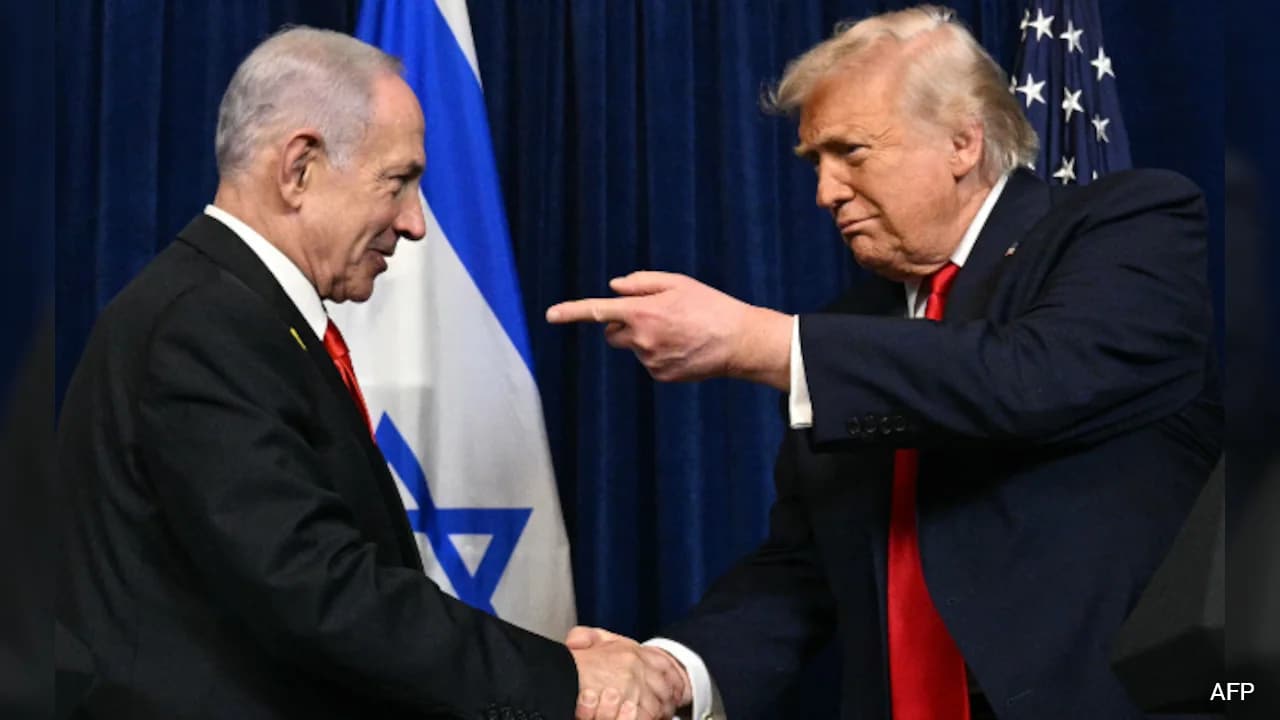
When high level political actors sit across from one another, the public usually receives a sanitized version of the exchange days later via carefully orchestrated press leaks. The recent disclosures regarding Donald Trump and Benjamin Netanyahu evaluating potential military avenues against Iran, including direct kinetic strikes, fit neatly into this historical playbook. But beneath the surface veneer of strategic planning lies a far more complex calculus involving domestic political survival, regional deterrence theory, and the hard realities of modern aerial warfare.
Veteran observers of Middle Eastern security policy know that contingency planning is the permanent baseline for any administration in Washington or Jerusalem. Militaries do not wait for a crisis to draw up target lists. They maintain updated dossiers on command nodes, enrichment facilities, and logistics corridors around the clock. What shifts over time is not the existence of these plans, but the political will required to transition them from a theoretical binder on a general's desk into an operational order. For a more detailed analysis into similar topics, we recommend: this related article.
The Anatomy of a Strategic Leak
Information rarely travels by accident in the upper echelons of statecraft. When details about sensitive discussions regarding Iran options filter out to reporters, the timing tells you everything you need to know about the motivations driving the disclosure.
Strategic ambiguity has long served as a cornerstone of deterrence. By letting an adversary know that kinetic options remain active on the table, leadership aims to modify Tehran's behavior without incurring the massive economic and human costs of an actual war. Yet, signaling only works if the target believes the threat carries genuine weight. For broader background on this topic, in-depth coverage is available at The Guardian.
For Netanyahu, maintaining a posture of uncompromising readiness is an absolute prerequisite for domestic political alignment. The Israeli security establishment operates under the shadow of past intelligence failures, most notably the October 7 attacks. Consequently, any perceived hesitation regarding existential threats carries an intolerable political and national security penalty. Showing the public that options are being actively weighed alongside key international partners reassures a deeply anxious electorate.
For Trump, the dynamic pivots around a different set of political imperatives. Known for favoring maximum pressure campaigns paired with an aversion to protracted foreign entanglements, his approach to Iran has always relied on unpredictable volatility. Suggesting that every option remains open reinforces his preferred brand of negotiation from a position of absolute strength.
The Logistics of Escalation
Moving past the political theater requires confronting the severe operational friction inherent in any strike against Iranian nuclear infrastructure. This is not a matter of a simple flyby raid. Decades of defensive hardening have buried crucial components of the nuclear program deep beneath mountain ranges and reinforced concrete.
To achieve meaningful degradation of these facilities, a military force would need to deploy specialized earth-penetrating ordnance delivered by heavy bombers. This introduces immediate geographic complications. Access to regional airspace becomes a non-negotiable requirement. Neighboring states that routinely voice quiet opposition to Iranian regional hegemony often balk at the prospect of opening their skies to offensive operations that could trigger devastating retaliatory rocket barrages against their own cities and critical energy infrastructure.
Tehran’s response capability is no longer limited to conventional military deployments. The sprawling network of regional proxies across Lebanon, Yemen, Iraq, and Syria forms an integrated deterrent shield. If a major strike occurs, the immediate counter-move involves saturating Israeli and allied defense batteries with thousands of precision-guided munitions and drones.
This asymmetry defines the modern Middle East conflict matrix. Iran does not need to win an air superiority battle to impose unacceptable costs on its adversaries. It simply needs to sustain a high-volume war of attrition that disrupts global commerce, spikes energy prices, and tests the endurance of regional air defense interceptor stockpiles.
The Economic Pressure Alternative
Kinetic strikes represent the most visible and dramatic manifestation of state power, but they remain a high-risk gamble with unpredictable second and third-order effects. This explains why economic warfare continues to operate as the default instrument of choice, even as military options are formally reviewed.
Maximum pressure relies on tightening the noose around oil exports and financial networks. When foreign exchange reserves dwindle, the ruling clerical establishment faces mounting internal unrest from a populace battered by inflation and structural mismanagement. Protests driven by economic desperation pose a more direct threat to regime stability than targeted military degradation, which often serves to temporarily rally a population around the flag.
However, the efficacy of sanctions has eroded over time due to the emergence of alternative trading blocs and illicit smuggling networks. Tehran has spent years adapting to financial isolation, finding willing buyers for its crude oil in clandestine markets and deepening strategic partnerships with global powers eager to circumvent Western-led financial architecture.
As these adaptive networks mature, the window for purely non-kinetic containment narrows. This realization drives the periodic resurgence of military contingency planning. If economic levers fail to halt the steady march toward weapons-grade enrichment thresholds, decision-makers find themselves forced to contemplate actions they would otherwise prefer to avoid.
The Reality of the Risk Matrix
No serious military planner views a direct conflict with Iran as a clean or contained operation. The interconnected nature of global supply chains means that any sustained disruption in the Persian Gulf sends immediate shockwaves through international markets. Energy prices would surge, triggering inflationary pressures that would ripple across Western economies already struggling with fiscal volatility.
At the same time, the domestic political cost of inaction can sometimes appear equally daunting to leaders who have staked their reputations on preventing a nuclear-armed adversary from dominating the region. This creates a perpetual tension between the desire to avoid catastrophic escalation and the fear of missing the strategic window to neutralize a permanent threat.
The recent explorations of all available options reflect this enduring dilemma. They demonstrate that while neither Washington nor Jerusalem enters such discussions lightly, the structural drivers pushing them toward confrontation remain entirely active. The calculus is cold, unforgiving, and divorced from diplomatic pleasantries.
As intelligence assessments continue to update and enrichment timelines shift, these contingency plans will move closer to the center of policy debates. The transition from theoretical option to execution order remains the most dangerous threshold in contemporary geopolitics, a line that leaders approach with extreme caution yet undeniable awareness of its proximity.