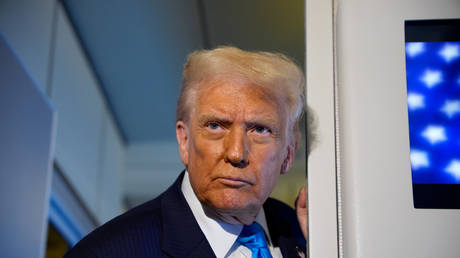
When UAE President Sheikh Mohamed bin Zayed Al Nahyan picked up the phone to talk with US President Donald Trump, official news agencies wrapped the event in standard diplomatic gauze. The public statements spoke of mutual interests, bilateral cooperation, and regional developments. Veteran observers of Middle Eastern foreign policy know to look past the boilerplate prose. A conversation of this magnitude during a period of acute maritime friction does not happen to exchange pleasantries.
The immediate catalyst driving this high-level contact is the dangerous deadlock in the Persian Gulf. Commercial shipping lanes face unprecedented disruptions, and energy transit corridors like the Strait of Hormuz have turned into flashpoints. When an ADNOC-operated tanker takes structural damage in transit, the security architecture governing global oil supplies shudders. Abu Dhabi needs Washington to understand that economic resilience depends on unhindered maritime access, while Washington needs its primary Gulf partners aligned as diplomatic channels with Tehran fracture completely.
The Anatomy of a High-Stakes Circuit
Diplomacy at the presidential level often serves as a pressure release valve when bureaucratic negotiations stall. For months, intermediate channels attempted to bridge the widening gap between American expectations and Iranian posturing over regional security and shipping restrictions. Those sixty-day diplomatic windows expired without a comprehensive framework.
Tehran hardened its stance, leaving commercial traffic vulnerable and forcing Gulf capitals to reevaluate their immediate security guarantees. Abu Dhabi practices a foreign policy anchored in economic pragmatism. Protracted regional instability directly threatens the country's ambitious long-term commercial diversification projects. When trade routes are compromised, the cost is measured immediately in surging shipping insurance rates and jittery international investor sentiment.
The call between Sheikh Mohamed and Trump highlights the reality that economic security cannot be decoupled from hard security. Washington holds the cards regarding broader sanctions enforcement and military posture in the theater, but the UAE bears the frontline exposure. Aligning tactical responses requires direct synchronization between the Oval Agency and the Presidential Court in Abu Dhabi, bypassing layers of diplomatic intermediaries.
Energy Markets and the Shipping Risk Premium
Energy markets react instantly to shifts in Gulf security dynamics. Every incident involving commercial vessels transiting regional waterways injects a quantifiable risk premium into global crude prices. While automated trading algorithms often treat routine leader phone calls as background noise, energy analysts look deeper into the structural implications of these exchanges.
The core issue centers on deterrence. If regional powers conclude that Western security umbrellas cannot guarantee safe passage for commercial tonnage, alternate risk mitigation strategies come into play. This includes everything from heavily escorted convoys to unilateral defensive measures that elevate the risk of accidental escalation.
Abu Dhabi has consistently advocated for diplomatic off-ramps, preferring economic integration over military confrontation. Yet, repeated threats to vital shipping arteries leave little room for passive diplomacy. The leadership in the UAE must weigh the immediate necessity of protecting national assets against the broader regional fallout of an extended maritime standoff.
Navigating Strategic Autonomy
Modern Gulf diplomacy is defined by a pursuit of strategic autonomy. Leaders in Abu Dhabi maintain open channels with multiple global powers, refusing to be boxed into rigid security blocs. This multi-alignment strategy allows the UAE to act as a bridge, but it also creates friction with Washington when geopolitical crises demand absolute alignment.
When crises peak, the limits of multi-alignment are tested. The phone call with the White House underscores that despite growing diplomatic diversification toward Asia and Europe, the security architecture of the Middle East remains tethered to Washington's willingness to project power and enforce deterrence.
Managing this dynamic requires delicate political balancing. Abu Dhabi wants American muscle when commercial vessels face direct threats, but it seeks to avoid becoming a staging ground for a broader regional conflict that would devastate its tourism and financial sectors.
The real test of this high-level dialogue will not be found in the carefully worded communiques issued after the conversation concludes. It will reveal itself in the operational security posture adopted across the Gulf in the coming weeks, the frequency of commercial convoy incidents, and whether diplomatic channels can be forced back open before economic pressures boil over into open kinetic conflict. The phone lines between Washington and Abu Dhabi will remain active because the alternative is a descent into unmanaged chaos.