The snow in Ontario does not merely fall; it accumulates like an unread ledger, heavy and indifferent to what it buries. Gurpreet Singh knew that cold. He had welcomed it five years ago when he stepped off a Boeing 777, clutching a student visa that felt less like a piece of paper and more like a golden key to a cathedral. Canada, they told him, was a place of endless horizons, a sanctuary for minds hungry to build, to learn, to contribute. He had traded the familiar dust of his Punjab village for the antiseptic hum of a lecture hall, trading sleep for midnight shifts at a warehouse to pay tuition fees that doubled without warning.
He was young. He was invincible, right up until the morning the envelope arrived.
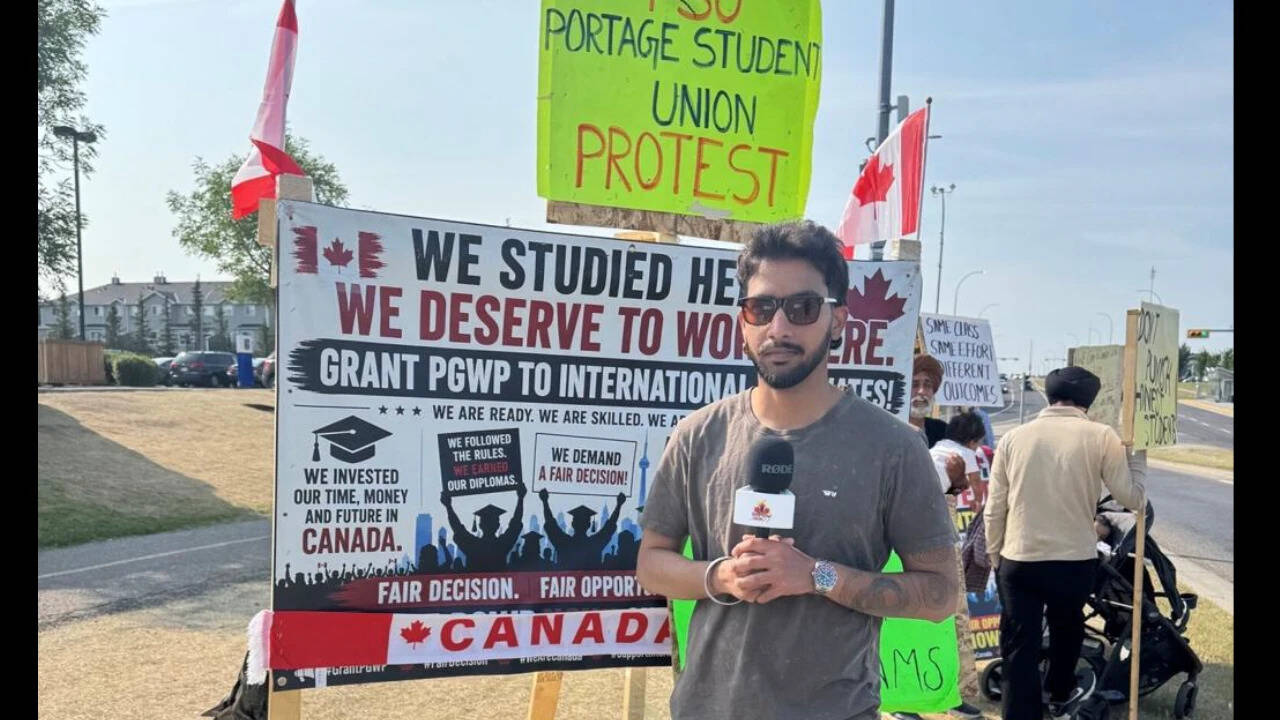
It was white. Standard issue. Inside was a deportation order bearing a seal that rendered five years of frozen bus rides, lukewarm instant noodles, and sleepless exam nights entirely weightless. His crime wasn't failing an exam or missing a payment. His crime was raising his voice. Alongside hundreds of other international students, he had stood outside a government office to protest sudden, arbitrary policy changes that threatened to strip away their post-graduation work permits—the very lifeline they had staked their futures on.
Intimidation is a quiet machine. It does not need a siren or a heavy boot on the neck. Sometimes, it looks like a single bureaucratic letter slipping through the mail slot, whispering a singular, terrifying message to an entire generation of dreamers: Speak, and you will vanish.
Consider what happens when you turn a university campus into a pressure cooker. We invited the world's youth to our shores, dangling the carrot of permanent residency while quietly constructing a maze of administrative tripwires. We charged them triple the domestic tuition, balancing provincial budgets on the backs of eighteen-year-olds who thought a study permit was a mutual contract. They came because they trusted our institutions. They stayed because they believed in our values of fairness and free expression.
Then they learned the fine print.
The protest in Brampton wasn't radical. It was born of desperation. When tuition hikes, housing shortages, and immigration cap shifts collided, these students did what any community of rational humans does: they gathered. They held cardboard signs. They chanted slogans in the freezing wind. They thought they were participating in the great Canadian tradition of civic discourse.
They forgot that a guest does not own the floor they stand on.
The response from the system was swift, clinical, and devastating. Visa revocations trickled down like falling dominoes. The message ricocheted through WhatsApp groups and campus cafeterias with the speed of an electric shock. Across the province, international student associations suddenly went quiet. Group chats were deleted. Protest flyers were torn down before the glue could dry. Fear is an efficient censor. It does not need to arrest everyone; it only needs to make an example of a few.
Gurpreet packing his suitcase in a cramped basement apartment is an image that should haunt us. The walls were bare except for a small calendar marking the days until his flight back to a village where neighbors would whisper about his sudden return, assuming failure where there was only state-sanctioned expulsion. He had not broken a criminal law. He had merely stepped out of the narrow, docile box assigned to the foreign cash cow.
We have built an economy addicted to transient labor, yet we treat the human beings providing it as disposable commodities. We want their tuition dollars to prop up our universities, we want their labor to staff our coffee shops and fulfillment centers, but the moment they demand dignity or stability, we hand them a one-way ticket out.
The intimidation worked. On any given afternoon at a major Canadian university now, you can feel the heavy, suffocating weight of self-censorship. Students from Delhi, Lagos, and Manila look at the pavement outside administration buildings and walk past. They keep their heads down. They take the extra shift. They accept the rent hike. They swallow the arbitrary rule changes because they know the stakes. One wrong word, one public grievance, and the life they built disappears into an official PDF attachment sent at four in the afternoon on a Friday.
This is the hidden tax of our immigration policy. We import ambition and export courage. We teach the brightest minds from the global South that democracy in the West is conditional, that free speech is a privilege reserved for those with a blue passport, and that standing up for your rights is a deportable offense.
The snow continues to fall outside the immigration offices in downtown Toronto, melting into gray slush under the boots of thousands who still wait, still hope, and still wonder if they are next. The office doors remain closed. The envelope sits on the hall table, waiting for the next person naive enough to believe that a promise made in a recruitment brochure is worth the paper it is printed on.