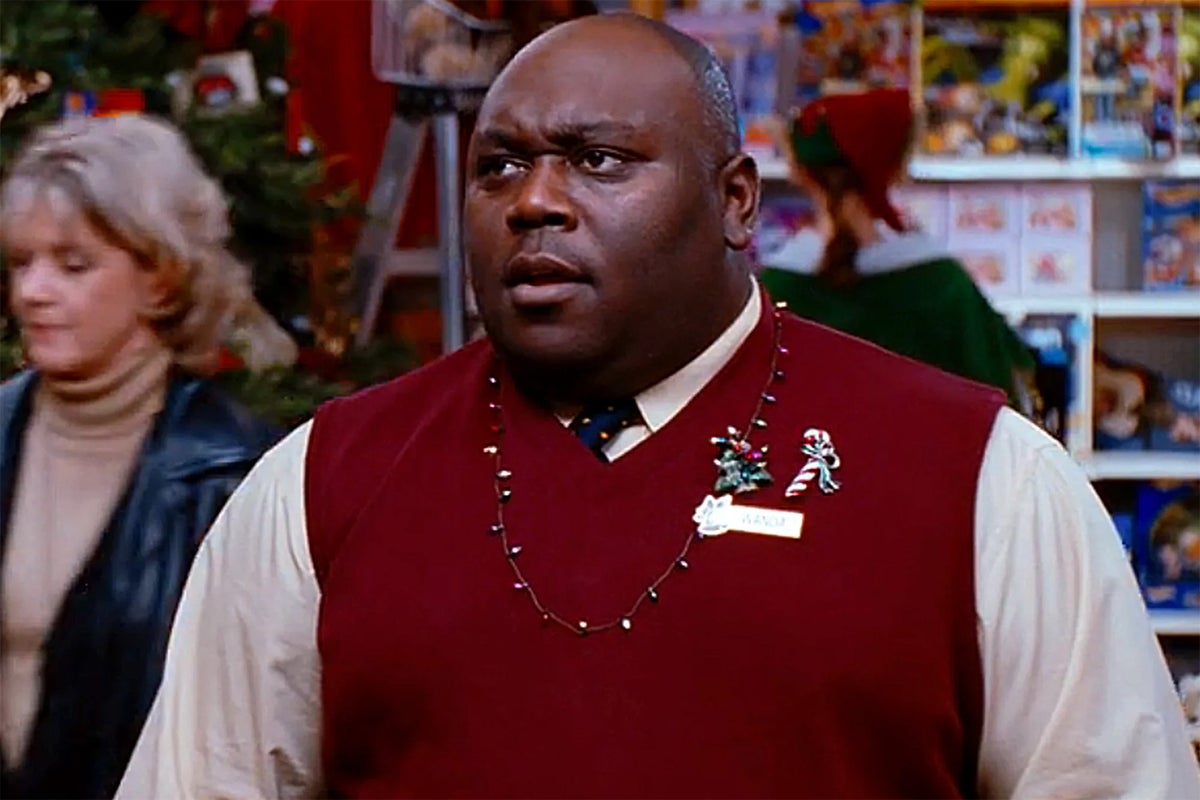
The velvet is always the first thing to go. It starts at the elbows, thinning out under the friction of a thousand mechanical smiles, turning from a rich, royal forest green into something slick and cheap. Then the bells lose their clappers. By the time December twenty-fifth rolls around, the costume doesn't feel like magic anymore. It feels like armor that has taken too many hits.
For years, the public only saw the armor. They saw the pointed shoes, the exaggerated rosy cheeks, and the infectious, cinematic joy that anchored a holiday classic. To millions of families, that face was a permanent fixture of December comfort, frozen in time on a streaming loop while hot cocoa cooled on coffee tables.
But on a Tuesday morning in a building that smelled heavily of industrial floor wax and stale coffee, the velvet was long gone.
There were no jingle bells in the county courthouse. Instead, there was the sharp, metallic snap of handcuffs. It is a sound that possesses its own terrible gravity. It cuts through the low murmur of legal clerks and the rustle of manila folders with absolute authority. When the bailiff led the performer forward, the contrast was blinding. The bright, celluloid memories of a beloved seasonal film collided violently with the gray reality of a judicial system that does not care about box office numbers or childhood nostalgia.
The charge on the docket read simply: contempt of court.
To understand how a person travels from the warm glow of Hollywood tier production to the hard wooden benches of a holding cell requires looking past the breathless headlines. The internet loves irony. It feasts on the spectacle of fallen icons, especially those associated with innocence and joy. Within minutes of the arrest, the digital commentary machine began its predictable spin, turning a human crisis into a punchline. But the real problem lies elsewhere. It rests in the invisible, grinding gears of a legal apparatus that operates without a pulse, and the fragile lives of the character actors who inhabit our culture’s background noise.
Consider what happens when the cameras stop rolling.
For a select few, a hit movie is a golden ticket to lifelong security. For the character actor, the utility player who fills out the world and gives it texture, it is often just another line on a resume. They return to the audition circuits. They take the indie roles. They sign autographs at conventions in convention centers that smell like carpet cleaner, exchanging a sliver of past glory for rent money. It is a existence lived in the margins of fame, where the rent is always due and the spotlight fades faster than the winter sun.
The legal dispute that culminated in this arrest did not begin with a dramatic crime. It began with paperwork. It began with a civil disagreement, the kind of quiet, bureaucratic entanglement that slowly leaks the oxygen out of a life. Financial disclosures. Depositions. Deadlines that pass unnoticed while someone is trying to figure out how to stretch a dwindling residual check across a six-month dry spell.
The system demands compliance. It requires a specific kind of literacy—an understanding of legalese and administrative rhythms that is foreign to the artistic mind. When a person misses a hearing because they are working a non-union gig three states away, the system does not see a struggling artist trying to keep the lights on. It sees a line item of defiance.
The judge sat beneath the state seal, a figure of absolute finality.
Judges see hundreds of faces a day. They become immune to the theater of the courtroom because they live in it. When the actor stood before the bench, there was no recognition in the magistrate's eyes. To the court, this was not a piece of cinematic history walking through the door. This was an individual who had failed to produce required documentation after multiple warnings. A failure to show up. A failure to bend to the schedule of the state.
The word contempt is heavy. It implies malice. It suggests a deliberate, arrogant sneer directed at the majesty of the law.
But watching the scene unfold, the emotion in the room felt less like contempt and more like profound exhaustion. The actor's shoulders were curved inward, a stark contrast to the expansive, theatrical posture that had once filled theater screens. The voice that had once delivered punchlines with impeccable timing was reduced to a quiet, halting monotone, answering the standard questions with a series of muffled affirmatives.
The law is an blunt instrument. It is designed to flatten nuance in pursuit of order. When the gavel came down, it carried the weight of an institution that cannot afford to care about the backstory. The order was given, the bailiffs stepped forward, and the illusion of celebrity evaporated completely.
Every actor enters a silent contract with the audience. We give them our attention, and in return, they give us a temporary escape from the mundane gravity of our lives. We want them to remain frozen in the roles we chose for them. We want the heroes to stay brave, the comedians to stay funny, and the elves to stay joyful. We do not want to see them standing in the harsh, flickering fluorescent light of a municipal building, trying to explain to an indifferent clerk why their bank accounts do not match their public profiles.
It is a specialized kind of loneliness, being public property while private life crumbles.
The holding cell in the basement of the courthouse is a equalizer. It doesn’t matter if you have shared scenes with A-listers or if your face is on a t-shirt sold at Target. The benches are the same cold stainless steel. The air is just as thin.
The story of the arrest will fade from the news cycle by tomorrow afternoon, replaced by a new scandal, a fresh piece of digital ephemera for the world to analyze. The internet will move on to the next piece of low-hanging fruit. The comments sections will lock, and the algorithms will redirect the public's fleeting attention toward something else.
But the human element remains behind the glass.
Long after the reporters have packed up their laptops and the morning dockets have been cleared, an individual has to sit with the reality of a system that doesn't believe in magic. The cuffs come off eventually, but the stain of the experience lingers. It is the realization that the world created on screen is a fragile thing, easily shattered by the cold, unyielding reality of a single piece of paper that someone forgot to sign.