November in Alaska does not ask for your permission before it freezes the marrow in your bones. By early afternoon in Anchorage, the light drains out of the sky like water from a cracked bucket, leaving the Chugach Mountains looking like jagged teeth against a bruised horizon. I have stood on the slush-caked sidewalks along Fourth Avenue during three different election cycles, watching the breath of dockworkers and oil-field roughnecks turn to instant frost while they argued about salmon runs and pipeline leases. Down here, politics is never an abstract parlor game played by people in tailored suits. It is the price of heating oil when the mercury drops to twenty below. It is whether your cousin’s fishing boat stays tied to the pier in Bethel or brings home enough king salmon to pay the mortgage.
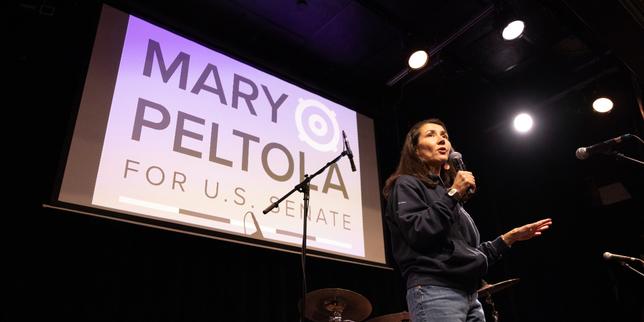
So when a headline breaks about a federal or ethics investigation targeting the campaign of Democratic candidate Mary Peltola during the 2026 midterm elections, the shockwave does not stay neatly contained inside the Washington Beltway. It travels up the Inside Passage, rattles the windows of tin-roofed cabins along the Kuskokwim River, and lands squarely on the kitchen tables of voters who thought they had finally found someone who spoke their language.
Silence.
That is what usually follows the initial burst of partisan noise when an inquiry hits a campaign trail. First comes the breathless breaking-news alert—the sterile, clinical dispatch noting that regulators or oversight investigators have opened a file on Mary Peltola’s 2026 campaign operations. Then, once the cable pundits move on to the next shiny scandal, a heavier quiet settles over the voters back home, forcing them to reckon with what an investigation actually means when trust is the only currency that keeps a fragile coalition alive.
The Anatomy of a Northern Storm
To understand why this inquiry carries such disproportionate weight in the 2026 midterms, you have to understand the peculiar political ecosystem of the Last Frontier. Alaska is not a reliably red state or a blue state; it is an fiercely independent archipelago of communities separated by hundreds of miles of roadless tundra, linked together by bush planes, snowmachines, and an abiding suspicion of distant authority.
Mary Peltola, the first Alaska Native elected to Congress when she won a special election in 2022 and later defended her seat before navigating the shifting sands of statewide politics, built her brand on an almost radical relatability. She campaigned on "fish, family, and freedom." She stood beside Republican senators when it meant securing federal infrastructure dollars for rural villages that still lacked running water, and she broke with national Democrats on energy projects like the Willow oil development because Alaskans live off resource extraction. That balancing act earned her a rare commodity in modern American politics: the benefit of the doubt from people who usually despise her party.
Then came the 2026 midterm cycle, and with it, the scrutiny that eventually shadows almost every high-stakes campaign.
Let us be precise about what happens when a campaign becomes the subject of an official investigation, without letting partisan theater blur the boundary between suspicion and proof. In American election law, inquiries into campaign finances, reporting discrepancies, or third-party coordination often begin not with a dramatic dawn raid, but with a dry, technical audit or a formal complaint filed by an opposing political action committee. Investigators examine ledger entries, vendor contracts, digital ad buys, and donor disclosures, looking for violations of federal campaign finance statutes or state ethics rules.
Think of a modern political campaign as a commercial fishing vessel operating in heavy seas. Every dollar raised is fuel pumped into the tank; every expenditure is a net cast over the stern. Federal regulators act like the Coast Guard inspectors waiting at the harbor mouth. They do not care how noble your mission is or how many hungry mouths you plan to feed; they care whether your manifest matches your cargo down to the last ounce, and whether you stayed strictly inside the legal boundaries of your fishing zone. If a crew member cuts a corner in the dark, or if a subcontracted captain steers across a line he was supposed to avoid, the inspector boards the boat and drops the anchor.
A Kitchen Table in Bethel
Consider a hypothetical voter—let us call her Clara—living in Bethel, the hub community in the Yukon-Kuskokwim Delta where Peltola herself grew up. Clara is not a political operative. She is a fifty-four-year-old school administrator who spent her morning scraping ice off her windshield and checking the latest river-ice thickness reports so her brother can safely haul supplies by snowmachine.
When Clara hears on the local public radio broadcast that Mary Peltola’s 2026 midterm campaign is under investigation, she does not immediately reach for a legal dictionary to parse the difference between a preliminary inquiry and a formal indictment. Instead, she feels a familiar, aching fatigue.
For decades, rural Alaskans watched politicians fly in from Anchorage or Juneau every two years, shake hands at the community center, promise to protect subsistence fishing rights, and vanish until the next election cycle. Peltola was supposed to be different because she knew what it meant to cut strips of salmon on a drying rack by the river. She knew the names of their grandmothers.
"Is she just like the rest of them now?" Clara wonders aloud, staring into her mug of black coffee while the wind howls off the frozen Kuskokwim.
That single question is the invisible stake that dry news reports almost never capture. An investigation does not need to end in a conviction to inflict real damage; its mere existence introduces a hairline fracture into the glass of public trust. In a state where elections are frequently decided by razor-thin margins under Alaska’s ranked-choice voting system—a structure where second- and third-choice preferences determine who ultimately holds power—a drop of even two or three percentage points in voter enthusiasm can flip an entire race.
Why Midterm Investigations Hit Differently
Midterm elections are notoriously unforgiving. Unlike presidential years, when sweeping national narratives pull millions of casual voters to the polls, midterms are wars of attrition decided by turnout and disillusionment. When an inquiry surfaces against a prominent candidate like Peltola in the heat of a 2026 campaign, it triggers a predictable, almost mechanical chain reaction across the political landscape.
First, it freezes the money. Major donors and national fundraising committees are notoriously skittish creatures. Even when a campaign’s legal team insists that the inquiry stems from minor bookkeeping errors or politically motivated complaints from rivals, institutional backers hesitate to wire fresh funds into an account that might soon be paying criminal defense or compliance attorneys instead of buying television airtime in Fairbanks and Juneau. Every hour a candidate spends huddled with compliance lawyers is an hour stolen from shaking hands at a diner in Palmer or testifying before a fisheries board.
Second, it hands opponents a blunt, effortless weapon. Attack advertisements do not have to explain the arcane nuances of Federal Election Commission reporting deadlines or vendor disclosure rules. They only need to flash the word INVESTIGATION in stark white letters over a grainy, desaturated photograph of the candidate. By the time a campaign issues a three-page legal rebuttal explaining that an outside vendor miscategorized an expense or that a donor limit was inadvertently exceeded and promptly refunded, the voter scrolling through their phone during a lunch break has already moved on, carrying away a vague, lingering stain of corruption.
I remember watching a similar dynamic play out years ago during a municipal race in the Pacific Northwest. A candidate I knew personally—a former public school teacher whose worst personal vice was drinking too much cheap diner coffee—was hit with an ethics complaint two weeks before ballots were mailed. The allegation involved a technical violation regarding how a volunteer’s donated office space was valued on a disclosure form. Six months after the election, the oversight board dismissed the complaint with a minor administrative fine of a few hundred dollars. The teacher had done nothing malicious. Yet by the time the vindication arrived in a PDF file nobody read, he had already lost the election by four hundred votes, his reputation permanently bruised in the local grocery store aisles.
The Murky Reality of Modern Campaign Law
If we are being completely honest with ourselves, modern American campaign finance law has become a labyrinth so convoluted that even seasoned professionals regularly lose their way inside it. Since landmark Supreme Court rulings dismantled old restrictions on independent expenditures while leaving strict limits on direct campaign contributions, campaigns have had to operate inside a bizarre dual reality.
Imagine trying to play a game of basketball where your team is allowed to dribble down the court, while a group of enthusiastic fans wearing your jersey is allowed to run alongside you throwing extra balls into the hoop—provided you never make eye contact with them, never signal to them, and never speak a word to them about which plays you plan to run. If a referee decides you winked at one of those fans during a timeout, the whistle blows, and you are charged with illegal coordination.
That metaphor captures the daily tightrope walk of every major congressional or statewide campaign in 2026. Campaigns rely on sprawling networks of digital consultants, fundraising platforms, polling firms, and allied political action committees. A single shared vendor, an overlapping data file, or an ambiguous social media post can trigger a formal complaint from rival watchdogs, forcing regulators to open an inquiry.
Does that mean every investigation is harmless bureaucratic noise? Not at all. History is littered with genuine campaign finance scandals where candidates funneled dark money through shell companies, accepted illegal foreign or corporate contributions, or used campaign funds to bankroll lavish personal lifestyles. Voters have every right—in fact, they have a civic obligation—to demand transparency when federal or state investigators begin pulling back the curtain on how a candidate raises and spends money.
The danger lies in our collective inability to hold two competing truths in our minds at the same time: that oversight investigations are an essential guardrail of democracy, and that the initiation of an investigation is the beginning of a fact-finding process, not the verdict at the end of it.
What Voters Actually Need to Watch
When the headlines blare that Mary Peltola’s campaign is under scrutiny, the smartest thing any observer can do is look past the partisan shouting match and examine three concrete indicators that separate a routine compliance headache from a campaign-ending crisis.
Look first at who is conducting the inquiry. There is a vast gulf between a complaint filed by an opposing party with a state ethics commission—which agencies are often legally required to review regardless of merit—and an active subpoena issued by the Department of Justice or a formal enforcement action voted on by federal regulators after months of preliminary review. One is routine political combat; the other is an existential threat.
Look next at the campaign’s own paper trail. When allegations surface, watch how the candidate and her treasurer respond in the first seventy-two hours. Campaigns dealing with honest administrative mistakes typically release amended filings immediately, open their books to independent auditors, and answer specific questions on the record. Campaigns hiding genuine misconduct retreat behind vague talking points, blame partisan witch hunts without addressing the underlying facts, and quietly burn through cash on crisis-management firms.
Finally, watch the behavior of local allies. In Alaska, political survival depends on tribal corporations, labor unions, commercial fishing associations, and small-business owners. Those groups have fierce survival instincts. If local leaders in Nome, Kodiak, and Ketchikan continue standing beside Peltola at community halls, it signals they believe the storm will pass. If they suddenly develop scheduling conflicts whenever her campaign plane touches down on the runway, the political weather has turned lethal.
The Weight of the Ballot
Out on the tundra, when a whiteout hits without warning, seasoned travelers know that panic is the fastest way to freeze. You stop moving. You check your compass. You wait until the wind drops enough to distinguish the true horizon from the blowing snow.
Democracy demands that same stubborn discipline, especially in the closing stretches of a bitter midterm cycle. Mary Peltola’s 2026 campaign now has to walk through the cold glare of official scrutiny, answering every question put to it by investigators and by the constituents who entrusted her with their voices. Maybe the inquiry will reveal nothing more than the messy, unglamorous friction of a sprawling political operation colliding with complex disclosure rules. Or maybe it will uncover genuine lapses in judgment that force her supporters to reconsider the faith they placed in her.
Either way, the verdict does not belong to the pundits shouting from studios three thousand miles away in New York and Washington. It belongs to people like Clara in Bethel, staring out over the frozen river as the long northern night closes in, waiting to see whether the person they sent to fight for them still remembers how to keep her ledger clean when nobody is watching.


