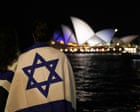
The calendar does not merely record time; sometimes, it ignites friction. When the first anniversary of the October 7 attacks in Israel approached, Australian political corridors filled with immediate anxiety over scheduled pro-Palestine demonstrations overlapping with Jewish community memorials. Canberra politicians and state premiers faced a sharp governance crisis. How does a liberal democracy balance the absolute right to political expression against the profound grief of a targeted minority community during a sensitive national remembrance?
This collision
The Collision of Grief and Protest on the October 7 Anniversary in Australia Learn more on a related subject: this related article.
news, politics
The convergence of simultaneous public demonstrations and solemn national commemorations creates profound social friction. When the anniversary of the October 7 attacks in Israel coincided with planned pro-Palestine vigils across Australia, the clash exposed deep fault lines within multicultural civil society, testing the limits of free assembly, community safety, and political leadership. More reporting by The Guardian highlights similar perspectives on the subject.
Australian leaders faced an intense balancing act. On one side stood Jewish communities mourning the victims of the deadliest day for their people since the Holocaust. On the other stood advocates demanding public space to protest the subsequent military campaign in Gaza. This volatile intersection forced federal and state authorities to grapple with how to manage competing rights to grief and dissent without inflaming community tensions.
The Anatomy of a Clash Over Public Space
The friction points extended far beyond symbolic calendar dates. Public space is a finite resource in major metropolitan centers like Sydney and Melbourne. When organizers submitted permits for rallies on the exact anniversary of the Hamas attacks, community leaders from the Executive Council of Australian Jewry and other groups reacted with acute distress. They argued that scheduling protests on this specific day was not a neutral act of free expression, but an intentional provocation designed to overshadow a day of national and international mourning.
Politicians stepped into a minefield. Prime Minister Anthony Albanese and state premiers urged restraint and public order, walking a tightrope between protecting the democratic right to protest and respecting the profound trauma felt by Australian Jews. Yet, moral appeals often fall flat when institutional trust is low. Law enforcement agencies found themselves caught between civil liberties groups defending the right to march and community advocates warning of public safety risks and incitement.
Political Posturing Versus Ground Realities
Political commentary following the announcement of the vigils quickly polarized. Conservative opposition figures demanded outright bans on protests occurring on the anniversary, framing permission as a failure of moral leadership and social cohesion. Government ministers, meanwhile, emphasized the legal thresholds required to restrict public gatherings, noting that police forces operate under legislative frameworks that prioritize public safety over emotional sensitivity, however raw those feelings might be.
This dynamic revealed a fundamental tension in modern democratic governance. Laws protecting assembly were written for a different era of domestic politics, long before digital networks hyper-accelerated grievance and international conflicts played out in real-time on local streets. When state premiers explored emergency powers to block specific rallies, civil liberties watchdogs pushed back, warning that setting a precedent of banning political protests based on the emotional resonance of a date sets a dangerous standard for future dissent.
The Broader Impact on Social Cohesion
Beneath the immediate headlines lies a quieter, more corrosive reality. Australia prides itself on successful multiculturalism, a social fabric woven from diverse immigrant communities who bring their heritage and historical grievances to a shared home. However, the spillover from the Middle East conflict has strained that fabric past its intended tolerances.
Schools, universities, workplaces, and places of worship have all experienced rising incidents of hostility. The debate over October 7 vigils was never solely about a single day on the calendar. It served as a lightning rod for accumulated anxieties regarding identity, allegiance, and the state's capacity to maintain social harmony when international traumas fracture domestic populations.
Leaders who attempted to bridge the divide discovered that middle ground is scarce in polarized times. Condemnations of terrorism must be paired, in the view of activists, with condemnations of military occupation and civilian casualties, while critics argue that pairing these issues on an anniversary dedicated to mourning victims of terror dilutes moral clarity.
The Long-Term Policy Challenge
As anniversaries pass and the conflict persists, Australia's policy makers face a protracted challenge. Law enforcement agencies continue to adapt their intelligence-gathering and crowd-management tactics, recognizing that community safety requires proactive engagement with community leaders long before permits are filed.
The deeper repair work, however, falls outside the jurisdiction of police. Rebuilding trust requires civic institutions to foster spaces where divergent communities can coexist without feeling that their grief is minimized or their right to speak is suppressed. The tension witnessed on October 7 demonstrated that social cohesion cannot be taken for granted; it is an ongoing negotiation that requires active, uncomfortable, and sustained dialogue across ideological divides.