Ground doesn't just shake; it shatters lives in seconds. When a massive 7.4-magnitude earthquake struck western Colombia, it didn't just rattle the coffee-growing heartland—it exposed the raw fragility of urban and rural infrastructure alike.
With the death toll climbing past 224 and thousands of people still unaccounted for on citizen-run databases, the immediate aftermath is an agonizing race against the clock. Every minute counts when you're trapped under concrete. But numbers on a screen rarely capture the actual chaos unfolding on the ground in cities like Cali and Pereira.
Inside the Ground Zero Cities
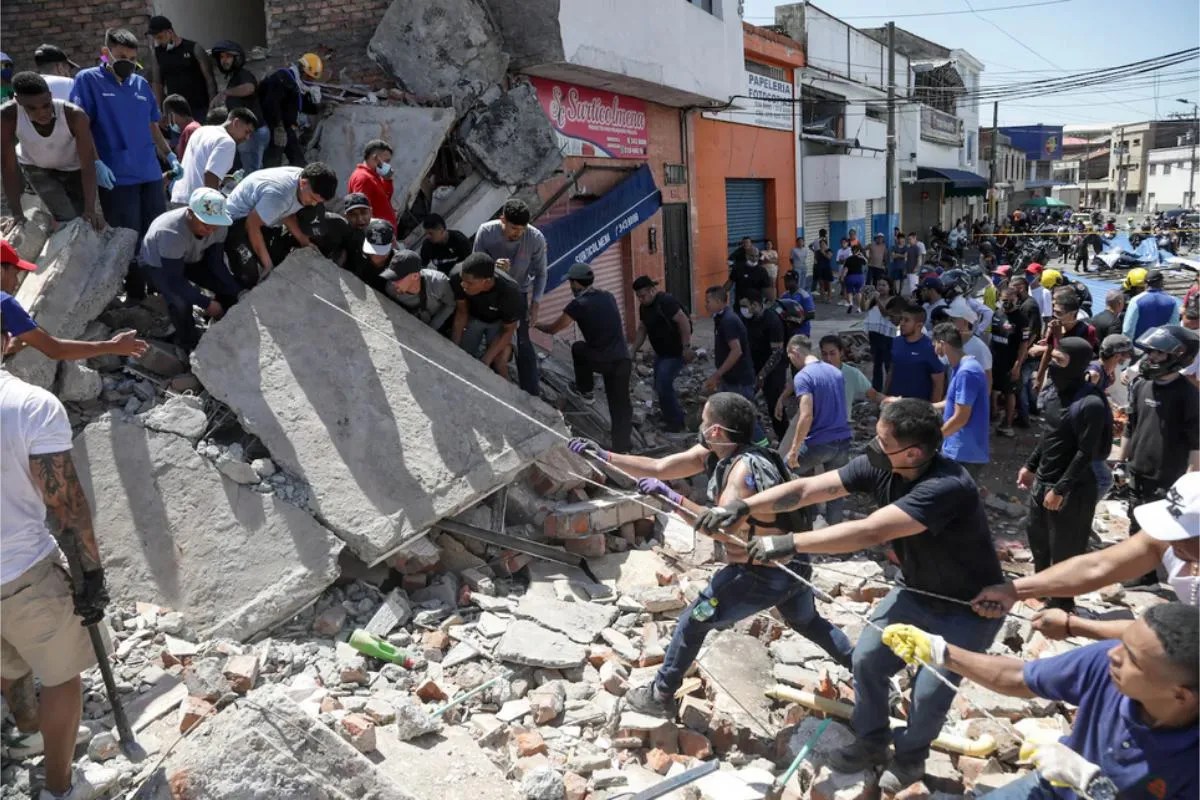
Take a look at Pereira or Cali. Entire residential sections were reduced to concrete slabs. Hospitals suffered catastrophic structural failures, forcing doctors to treat bleeding patients directly in the gardens while aftershocks rumbled overhead.
You've got ordinary citizens forming human chains, digging through rubble with bare hands because heavy machinery can't clear the streets fast enough.
- Cali: Dozens of buildings completely collapsed, trapping dozens, while local authorities rushed to impose nighttime curfews to stop potential looting.
- Pereira: Power lines went down entirely, plunging neighborhoods into darkness and forcing families to spend the night sleeping out on the asphalt.
- Chocó: Near the epicenter in San José del Palmar, remote jungle towns accessible only by boat or air faced near-total isolation.
The Early Test for New Leadership
This disaster landed squarely on the desk of newly inaugurated President Abelardo de la Espriella. Taking office just days prior, he found himself forced to mobilize the entire military and police apparatus overnight.
De la Espriella flew straight to Quibdó in Chocó, declaring a state of disaster to fast-track emergency funding. International aid is trickling in—the United States allocated millions for immediate shelter and food supplies, while regional banks opened up reconstruction lines.
Money fixes concrete eventually. It doesn't bring back loved ones. Families staring at ruined storefronts and pancaked apartments know that bureaucratic aid packages take weeks to materialize while survival happens in the first forty-eight hours.
Why the Missing Numbers Vary So Wildly
You might notice a gap between official government missing figures and civilian-run tracking sites. Governments move slowly, verifying reports through strict bureaucratic channels. Families don't have that luxury.
When communication lines are severed and rural roads are blocked by landslides, crowdsourced digital spreadsheets become the primary lifeline. People post photos of elderly relatives, farmers from remote hillside towns, and shopkeepers who haven't answered their phones since Monday morning.
When you look at past regional seismic events, those community-driven registries often paint a much truer picture of the initial devastation than a press briefing held hours later in the capital.
The dust hasn't settled yet. Rescuers are still pulling occasional survivors from air pockets deep within the wreckage, proving that hope survives even when the power grid doesn't. The real test for Colombia won't just be surviving the tremors, but rebuilding smarter before the next fault line gives way.