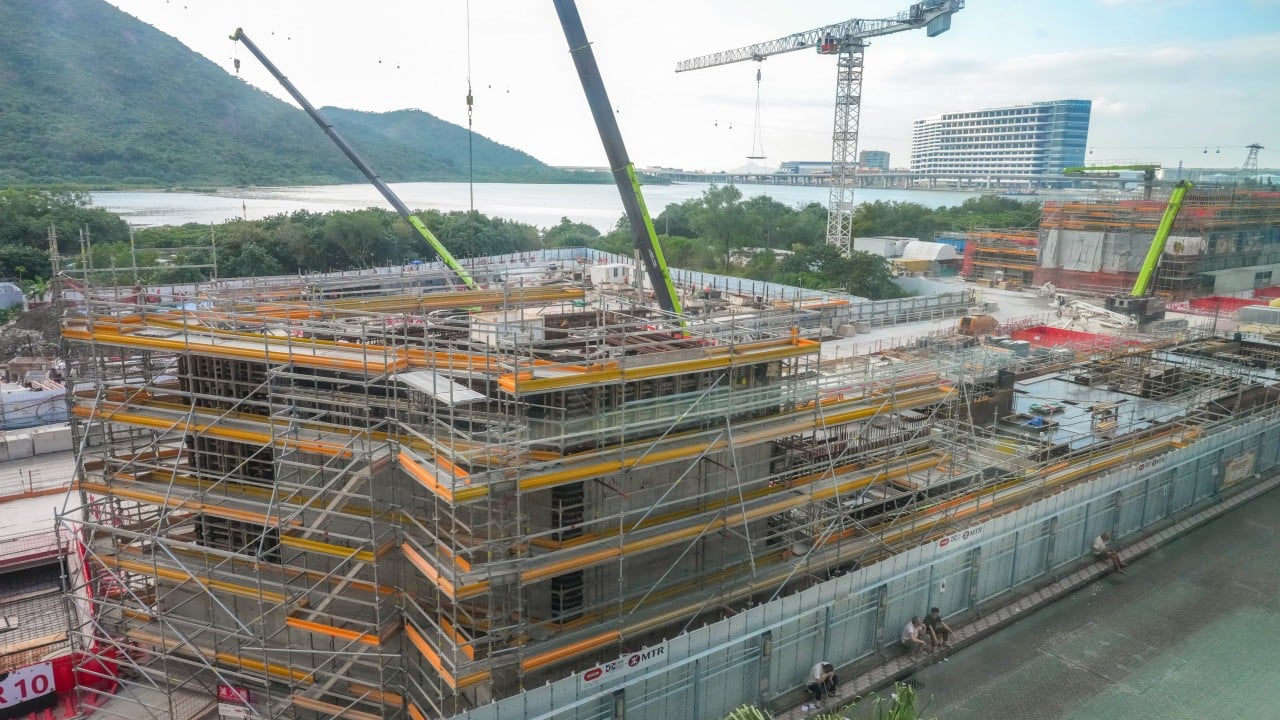
Step out of Admiralty station on a humid Tuesday morning, and the city hits you before you even reach the escalator. It smells like wet limestone, diesel exhaust, and freshly welded steel. Above your head, forty stories of glass and reinforced concrete climb into the low Victoria Harbour clouds, held together by bamboo scaffolding that looks impossibly fragile against the wind. For decades, that vertical ambition was Hong Kong’s greatest boast. We built faster, deeper, and higher than anywhere else on earth, turning steep granite mountains and reclaimed sea into a financial engine that never slept.
We trusted the concrete. We trusted the signatures at the bottom of the inspection logs.
Then came the year the ground beneath that trust began to crack.
If you only read the government press releases or the dry engineering audits, the string of construction scandals that rocked Hong Kong in recent years looks like a series of isolated technical failures. Six distinct breaches. Six separate sites. A few missing steel bars here, a falsified soil test there, a sinking subway station platform, a misaligned sea wall. On paper, it reads like bureaucratic bookkeeping. Out on the streets, riding a crowded train fifty meters below the seabed, it feels entirely different. It feels like a quiet betrayal.
To understand what actually happened to Hong Kong’s building culture, you have to step away from the boardrooms in Central and walk onto the mud of a tunnel shaft at three in the morning.
The Weight of a Missing Bolt
Consider a hypothetical scenario, built directly from the verified mechanics of what investigators uncovered beneath the city. Picture a site supervisor named Chan—not a villain, just an exhausted man in a sweat-stained yellow vest, staring at a delivery manifest under the harsh glare of floodlights. Behind him, a crew of steel-fixers is waiting to pour concrete into a diaphragm wall, the massive underground barrier designed to keep seawater and earth from crushing a new railway station.
The schedule is already three weeks behind. Every day of delay costs the main contractor hundreds of thousands of Hong Kong dollars in liquidated damages. Ahead of the pour, the steel reinforcing bars—the rebar—must be screwed into threaded couplers embedded in the concrete wall. Each bar needs to be twisted in until at least forty millimeters of thread disappears inside the sleeve. That connection is the skeleton of the entire structure. Without it, concrete is strong when pushed, yet brittle as chalk when pulled.
Now picture the problem Chan faces at three in the morning. The threads on a batch of couplers are clogged with dried cement paste. Cleaning them out and re-threading the bars will take two days. The concrete mixer trucks are already idling at the gate, their drums turning slowly so the mix doesn't harden into useless stone.
So someone picks up a hydraulic cutter. They snip the threaded ends off the steel bars, shove the smooth, shortened stumps loosely into the couplers, and wave the concrete trucks forward. Within an hour, fifty tons of gray slurry buries the evidence forever.
This is not a fever dream. During the construction of the Hung Hom station expansion on the Sha Tin to Central Link—Hong Kong’s most expensive rail project, ballooning past ninety billion Hong Kong dollars—whistleblowers revealed that workers had systematically cut threaded rebar short to fake proper connections. When investigators finally broke open the concrete walls with ultrasonic scanners and physical chisels, the truth was undeniable. Out of dozens of exposed couplers, roughly a third failed to meet the minimum safety standard. Some bars had barely six millimeters of thread engaged, hanging by a fraction of a fingernail.
I still remember the afternoon those ultrasound images hit the local evening news. Standing in a cramped flat in Kowloon, watching a structural engineer point at the hollow voids inside a station wall I walked through twice a week, my stomach dropped. You spend your whole life in a dense city surrendering your safety to strangers. Every time you step onto an elevator or ride the MTR under the harbor, you are signing an invisible contract with engineers, inspectors, and foremen you will never meet. You assume that when a signature goes onto a form, someone actually looked.
At Hung Hom, hundreds of inspection forms had simply vanished, or had never been filled out at all.
The Illusion of the Paper Trail
Why does a world-class engineering hub suddenly lose track of basic structural honesty? The answer lies in the anatomy of how Hong Kong builds.
Think of a major infrastructure project here like a Russian nesting doll of liability. At the very top sits a statutory body or a government department, armed with glossy master plans and strict safety manuals. They award a mega-contract to a multinational engineering giant. That giant subcontracts the concrete work to a local firm, which subcontracts the steel-fixing to a smaller outfit, which hires day laborers through informal gang bosses.
By the time the work reaches the guy holding the wrench in the mud, the profit margin has been sliced five times.
In this hyper-compressed ecosystem, speed is the only currency that never devalues. If a middle-tier subcontractor finishes early, they survive. If they pause work to report a defective batch of materials, they trigger an investigation that freezes their cash flow and threatens their next tender. Slowly, almost imperceptibly, the culture shifts from verifying safety to managing paperwork.
Look at what happened with the Hong Kong-Zhuhai-Macao Bridge, the fifty-five-kilometer sea crossing hailed as one of the modern wonders of engineering. Before the bridge even opened to traffic, investigators discovered that technicians at a government-contracted laboratory had been faking concrete compression test results for years. When concrete cubes failed to meet strength requirements—or when technicians simply missed the strict testing deadlines—they substituted high-strength metal cylinders or previously tested blocks into the machines to generate passing scores.
Twenty-one laboratory staff were eventually charged. Over three hundred suspect test results were flagged across the project.
Let’s pause and appreciate the absurdity of that moment. Engineers spent billions of dollars designing artificial islands and immersed subsea tunnels capable of withstanding super-typhoons and ten-thousand-ton ship collisions, only to have the integrity of the concrete compromised by a lab technician trying to clear a backlog before his shift ended. When you fake the test, you don't make the concrete stronger. You just blindfold the people driving across it.
When the Ground Literally Sinks
For a long time, the public treated these revelations as isolated scandals—bad apples spoiling an otherwise gleaming barrel. Then the ground started moving in places where people lived.
In Tuen Mun, residents living near a light rail station watched in bewilderment as the platform began to sink, dipping well past the twenty-millimeter safety threshold set by the government. At the Exhibition Centre station excavation site in Wan Chai, the surrounding ground settled by over eighty millimeters—more than four times the original trigger level—forcing contractors to quietly raise the acceptable sinking limit on paper rather than halt the dig.
Imagine waking up in a high-rise apartment block built on reclaimed coastal mud, noticing a new diagonal hairline crack running above your kitchen doorframe, and reading in the morning paper that the engineers digging next door simply moved the goalposts so they wouldn't have to stop work.
That is the invisible psychological tax of a construction scandal. Even when the buildings do not collapse, even when the trains continue to run on schedule, the city loses its sense of permanence. In a place where land is scarce and sixty-story residential towers stand shoulder to shoulder, stability isn't just an engineering metric. It is the baseline requirement for sanity.
Consider the ripple effects that radiated outward from that single year of reckoning:
- The Third Runway Reclamation Scandal: Offshore at Chek Lap Kok, where dredgers were pumping millions of cubic meters of sand into the sea to build Hong Kong’s third airport runway, anti-corruption officers uncovered a sprawling bribery ring. Contractors and supervisors were arrested for allegedly accepting kickbacks to rubber-stamp substandard filling materials and inflate engineering budgets. Beneath the future landing gear of wide-body jets, the very seabed was being negotiated under the table.
- The Disappearing Anchor Bolts and Misaligned Seawalls: Across multiple public housing and marine infrastructure sites, whistleblowers brought forward photographs of concrete anchor bolts snapped off and glued back onto surfaces purely for visual inspection, alongside seawall blocks shifting out of alignment under tidal pressure while site diaries recorded smooth sailing.
- The Shattered Regulatory Halo: For decades, Hong Kong’s Buildings Department and railway operators operated with near-papal authority. When the Commission of Inquiry into the Hung Hom scandal finally published its findings, its language stripped away that aura entirely. The commission found that the project management had suffered from a serious failure of supervision, leaving critical structural records missing and quality control systems chronically bypassed.
People often ask how six major scandals could erupt across different contractors, different government departments, and different sectors—from rail and aviation to public housing—within such a tight window. Was it a sudden wave of incompetence?
No. It was the inevitable collision between an overheated infrastructure boom and an accountability system built for a slower era.
The Anatomy of a Systemic Blind Spot
Between 2010 and 2020, Hong Kong launched an unprecedented wave of simultaneous mega-projects. Express rail links, cross-border bridges, harbor bypasses, airport expansions, and new town developments all broke ground within a few years of each other. Demand for licensed engineers, experienced foremen, and skilled concrete workers outstripped supply almost overnight.
When an industry grows that fast without expanding its supervisory backbone, corners get cut in the dark.
Think of a skyscraper’s foundation like the roots of an old banyan tree clinging to a steep Hong Kong hillside. You never see the roots. You only see the canopy. As long as the weather stays calm, nobody asks how deep the roots actually go into the rock. It takes a typhoon—or a whistleblower with a smartphone camera—to reveal that half the roots were severed to make room for a drainage pipe.
The tragedy is that the vast majority of engineers and construction workers in Hong Kong take fierce pride in their craft. I have sat in dai pai dongs in Sham Shui Po with retired structural engineers who can tell you the exact mix ratio of every bridge built across the harbour since the 1970s. They treat concrete like a living material, something that demands patience, moisture control, and respect. Watching the headlines roll out week after week during that dark year broke their hearts. They saw a noble profession reduced to punchlines about glue-on bolts and vanishing logbooks.
More troubling still was the realization that every single one of these six scandals came to light not through routine government audits, but because someone inside the system risked their career to leak documents or blow the whistle. Without Jason Poon, the subcontractor boss who refused to stay quiet about the cut steel bars at Hung Hom, trains carrying thousands of commuters every hour would be rumbling directly over compromised concrete walls today.
Think about that for a second. Our primary safety net wasn't the multi-billion-dollar regulatory apparatus. It was the conscience of a few stubborn individuals willing to burn their own livelihoods to tell the truth.
Rebuilding Trust in the Dark
When a city’s physical foundation is called into question, tearing everything down isn't an option. You cannot demolish a ninety-billion-dollar railway or dig up an airport runway. You have to reinforce it from the inside out—both the concrete and the culture that poured it.
In the aftermath of the hearings, the shakeup was swift and unforgiving. Senior executives at the MTR Corporation stepped down. Contractors were suspended from bidding on public works. Independent forensic teams spent months chiseling open walls, installing steel reinforcement plates, and running continuous ultrasonic diagnostics on buried concrete joints. Digital tracking systems—using RFID chips embedded directly into rebar couplers and automated, tamper-proof concrete testing sensors—began replacing the clipboards and handwritten logs that had failed so spectacularly.
Technology can close the loopholes where human fatigue and greed like to hide. A sensor cannot be bribed to falsify a compression score. A blockchain-verified inspection log cannot accidentally disappear into a dusty filing cabinet at three in the morning.
Yet anyone who has ever stood on a wet construction site knows that sensors only measure what you attach them to. The real fix doesn't live in software. It lives in what happens at three in the morning when the concrete trucks are idling at the gate, the schedule is three weeks behind, and a supervisor has to choose between a costly delay and a quiet shortcut.
Last week, I walked through the newly opened platforms at Hung Hom. The air smelled clean, cooled by massive ventilation shafts humming softly behind sleek stainless-steel panels. Commuters scrolled through their phones, leaning casually against the tiled walls, completely unbothered by the eighty-meter depth of earth and harbor water pressing against the concrete behind their backs. Everything looked solid. Everything felt seamless.
And somewhere behind those polished tiles, buried deep inside the gray stone, sat a grid of steel bars that had to be broken open, measured with calipers, and bolted back together in the harsh glare of public shame before a single train was allowed to roll.