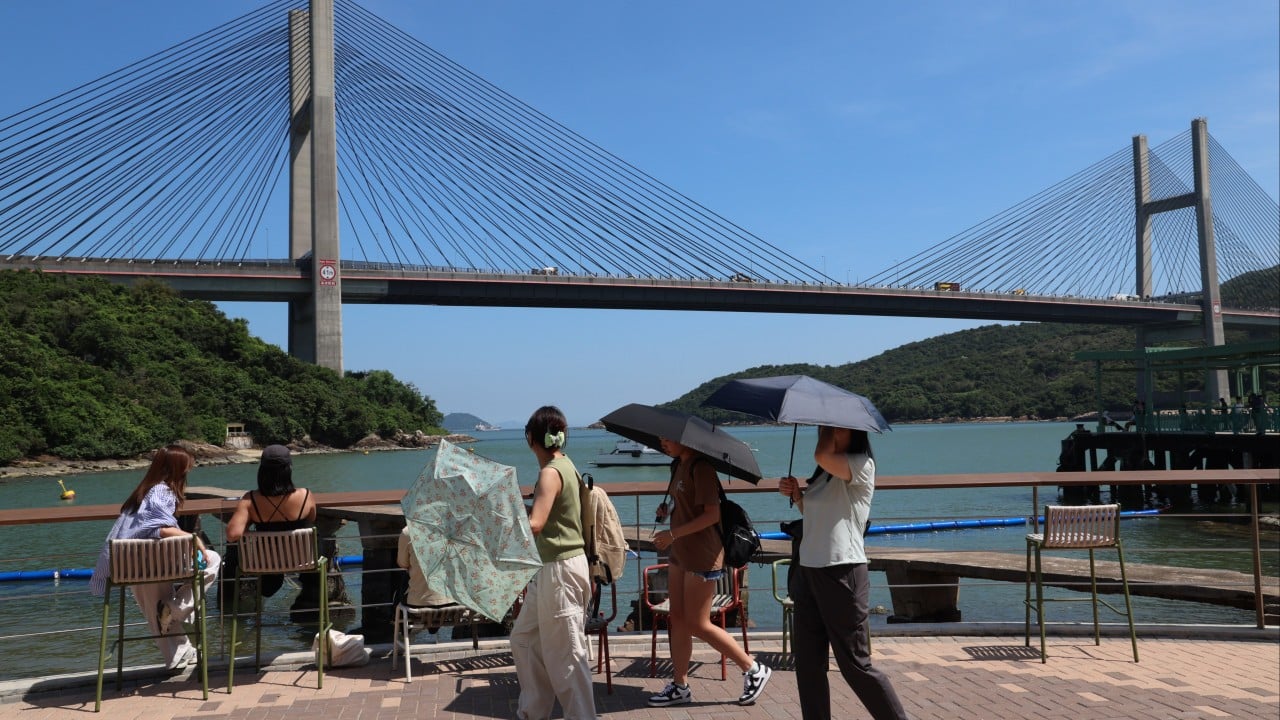
When the thermometer ticks past thirty-seven degrees Celsius in the concrete canyons of Hong Kong, the city stops functioning on normal terms. Official forecasts point to blistering weekend highs driven by the outer subsiding air of regional storm systems like Tropical Cyclone Dolphin, turning the Special Administrative Region into a literal pressure cooker. Most mainstream reports treat these spikes as temporary anomalies, brief weather inconveniences to be weathered with an umbrella and a bottle of mineral water. That narrative is fundamentally broken. What we are witnessing is an accelerating structural crisis where urban design, dense population architecture, and atmospheric physics collide with lethal precision.
The Mechanics of an Urban Oven
The core problem with Hong Kong heat is not merely the ambient air temperature recorded by the Hong Kong Observatory. It is the built environment itself. Decades of hyper-dense vertical development have created an architectural morphology that traps thermal energy at street level. High-rise walls block prevailing breezes from Victoria Harbour, while millions of square meters of concrete, asphalt, and glass absorb solar radiation throughout the day and reradiate it slowly overnight.
Consider a hypothetical office worker stepping out of a chilled Central skyscraper into the midday glare. The transition is not just uncomfortable; it induces immediate thermal shock. In districts like the New Territories or densely packed urban pockets, the combination of high humidity and restricted wind flow pushes the effective heat stress index far beyond the raw air temperature. The atmosphere behaves like a wet-bulb trap, where human perspiration loses its cooling efficiency entirely.
Who Bears the True Burden
Official advisories warn vulnerable groups—the elderly, infants, and those with chronic medical conditions—to stay indoors. Yet, this advice exposes a glaring socioeconomic divide. Thousands of lower-income residents live in subdivided flats, illegal rooftop structures, or older tenement buildings colloquially known as tong lau. These spaces lack cross-ventilation and efficient air conditioning, transforming into literal ovens during prolonged heatwaves.
For outdoor workers, construction crews, and sanitation staff, retreating indoors is simply not an option. The Labour Department issues heat stress warnings, but enforcement of mandatory rest breaks remains notoriously difficult in a fragmented subcontracting economy. Employers face fines, but the economic pressure to meet tight construction deadlines often forces workers to trade safety for a paycheck. The burden of extreme weather maps directly onto lines of economic vulnerability, disproportionately affecting those with the least capital to insulate themselves from climate realities.
The Failure of Reactive Policy
For years, the government response to extreme heat has relied on a playbook written for a different era. Opening temporary heat shelters and issuing amber or red work warnings are reactive band-aids applied to a chronic wound. Shelters are often underutilized because they require vulnerable citizens to travel across the city during peak thermal hours, exposing them to greater danger in transit.
True urban resilience requires a complete overhaul of building codes and city planning. We need mandatory green-roof legislation on commercial and residential towers, stricter insulation requirements for older housing stock, and architectural corridors designed to channel sea breezes deep into the urban core. Planting trees and expanding public parks cannot be treated as aesthetic afterthoughts; they are vital pieces of civic infrastructure required to lower ambient temperatures through evapotranspiration.
The upcoming weekend peak of thirty-seven degrees will pass. The media cycle will move on to the next storm or political headline. But the thermal mass of Hong Kong will retain the scars of this escalation, waiting for the next high-pressure ridge to lock the heat back over the Pearl River Delta.