The floorboards do not groan anymore. They cannot. Too many years have passed since the last pair of shoes paced anxiously across them, waiting for a verdict, a signature, a piece of paper that might alter a life.
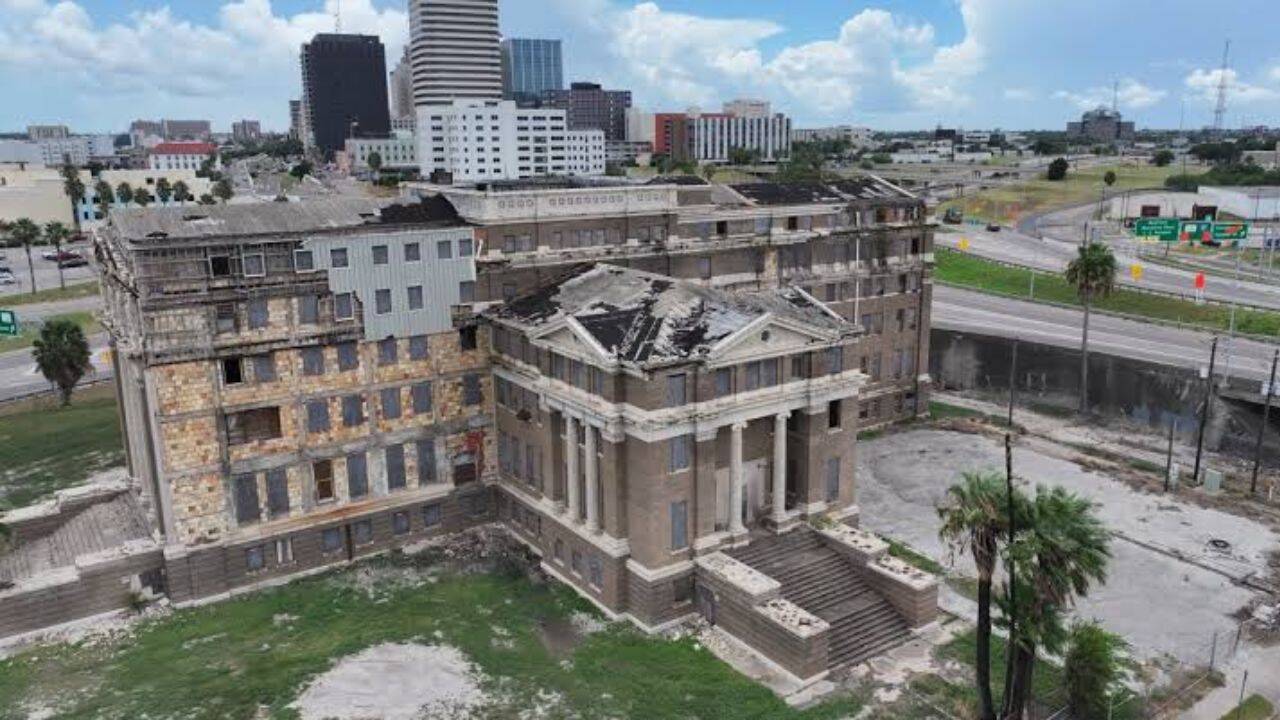
Drive down a quiet Texas highway, past the weathered cedar posts and the rusted skeletons of old grain elevators, and you will find it. A building that once held the collective heartbeat of an entire county. Today, it stands mute. Its windows are dark, hollowed-out sockets staring blindly at an empty square where townspeople once tied their horses, then their Fords, and eventually stopped coming altogether.
Since 1977, this courthouse has held nothing except dust, memories, and the slow, relentless erosion of time.
Now, it faces its final sentence. Demolition.
The reason sits neatly in a ledger miles away, translated into a cold, clinical sum: $120 million. That is the estimated price tag to bring the old stone back to life. One hundred and twenty million dollars to fix leaking roofs, crumble-softened mortar, outdated wiring, and structural beams that have grown tired of holding up the sky. In an era where every municipal dollar is stretched thin enough to snap, that number is a death warrant.
You look at a figure like that and you nod. It makes fiscal sense. Tear it down. Clear the lot. Plant grass or pave it over for parking. Move forward.
Except buildings like this are never just about bricks and mortar. They are anchors.
Imagine walking into that courtroom in 1948. The air smells of floor wax, cheap pipe tobacco, and nervous sweat. Outside, the cicadas scream in the dry Texas heat. Inside, a man in a stiff, Sunday-best shirt stands before a judge, his calloused hands turning his Stetson over and over until the brim is soft. He is fighting for a strip of pastureland or pleading for leniency for a reckless son. The stakes are immense, even if the world outside has no idea they exist.
Every county courthouse in America was built as a palace for the ordinary citizen. They were architectural declarations that law, order, and community mattered. They used imported marble and soaring clock towers not to show off wealth, but to show reverence. The message carved into the stone was clear: What happens here is sacred.
When you abandon a building like that, you do not just lose a structure. You lose a chapter of memory.
The arithmetic of preservation is always brutal. A new, utilitarian box of steel and glass can be thrown up for a fraction of the cost. It will have efficient air conditioning. It will have fluorescent lights that hum a steady, modern tune. It will be practical.
And it will possess zero soul.
Across rural America, these ghosts are multiplying. Small towns shrink as young people move toward the neon gravity of the cities. Tax bases wither. Municipal budgets buckle under the weight of maintaining grand, century-old infrastructure designed for an era that no longer exists. The courthouse in question is not an isolated tragedy; it is a symptom of a widespread forgetting. We built monuments when we were hopeful and young, and now we are learning how expensive it is to keep our promises to the past.
Is it worth one hundred and twenty million dollars to save a vacant box? Put that way, absolutely not. No sensible community can justify spending that kind of money on ghosts when bridges need paving and schools need books.
The tragedy is not that the wrecking ball is coming. The tragedy is that we built a world where a community has to choose between its history and its survival.
Soon, the heavy machinery will roll onto the square. The brick will tumble. The dust will rise into the wide Texas sky, stinging the eyes of the few remaining old-timers who remember when the building was the center of the universe. Within a week, there will be nothing left except an empty patch of dirt, ready for something new, something efficient, something forgettable.
The wind will sweep across the vacant lot, finding nothing left to echo against.