Every morning, Elias stands on a platform that smells of damp iron and old coffee, waiting for a train that is ten minutes late. He is not alone. Hundreds of people surround him, their eyes glued to flickering screens that announce delays in a clinical, unapologetic font. This is the friction of a city breathing through clogged arteries. The bridges are rusting. The power lines are straining under the heat of a changing world. We talk about "infrastructure" as if it is a collection of blueprints and steel, but for Elias, it is the half-hour of sleep he loses every day. It is the missed bedtime story with his daughter because the transit line buckled under a summer storm.
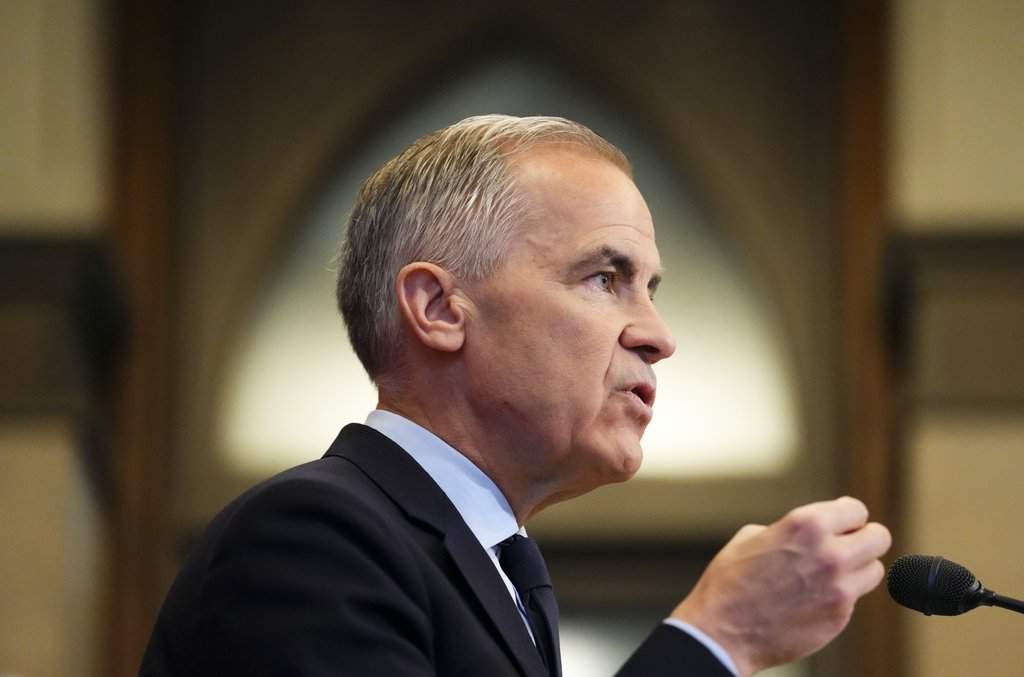
Mark Carney, the man who once held the keys to the Bank of England and the Bank of Canada, recently sat down in a room far removed from Elias’s train platform to discuss a radical solution to this exhaustion. His proposition is simple in theory but visceral in its implications: to build the future, we might have to sell the present.
Carney’s argument centers on "asset recycling." It is a term that sounds like something you do with plastic bottles, but it involves the multi-billion-dollar handover of public treasures—airports, highways, utilities—into the hands of pension funds and private investors. The logic is that the government is sitting on a gold mine of mature assets that are already built and functioning. By selling these to the private sector, the state can instantly liquefy its wealth and pour that cash into the "next generation" of projects. We are talking about the green energy grids and the high-speed rails that Elias’s daughter will need twenty years from now.
But the friction lies in the ownership.
The Hidden Ledger of Public Wealth
Think of a family home that has been paid off for decades. It provides security, a roof, and a sense of permanence. Now, imagine a financial advisor tells that family to sell the house, move into a rental, and use the cash to invest in a speculative green energy startup. On paper, the family’s net worth might grow faster. In reality, they no longer own the ground they sleep on.
When a government sells an airport, it is trading a steady, reliable stream of user fees for a lump sum of capital. Carney suggests that this is the only way to bridge the massive funding gap required for the "net-zero" transition. The numbers are staggering. We aren't looking for a few billion; we are looking for trillions. The public purse is stretched thin, bloated by the debt of past crises and the rising costs of an aging population.
The private sector, meanwhile, is drowning in capital. Pension funds are desperate for "long-horizon" assets—things that will still be there in fifty years, like a runway or a water filtration plant. They want the steady, predictable returns that come from everyone needing to fly or drink water. Carney sees a perfect, if uncomfortable, marriage: the public gets new schools and carbon-neutral grids, while the private sector gets the stability of the old world.
The tension, however, is felt at the toll booth.
The Toll on the Human Spirit
Consider a hypothetical commuter named Sarah. She drives a highway that was recently "recycled." Under government control, the tolls were stagnant, barely covering maintenance. Now, a global infrastructure fund owns the asphalt. They have a fiduciary duty to their pensioners to maximize returns. Suddenly, the toll creeps up. Then it fluctuates based on "peak demand."
Sarah doesn't care about asset recycling. She cares that her commute now costs the equivalent of a grocery run. This is the invisible stake of the privatization debate. When we sell a public asset, we lose the ability to prioritize the public good over the profit margin. We trade democratic control for fiscal agility.
Carney argues that this trade-off is necessary because the alternative is stagnation. If we don't find a way to fund the transition to a sustainable economy, the costs of climate-driven disasters will eventually dwarf any toll Sarah has to pay. The bridges will do more than rust; they will fail. The grid won't just be old; it will be dark.
We are living in an era of "permanent crisis," where the traditional ways of balancing the books no longer apply. Inflation has eaten the value of old budgets. Interest rates have made borrowing for new projects a painful prospect for many nations. In this environment, the "dead capital" locked up in an airport looks like a lifeline.
The Great Balancing Act
The risk of Carney’s vision is not just financial; it is psychological. There is a profound sense of loss when a community realizes it no longer owns its landmarks. There is a fear that the "recycling" will become a fire sale, where the public's hard-earned heritage is sold off to the highest bidder to cover up short-term budget holes.
To prevent this, the master storyteller of finance suggests a shift in how we view the state. Instead of being the "owner-operator" of everything, the government becomes the "architect" of the future. It identifies the needs—the hydrogen pipelines, the fiber-optic cables, the coastal defenses—and uses the proceeds from old assets to de-risk these new, scarier frontiers.
It is a high-stakes gamble on the idea that we can outrun our own decay.
The math is cold, but the motivation is deeply human. We want to believe that the world we leave behind will be better than the one we inherited. We want Elias to have a train that arrives on time, powered by a sun that doesn't burn his fields. We want Sarah to drive on roads that lead to a future she can afford.
If selling the airport is the price of that future, we have to ask ourselves what we truly value. Is it the ownership of the stone and mortar we can see? Or is it the promise of the invisible systems that haven't been built yet?
The train finally pulls into the station. Elias steps on, finding a small patch of floor to call his own for the next forty minutes. He watches the city pass by—a blur of grey concrete and untapped potential. Somewhere in a boardroom, a pen is hovering over a contract that could change who owns the very tracks he is riding on. The decision won't just be about numbers on a balance sheet. It will be about whether we have the courage to trade our history for a chance at a legacy.
We are standing on the platform, and the clock is ticking.