The Concrete Quiet Along an Unfinished Border
Cold. That is the first thing you notice when a border stops pretending to be temporary and starts acting like a wall.
Not the sharp, biting cold of a January wind off the Yellow Sea, though that comes soon enough. A deeper cold. The kind that settles into poured concrete, rusted rebar, and the quiet that follows when two halves of a single people decide that even the idea of a bridge is a threat.
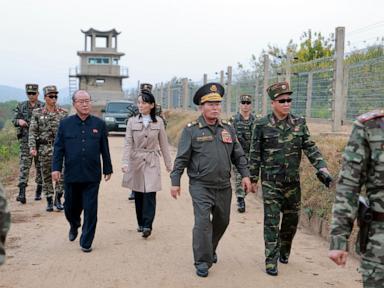
When reports emerge that the sister of North Korea’s leader has walked a line of fresh fortifications while tensions with South Korea climb, most readers skim a few lines and move on. Another headline from the Korean Peninsula. Another photo of dark coats, binoculars, and bleak ridges. Another spike in friction that feels almost routine until you stop to ask what a fortification actually is.
A fortification is not just dirt and stone. It is an argument made solid. It is a government telling its own soldiers, its neighbors, and the wider world that coexistence has been crossed off the ledger and replaced with permanence.
To understand why a border inspection carries weight far beyond the ridge where boots crunch on gravel, we have to look past the theatrics of state media and examine how quiet escalation works on the ground.
Two Lives on Opposite Sides of a Line
Let us use a hypothetical scenario to trace how abstract geopolitical friction lands on real human skin. Picture two men who never meet, born in the same decade on the same peninsula, living inside two entirely different versions of reality.
In the north, call him Chol-min. He is a young engineer or conscripted laborer assigned to reinforce a sector where roads once pointed south or where old transit corridors sat half-forgotten. His days are measured in rations, diesel fumes, frozen mud, and the sharp authority of officers who treat every meter of earth as a test of loyalty. When a high-ranking official—especially someone as central to regime messaging and state discipline as the leader’s sister—arrives for an inspection, the air changes. Every trench looks straighter. Every firing slit looks sharper. Chol-min does not need a foreign policy briefing to know what a visit from the top circle means. It means work speeds up. Leave gets tighter. Mistakes get heavier.
Across the line, in the south, call her Ji-eun. She lives thirty miles from the Demilitarized Zone, in a city where subway trains chime on schedule, glass towers catch late-afternoon light, and life moves at a sprint. Ji-eun is not sitting in a bunker. She is answering emails, checking rent prices, maybe watching a news alert on her phone while waiting for coffee. Yet every flare-up along the border pulls an invisible thread taut inside her chest. Not panic—most people in Seoul do not live in daily terror—but a low, persistent hum of dread. A sudden shift in tone from Pyongyang. A road blown up or blocked. A senior figure inspecting newly hardened positions. Each piece on its own feels manageable. Together, they remind her that the armistice signed in 1953 never truly ended a war; it only paused the shooting.
Neither Chol-min nor Ji-eun controls the megaphone. Both live inside its echo.
I have spent enough time studying conflict zones and reading the accounts of people caught near contested frontiers to know how deceptive calm can be. When you stand near a tense border, the danger rarely announces itself with a single explosion. It creeps in through small, deliberate changes. A gate stays locked longer. A patrol route shifts. A trench gets deeper by three feet. People who live near those lines develop a sixth sense for mood—how the wind blows, whether trucks are moving at night, whether voices at checkpoints sound tighter than usual. You learn quickly that tension is a physical atmosphere before it becomes a headline.
Why Fortifications Speak Louder Than Speeches
Speeches from Pyongyang are loud, theatrical, and frequent. Analysts parse every adjective for months, sometimes over-reading bluster and sometimes under-reading intent.
Fortifications are different. Concrete does not bluff easily.
Think of a fortification like a lock you install on an interior door inside your own house. You do not put a heavy deadbolt on your living room door because you love your family and expect an easy afternoon. You put it there because you have decided you do not trust what is on the other side—or because you want to make sure nobody walks back through easily.
Over the past several years, North Korea’s leadership has steadily dismantled the language and symbolism of eventual peaceful unification that once lingered at the edges of its official posture. Physical barriers, mined stretches, demolished or severed transport links, and reinforced defensive positions fit a coherent strategic logic. Rather than treating the inter-Korean boundary merely as a ceasefire line awaiting a distant diplomatic thaw, Pyongyang has increasingly treated it as a hardened frontier between two hostile states.
Why does that shift matter so much? Because psychology shapes risk.
When a border is viewed—even dimly—as a place where families might one day reunite, trains might run, or talks might resume, both sides keep a narrow margin for restraint. The space is never warm, and trust has long been absent, yet some baseline of shared history remains in the room. Once a regime pours concrete along that divide and sends a senior figure like the leader’s sister to inspect the work, it signals something starker. It signals that accommodation is off the table, that defense and denial of access are being baked into the terrain itself, and that any miscalculation along a crowded, heavily armed line carries steeper consequences.
Still, let us be honest about what we do not know—and why certainty in Korean Peninsula affairs is often a trap.
Even seasoned observers disagree on exact timelines, tactical motives, and internal calculations inside Pyongyang. Is a high-profile inspection aimed primarily at deterring South Korean and U.S. military posture? Is it meant to project strength to domestic audiences facing economic strain? Is it a way to test reactions in Seoul and Washington while keeping pressure dialed just below the threshold of open conflict?
Often, the answer is all of those at once. Authoritarian states rarely stage a border inspection for a single narrow reason. A walk along freshly built defenses serves as internal discipline, external signaling, and political theater rolled into one cold afternoon. Admitting that uncertainty is not a sign of weakness; it is the only honest starting point when trying to read a closed system.
The Invisible Stakes Beneath the Headlines
When tension rises between the two Koreas, outside observers often reduce the stakes to a familiar checklist: missile tests, artillery ranges, alliance drills, sanction evasion, nuclear warheads. Those pieces are real, and ignoring them would be reckless.
Yet they miss the quieter stakes that rarely make the top of a wire report.
First is the erosion of off-ramps. Every physical barrier added to a border, every severed connection, every hardening of posture makes de-escalation harder to imagine. Crisis management depends on channels, predictability, and room to step back without losing face. When a frontier becomes a wall of concrete and suspicion, a minor incident—a stray drone, a misread patrol movement, a sudden clash near maritime or land lines—has fewer shock absorbers.
Second is the human cost of permanent division. Generations have now grown up who have never known a unified peninsula and whose mental maps are locked behind barbed wire and propaganda. For older Koreans—many now in their eighties or nineties—the window to see a separated relative again is closing fast, measured not in decades anymore but in months and winters. Every fortification is another nail driven into a door that was already hard to open.
Third is the regional ripple effect. The Korean Peninsula does not sit in a vacuum. Shifts in inter-Korean tension interact directly with Washington’s deterrence posture, Tokyo’s security calculations, and Beijing’s balancing act along its own border with North Korea. When friction climbs in Seoul and Pyongyang, naval patrols tighten, air defenses stay on higher alert, and great-power competition grows sharper. A localized spark can pull far larger powers into a high-stakes standoff.
Consider what happens next when a leader’s sister—a figure widely understood in outside analysis to wield major influence in regime messaging, party discipline, and inter-Korean and external relations—steps onto a fortified line. Her presence is not accidental. In Pyongyang’s hierarchy, proximity to the top leader equals authority. When she inspects defenses as tensions rise, the message is clear: the leadership treats the frontier as a priority zone of state readiness, not a backwater.
How Fear and Habit Shape Both Sides
To really grasp why this dynamic persists, look at human behavior under chronic threat.
When people live with unresolved danger for seventy-plus years, two habits take root. One is numbness. The other is hyper-vigilance.
In South Korea, numbness is survival. If you let every provocation from the north derail your Tuesday morning, you would burn out before spring. Markets wobble briefly on sharp news, headlines flare, and then daily life resumes. Yet beneath that composure sits a quiet readiness—a knowledge that history has a way of intruding when least expected.
In North Korea, hyper-vigilance is enforced from childhood. The state frames the outside world—South Korea, the United States, sanctions, military exercises—as an existential threat. Building fortifications fits neatly into that narrative. Concrete validates the warning. Look how dangerous the world is, the wall seems to say; look how necessary our vigilance and sacrifice remain.
Here is a metaphor worth naming plainly as a metaphor: think of two neighbors who have not spoken in years, separated by a tall fence. One day, one neighbor starts stacking cinderblocks along the base and walking the line with a stern expression. Even if no bricks are thrown, the sight changes how the other neighbor walks past the yard. You watch the windows a little closer. You wonder what happens if a storm knocks something loose.
That is the psychological weight of border fortifications. They turn space itself into a statement.
Reading the Signs Without Losing Your Bearings
So how should an ordinary reader make sense of news like this without swinging between fatalism and indifference?
Start by looking at pattern over noise. A single inspection or sharp statement is a snapshot; months and years of physical construction, troop posture, and policy shifts form the movie. When fortification work aligns with broader political moves—such as hardening official rhetoric toward Seoul or cutting off avenues of contact—it points to a durable strategy rather than a passing mood.
Watch the space between signaling and escalation. States that fortify borders are often trying to deter or consolidate control rather than launch an immediate all-out invasion—though miscalculation remains a constant hazard when tensions run high. Distinguishing between long-term hardening and imminent attack helps keep fear grounded in evidence rather than rumor.
Remember the people behind the abstractions. Words like tensions, fortifications, deterrence, and escalation sound clean on a screen. They smooth away the cold fingers of a young soldier standing watch before dawn, the anxious glance of a family living near the frontier, and the weight of a divided homeland that refuses to disappear from human memory.
A border is supposed to be a line on a map. On the Korean Peninsula, it has become a world of its own—heavy, guarded, and full of unspoken history.
Steel fades. Concrete cracks in freezing rain. Yet the human longing for safety, dignity, and a future not dictated by fear endures long after a patrol walks past the ridge, waiting in the quiet that follows every inspection.