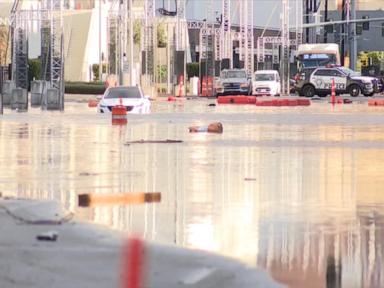
Millions of people across the region are currently bracing for heavy rain and life-threatening flash flooding as a slow-moving weather system stalls over saturated ground. Yet, treating this meteorological event as a sudden, unpredictable act of nature misses the point entirely. The rising water is not merely a product of cloudbursts. It is the logical, engineered consequence of decades of unchecked municipal expansion, deteriorating infrastructure, and a planning philosophy that treats soil as an inconvenience to be paved over.
When heavy rain falls on a natural landscape, the earth acts as a sponge. Roots, leaf litter, and permeable topsoil absorb a massive percentage of the initial downpour, slowing down the runoff and filtering the water before it reaches local waterways. Modern metropolitan areas operate on the exact opposite principle. Asphalt, concrete, and rooftops form an impervious shield. Water hits the ground and has nowhere to go. It accelerates into storm drains that were engineered using rainfall data from the middle of the twentieth century—data that no longer reflects the intensity of contemporary weather patterns.
The Mathematics of Modern Overload
Civil engineers design urban drainage systems around statistical thresholds, such as the ten-year or fifty-year storm. These metrics assume a certain probability of heavy rainfall within a given timeframe. The baseline assumptions are collapsing. A warming atmosphere holds more moisture, translating into sudden, high-volume cloudbursts that overwhelm municipal pipes within minutes.
Consider a hypothetical mid-sized municipality with a storm sewer network built in 1975. At the time, surrounding acreage consisted of farmland and light woods, allowing natural retention. Over the next forty years, developers replaced those fields with distribution centers, parking lots, and housing subdivisions. The volume of surface runoff during a heavy rain event quadrupled, but the pipe diameters beneath the streets remained identical. When a storm drops two inches of rain in an hour, the system chokes. The water backs up through manhole covers, pools in low-lying intersections, and turns residential streets into rushing rivers.
This is why flash flooding occurs with terrifying speed. There is a lag of mere minutes between the first heavy drop hitting a commercial rooftop and the moment an urban creek bursts its concrete banks.
Infrastructure Debt and the Cost of Inaction
Municipalities across the country are facing a massive infrastructure deficit. Fixing underground drainage systems is expensive, disruptive, and invisible to voters. Mayors and city councils routinely prioritize ribbon-cutting ceremonies for new sports complexes or commercial zones over the unglamorous work of upgrading subterranean stormwater management networks.
When a flash flood hits, the immediate political response focuses on emergency rescue operations and disaster declarations. Relief funds flow in after the damage is done. Little attention is paid to proactive mitigation. Upgrading a drainage system requires digging up major thoroughfares, replacing undersized culverts, and installing modern retention basins. These projects cause years of traffic disruptions and cost hundreds of millions of dollars. Without them, however, communities remain vulnerable to repeating the same cycle of inundation every time a heavy front stalls overhead.
Rethinking the Urban Sponge
Forward-thinking urban planners are realizing that trying to out-engineer water with bigger concrete pipes is a losing battle. Nature always wins the volume game. The alternative is shifting toward sponge cities—urban environments designed to absorb, clean, and store water locally rather than rushing to push it away.
This approach involves replacing concrete riverbanks with natural wetlands, mandating green roofs on commercial buildings, and installing permeable pavement in parking structures. Rain gardens in public parks can capture runoff from surrounding neighborhoods, allowing water to infiltrate the aquifer gradually rather than flooding basements downstream.
Implementing these changes requires dismantling rigid zoning laws and pushing back against short-sighted commercial interests. Until local governments treat water management as a core existential priority rather than a secondary utility, millions of residents will continue to watch the weather forecast with dread, waiting for the next storm to turn their streets into torrents.