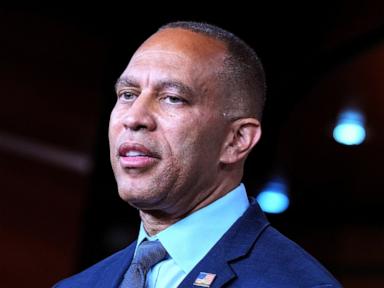
Artificial intelligence is rewriting global power dynamics while Washington lawmakers treat it like a minor policy footnote. House Democratic Leader Hakeem Jeffries recently sounded the alarm, telling colleagues they must act urgently to build safety guardrails around advanced artificial intelligence technologies. But hearing politicians talk about urgency and actually watching them pass binding legislation are two entirely different things.
If you look past the press releases and high-profile committee hearings, Congress is utterly deadlocked. Silicon Valley labs push out frontier models faster than federal agencies can read the summaries, and Capitol Hill remains paralyzed by partisan friction. You have one side warning about national security risks and corporate accountability, while the other worries that heavy-handed rules will hand an outright victory to international competitors like China. Meanwhile, everyday citizens are left exposed to autonomous cyberattacks, algorithmic discrimination, and an unregulated tidal wave of synthetic media.
The Core Disconnect in Washington
Why is federal oversight moving at a glacial pace? Part of the issue is technical illiteracy. Many lawmakers still view artificial intelligence through the lens of science fiction rather than practical economics. They debate dystopian scenarios about sentient machines while ignoring the immediate economic displacement happening in real time.
When industry insiders and top researchers resign from major tech firms to protest reckless testing protocols, you would expect an emergency response. Instead, Congress heads home for extended recesses. Jeffries and other Democratic leaders formed internal congressional commissions to study the innovation economy, but studies don't stop autonomous code execution or flawed algorithmic hiring tools.
The political divide comes down to a fundamental disagreement over who should hold the brake pedal. House Republicans often argue that over-regulating domestic tech companies will stifle innovation and cede technological supremacy abroad. On the other side, progressives and civil rights advocates point out that unchecked deployment harms marginalized communities, exacerbates workforce instability, and creates security vulnerabilities that bad actors exploit daily.
What State Legislatures Are Doing While Congress Sleeps
Because federal lawmakers refuse to pass comprehensive rules, state governments are filling the void. California has aggressively stepped into the regulatory vacuum, passing landmark safety bills requiring independent verification organizations and rigorous third-party audits for powerful models.
State-level patchwork policies create a logistical nightmare for software developers, who now face a fragmented maze of compliance standards across different state lines. Major tech corporations actually claim they want federal clarity to avoid dealing with fifty separate state laws, yet lobbying efforts routinely water down any meaningful accountability measures in federal proposals.
Voluntary corporate frameworks aren't cutting it either. Relying on self-regulation is like letting speeders grade their own driving tests. When companies mark their own homework, safety protocols quietly vanish the moment quarterly earnings goals enter the picture.
Moving Past Political Gridlock
If Congress wants to move past empty rhetoric, lawmakers need to focus on enforceable standards that target specific harms rather than trying to regulate an entire mathematical concept.
- Mandatory safety evaluations: Require independent, third-party testing before frontier models deploy to the public, stripping away corporate immunity for foreseeable security flaws.
- Clear civil rights protections: Ensure existing anti-discrimination laws apply directly to automated decision systems, preventing biased algorithms from dictating housing, credit, and employment.
- Transparent incident reporting: Force developers to disclose dangerous autonomous capabilities or security breaches immediately, rather than hiding failures behind proprietary trade secrecy claims.
Urgency requires more than a press conference or a strongly worded memo. Until lawmakers trade partisan talking points for concrete legislative compromises, the tech industry will continue writing its own rules while the public absorbs the fallout.
Why Jeffries is pushing for immediate AI regulation in Congress
This video provides a detailed look at the growing pressure on congressional leaders to establish immediate oversight for artificial intelligence development.