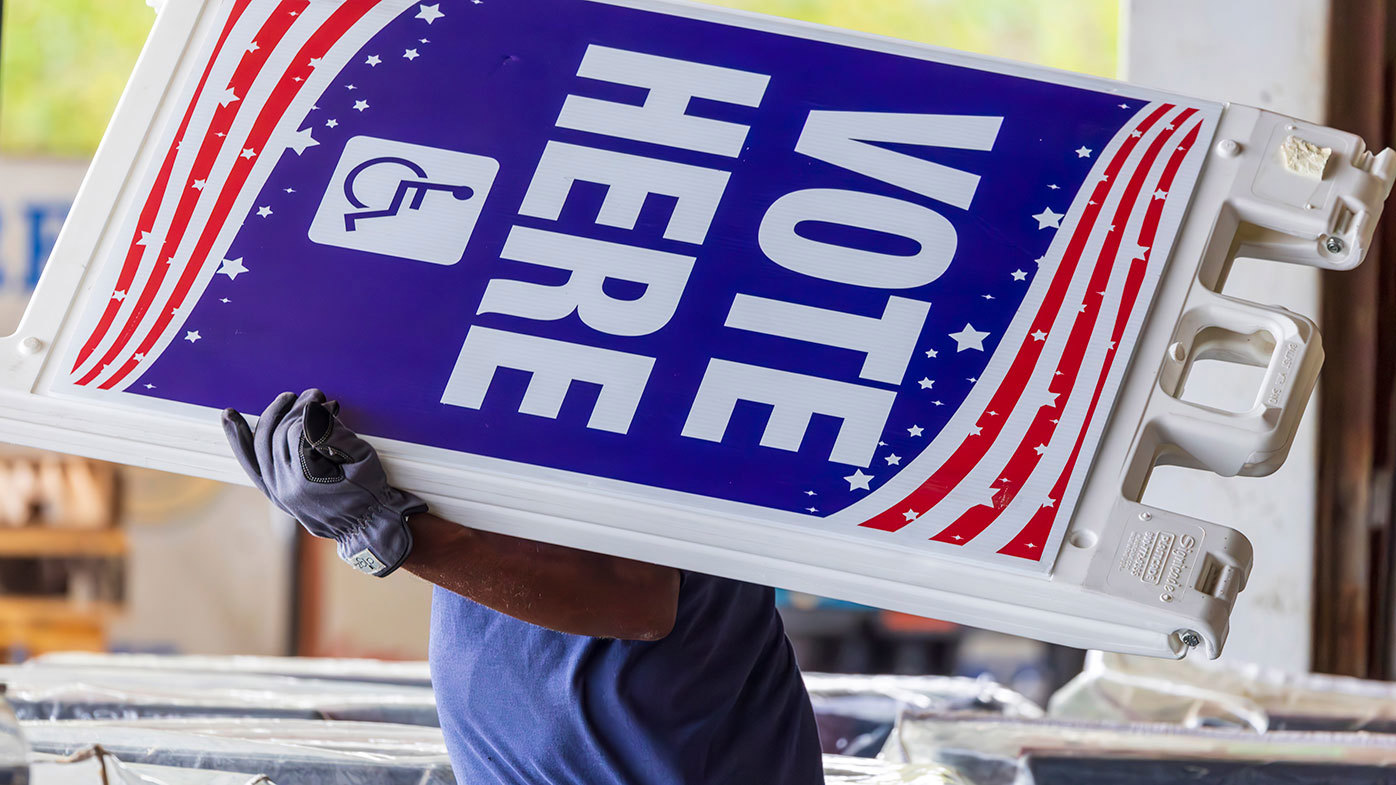
The United States does not have a "pause" button for national elections. While sensationalist headlines occasionally suggest that the government can suspend voting to redraw district lines or manage civil unrest, the legal reality is far more rigid. Under current federal law and the Constitution, the date for choosing presidential electors is fixed as the Tuesday following the first Monday in November. Any attempt to "suspend" this process to address redistricting or administrative hurdles would require an act of Congress, a move that would trigger an immediate and unprecedented showdown in the Supreme Court.
Redistricting—the process of redrawing legislative boundaries—is a messy, partisan, and often litigious affair. However, it is fundamentally a state-level responsibility governed by the census cycle. When maps are delayed or struck down by courts, the standard remedy is not to cancel the election, but to use interim maps or court-ordered boundaries. The suggestion that the entire federal apparatus would grind to a halt to accommodate mapmakers is a misunderstanding of how American power is distributed. Building on this topic, you can also read: Structural Mechanics of National Security Escalation: Deconstructing the UK Severe Threat Level.
The Ironclad Calendar of the Electoral College
The heartbeat of American democracy is not found in a single polling place, but in the United States Code. Specifically, 3 U.S.C. § 1 mandates the timing of the election. This isn’t a suggestion. It is a statutory requirement that anchors the entire transition of power.
Even in the darkest hours of the Civil War, the 1864 election proceeded. Abraham Lincoln himself acknowledged that if the rebellion could force the postponement of a national election, it might already have "fairly conquered and ruined" the country. This historical precedent serves as a massive barrier against any modern administration claiming that logistical difficulties, such as unfinished district lines, justify a delay. Observers at The Washington Post have shared their thoughts on this matter.
If a state fails to make a choice on the appointed day, federal law provides very narrow windows for "subsequent" selection, but this has never been used to justify a blanket suspension of the national vote. The gears of the 20th Amendment also turn without fail. The terms of the President and Vice President end at noon on January 20. If no election occurs, the line of succession kicks in automatically. The sitting president does not stay in office by default. They simply cease to be president.
Why Redistricting Cannot Stop the Clock
Redistricting happens every ten years following the census. It is a high-stakes game of political chess where every street corner can change the balance of power in the House of Representatives. Because the census data is sometimes delayed—as we saw during the 2020 cycle—states often find themselves in a time crunch to finalize maps before the primary season begins.
When these deadlines are missed, the legal system has a built-in "fail-safe" mechanism. Courts do not stop elections; they provide temporary maps.
The Judicial Safety Valve
If a state legislature and a governor cannot agree on a map, or if a court throws out a map for being an unconstitutional racial or partisan gerrymander, the following usually happens:
- Court-Appointed Special Masters: A neutral expert is hired to draw a "least-change" map that satisfies legal requirements.
- Stay of Execution: A court may allow an "imperfect" map to be used for one election cycle rather than disenfranchising the entire population.
- Primary Delays: While a state might move its primary election date to accommodate map changes, the general election remains immovable.
The idea that the federal government would intervene to halt all 50 states because of a redistricting dispute is a logistical and legal impossibility. Each state runs its own election. There is no single federal election "switch" to flip.
The Mechanics of Gerrymandering and Power
To understand why people fear a suspension of elections, one must look at the sheer volatility of modern redistricting. We are currently witnessing a shift toward algorithmic map-making. Sophisticated software can now predict voter behavior with terrifying accuracy, allowing mapmakers to "pack" and "crack" districts to ensure a specific outcome.
Packing involves cramming as many opposition voters as possible into one district to minimize their influence elsewhere. Cracking spreads those voters across many districts so they can never form a majority.
These tactics lead to intense legal battles. In states like North Carolina, Alabama, and Ohio, we have seen maps rejected by courts just months before an election. In these instances, the tension reaches a breaking point. The losing side often cries foul, claiming the process is broken. But even in these extreme cases, the remedy is a legal adjustment, not a national shutdown.
The Ghost of the "Emergency" Power
There is a persistent myth that the President holds "emergency powers" that could override the election calendar. While the executive branch has broad authority during times of war or national disaster, that authority stops at the ballot box.
The Supreme Court has historically been allergic to the idea of executive interference in the electoral process. In Youngstown Sheet & Tube Co. v. Sawyer, the court established that the President’s power is at its lowest ebb when he acts against the expressed will of Congress. Since Congress has expressed its will that the election happen on a specific Tuesday in November, any executive order to the contrary would be dead on arrival in the chambers of the SCOTUS.
Furthermore, the decentralization of US elections is a feature, not a bug. Elections are managed by thousands of county clerks and state secretaries of state. For a central government to "suspend" the election, it would have to physically prevent 50 different state governments from conducting their own constitutionally mandated duties. It would be a coup in all but name, and the bureaucracy itself—the "Deep State" that conspiracy theorists often cite—is actually the greatest protection against such a move. The people who print the ballots and program the machines don't all report to the Oval Office.
The Real Threat is Attrition, Not Suspension
If we stop looking for a dramatic "suspension" of the election, we might see the real danger: the slow degradation of the redistricting process until it becomes non-functional.
When maps are locked in perpetual litigation, voters lose faith. They stop knowing which district they live in or who their representative is. This confusion creates a "soft" suppression. If the lines are always shifting, the barrier to entry for challengers becomes insurmountable, and incumbents become entrenched regardless of their performance.
We see this in the rise of "safe" seats. Currently, only a tiny fraction of the 435 seats in the House of Representatives are considered truly competitive. This isn't because of a government suspension of the rules; it’s because the rules are being used to engineer the competition out of the system.
The Logistics of a Failed Map Cycle
Consider a hypothetical scenario where a state simply refuses to draw a map. The law is clear: the state would have to elect its representatives "at-large." This means every voter in the state would vote for every seat on a giant, statewide ballot. This is a nightmare for candidates—it makes campaigning exponentially more expensive—but it ensures the election happens. The system prefers chaos over silence.
The Legislative Shield
Congress has the power under the Elections Clause (Article I, Section 4) to "make or alter" regulations regarding the "Times, Places and Manner" of holding elections for Senators and Representatives. If there were ever a legitimate reason to move an election date, it would have to start in the House and Senate.
However, the political cost of such a move is prohibitive. Any party that suggests moving an election date is immediately accused of trying to seize power. In a hyper-polarized environment, getting a bipartisan consensus to delay a vote is practically impossible.
Even if a natural disaster—a massive hurricane or a second pandemic—hit on election day, the standard procedure is to extend hours or allow for emergency mail-in ballots in the affected areas. We saw this in 2020. The system adapted; it did not stop.
Mapping the Future
The conversation shouldn't be about whether the government will suspend the election—they won't—but about how we can make the redistricting process more transparent so that the threat of a delay never enters the public consciousness.
Independent redistricting commissions are the most viable path forward. By removing the map-making power from the hands of the politicians who benefit from the lines, we reduce the amount of litigation and the likelihood of last-minute map collapses. Currently, states like Michigan and California use these commissions to varying degrees of success. They aren't perfect, but they represent a move toward a more stable electoral calendar.
The strength of the American system is its rigidity. The dates are set. The terms are limited. The lines will be drawn, one way or another, by a legislature or by a judge. The government doesn't get to hit pause to get its house in order. The clock is ticking, and the Tuesday after the first Monday in November is coming, whether the maps are ready or not.
Secure your registration, know your local board of elections, and ignore the noise of a "suspension" that the law does not allow.



