The image of an untouchable American military machine is hit with a reality check. Over the last three weeks, a coordinated series of strikes has done more than just rattle nerves at regional outposts; it’s carved a billion-dollar hole in the Pentagon’s pocket. While Washington often plays down the "minimal" nature of these hits, a closer look at the data from the recent 21-day assault shows a different story. It’s a story of high-tech assets being humbled by relatively cheap, persistent threats.
When we talk about losses, we aren’t just talking about buildings. We’re talking about the eyes and ears of the US military in the Middle East.
The Massive Bill for High Tech Radar and Defense
The biggest shock to the system hasn't been the loss of personnel—thankfully, fatalities have been extremely limited—but the destruction of specialized hardware. You can’t just "patch up" a THAAD radar system.
Reports indicate that Iran-backed strikes successfully targeted an AN/TPY-2 radar component of the Terminal High Altitude Area Defense (THAAD) system. This isn't a simple radio tower. It’s a sophisticated piece of equipment valued at roughly $485 million. In a single afternoon, a drone or missile worth a few thousand dollars can effectively blind a defense system that costs half a billion.
The financial hemorrhaging doesn't stop there. In Qatar, at the Al Udeid Air Base, an AN/FPS-132 early warning radar—a cornerstone of regional surveillance—took a hit. The price tag for that system? A staggering $1.1 billion. When you add up the damage to radar sites across Jordan, Kuwait, and the UAE, the "hardware bill" for this 21-day window easily clears the $1.9 billion mark.
Drone Wars and the MQ-9 Reaper Problem
The US has long relied on the MQ-9 Reaper as the workhorse of Middle Eastern surveillance. They’re great for loitering over a target for 20 hours, but they’ve proven surprisingly vulnerable lately.
During this assault period, multiple MQ-9 Reapers were downed. With each unit costing between $30 million and $56 million depending on its sensor suite, these losses add up fast. It’s not just the money; it’s the operational vacuum they leave behind. When a Reaper goes down over Iraq or Yemen, the US loses real-time intelligence on the very groups launching the attacks.
It’s a lopsided war of attrition. A militia uses a "suicide" drone that costs less than a used Toyota Camry to take out a US asset that costs as much as a private jet. You don't need a math degree to see that the math doesn't favor the Pentagon.
Ground Zero Al-Asad and the Human Toll
While the hardware costs get the headlines, the pressure on the ground is personal. The Al-Asad Airbase in Iraq has become a favorite target for ballistic missiles and "kamikaze" drones.
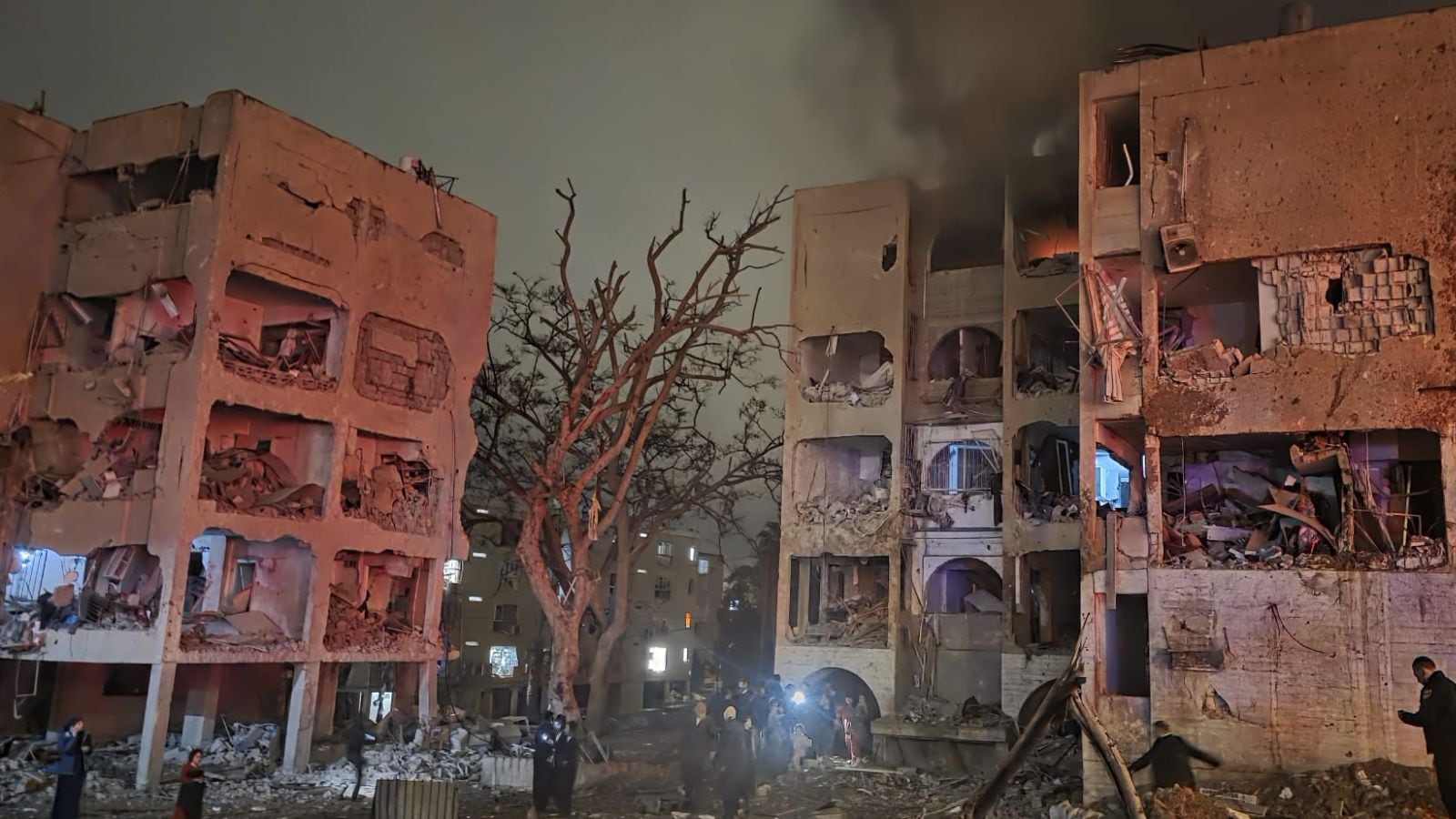
In one of the most intense stretches of this 21-day period, Al-Asad was hit by close-range ballistic missiles. We aren't talking about "grad" rockets anymore. These are heavier, more precise weapons. The physical damage to the base—hangars, fuel depots, and living quarters—is estimated at over $300 million across the region.
- Traumatic Brain Injuries (TBI): This is the "hidden" injury of this conflict. Dozens of service members have been treated for TBIs following these blasts. Even if they return to duty, the long-term impact on force readiness is real.
- Infrastructure Stress: Constant "shelter-in-place" orders disrupt maintenance and training. A base under siege isn't an effective launchpad for regional stability.
Why the US Strategy is Shifting
You might wonder why the US doesn't just "end it" with a massive show of force. The reality is a complex web of "deterrence" that seems to be fraying.
The Pentagon recently requested an additional $200 billion in war funding. That's a "B," and it’s a big one. Defense Secretary Pete Hegseth recently noted that the cost of these operations "could move" higher. The US is now being forced to redeploy THAAD components from as far away as South Korea just to plug the holes in the Middle East.
This isn't just about 21 days of fire. It’s about a fundamental shift in how "low-cost" adversaries can bleed a superpower. They aren't trying to win a pitched battle; they’re trying to make the cost of staying too high to justify.
What This Means for You
If you’re following this because you’re worried about regional stability or just wondering where the tax dollars go, here is the bottom line: The "21-day assault" showed that US air defenses are not a bubble. They can be pierced, and when they are, the cost is astronomical.
Keep an eye on the following:
- Redeployment Patterns: Watch if the US moves more assets from the Pacific to the Middle East. That tells you how much damage the current systems actually took.
- The "LUCAS" Drone: The US is now trying to fight fire with fire, introducing its own low-cost autonomous drones to counter the Iranian models.
- Diplomatic Closures: When embassies in places like Kuwait City go to "non-essential staff only," it's a sign that the intelligence community expects the hardware losses to be followed by renewed ground threats.
The era of "cheap" regional presence is over. Every day the US stays in these contested zones, the meter is running at a rate of millions per hour.