The air inside the terminal felt thinner, though the oxygen levels hadn't changed. At Dulles International, the usual hum of transit had been replaced by a jagged, anxious static. For thirty-five days, the machinery of the American border didn't just slow down; it groaned under the weight of an invisible debt.
Consider a TSA agent we will call Elias. He is not a political strategist or a cable news pundit. He is a father of two who enjoys woodworking and possesses a particularly sharp memory for flight schedules. For five weeks, Elias woke up, kissed his sleeping wife, and drove to a job that had stopped paying him. He stood in the security lane, patting down travelers and scanning luggage, while his own bank account hovered in the red. He was an essential gear in a machine that had forgotten to oil its parts.
This wasn't just about a wall or a budget line item. It was about the mortgage payments that didn't happen, the insulin that got rationed, and the slow, corrosive realization that your livelihood is a secondary thought in a marble room miles away.
The Breaking Point of a Border
When the 116th Congress convened, the standoff over five billion dollars for a border wall had already frozen the Department of Homeland Security. By the time the shutdown reached its third week, it became the longest in United States history.
Statistics can be sterile. We hear "800,000 federal workers" and our brains struggle to visualize the scale. To see it clearly, you have to look at the grocery store lines in suburban Virginia or the food banks in San Diego specifically designated for Coast Guard families. Yes, the Coast Guard—the men and women patrolling the freezing waters of the North Atlantic—were performing life-saving rescues while their spouses back home were wondering if the landlord would accept a "good faith" letter instead of a check.
The DHS is a sprawling entity. It covers everything from cyber defense and disaster relief to the Secret Service. During the freeze, the "essential" employees were forced to work without pay, while the "non-essential" ones were sent home to rot in a state of forced idleness. Both groups shared a singular, gnawing uncertainty. Every morning, the headlines promised a breakthrough. Every evening, the sun set on a stalemate.
The Ink that Ended the Silence
The resolution didn't come with a grand fanfare. It came because the system reached a point of physical failure. When air traffic controllers in New York and Florida began calling in sick—not out of malice, but out of the sheer, unadulterated stress of managing the world's most complex airspace on an empty stomach—the levers of power finally moved. The delay of flights at LaGuardia accomplished what weeks of debate could not.
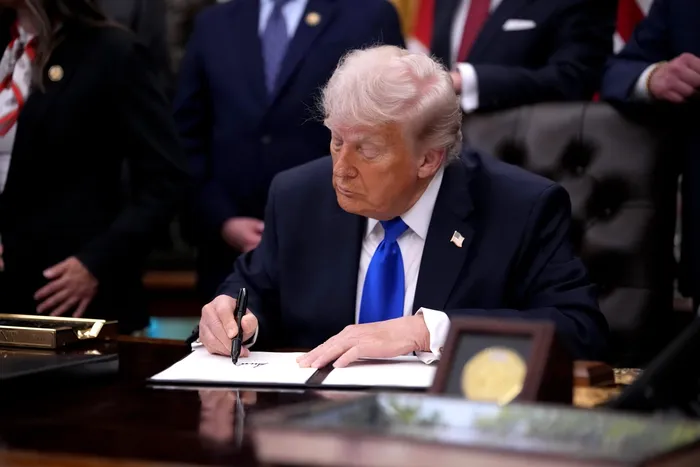
When the bill finally landed on the President's desk, it was a temporary surrender to reality. President Trump signed the three-week funding measure, a move that didn't solve the ideological rift but did, finally, restart the heart of the government.
Money began to move. It was like a dam breaking.
But the signing of a bill is just a mechanical act. The emotional recovery is a different story. For Elias and thousands like him, the "end" of the shutdown didn't mean a return to normal. It meant a frantic sprint to catch up on late fees, credit card interest, and the psychological toll of being told your labor is mandatory but your compensation is negotiable.
The Invisible Toll of the Gatekeepers
There is a specific kind of fatigue that sets in when you are tasked with protecting a nation that is currently failing to protect your dinner table.
Border Patrol agents continued to trek through the scrubland of the Rio Grande Valley. They tracked footprints in the dust and processed families seeking asylum, all while knowing their own children’s school lunch accounts were hitting zero. This is the human element the news tickers miss. We talk about "funding" as if it’s a pile of gold coins, but in reality, it is the stability of a nation’s front line.
When the DHS was finally funded, the immediate relief was palpable, but it was shadowed by a newfound cynicism. The employees returned to their posts, but the contract between the state and the worker had been bruised. They had seen how easily they could be used as a bargaining chip.
The Machinery Restarts
The logistics of restarting a department as massive as the DHS are staggering. It isn't as simple as flipping a light switch. You have to process back-pay for nearly a million people. You have to clear a month-long backlog of inspections, audits, and administrative filings.
Imagine the FEMA offices, where disaster preparedness grants had been gathering dust. Imagine the Cybersecurity and Infrastructure Security Agency (CISA), where analysts had been trying to defend against foreign threats while worrying about their own eviction notices. The "reopening" was a chaotic, high-stakes scramble to mend the net before something slipped through.
The bill signed that Friday afternoon was a bridge. It didn't provide the billions for the wall that had sparked the fire, but it gave the country twenty-one days of oxygen. It was a recognition that while the debate over the border's future would continue, the people guarding it could no longer be asked to bleed for free.
The gates at the airports stayed open. The Coast Guard cutters stayed on mission. The Secret Service maintained their vigil.
The Echo in the Halls
The shutdown ended not with a victory for either side, but with a collective sigh of exhaustion. The political theater had played out to an empty house, leaving the stagehands to pay the price.
As the first paychecks finally hit the bank accounts of the DHS staff, the tension in the terminals and at the checkpoints began to dissipate. Elias went back to his woodworking. He bought the good lumber he’d been eyeing. But every time he hears a politician mention a "shutdown" now, he feels a slight tremor in his hands.
The security of a nation is often measured in fences, sensors, and satellites. We forget that the most critical component of that security is a person—a person who needs to know that when they show up to stand in the gap, the country they serve stands behind them.
The doors are open again. The lights are on. But if you look closely at the faces of the people behind the counters and the badges, you can still see the shadow of those thirty-five days. It is the look of someone who knows exactly how fast the ground can fall away.
The ink on the bill has long since dried, but the memory of the silence remains.