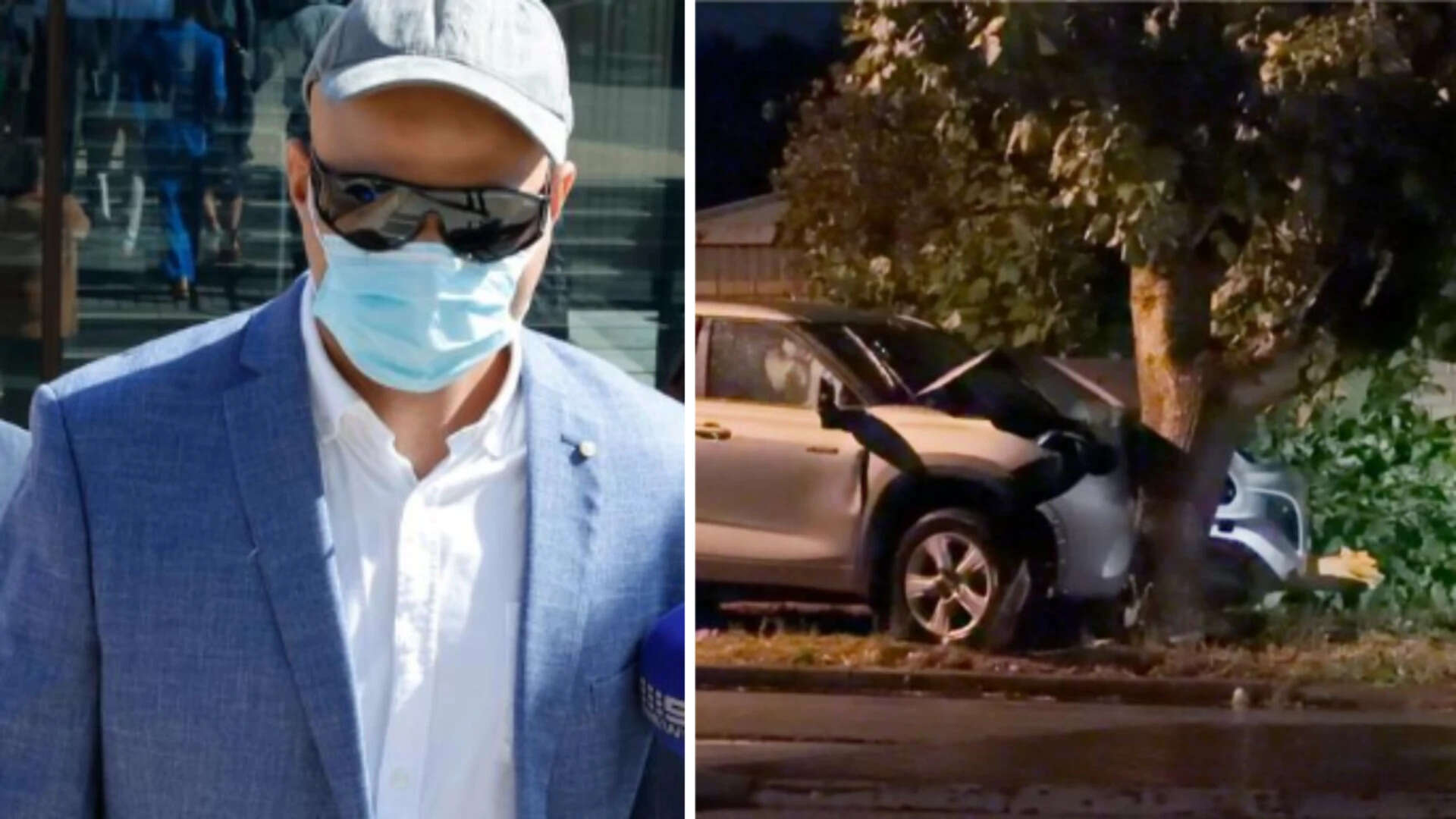
The air inside a late-night rideshare is often thick with a specific kind of silence. It is the silence of the weary. On one side of the headrest, a passenger leans against the window, watching the blurred neon of the city streak past, thinking of home and the relief of a soft mattress. On the other side, a driver grips a steering wheel that has felt like lead for the last four hours. Their eyes are heavy. The dashboard glow is the only thing keeping the darkness at bay.
In India’s sprawling urban corridors, this scene repeats millions of times a night. Most of the time, the journey ends with a quiet "thank you" and a door clicking shut. But sometimes, the silence is shattered.
The Weight of the Wheel
Consider the biology of exhaustion. When a human being pushes past the sixteen-hour mark of wakefulness, the brain begins to malfunction in ways that mimic legal intoxication. Reaction times lag. Peripheral vision narrows. The mind starts to steal "micro-sleeps"—terrifying intervals of three to five seconds where the brain simply turns off, even if the eyes remain wide open.
In a recent, devastating incident in India, these biological realities collided with a family’s life. An Uber driver, reportedly pushed to the brink by back-to-back shifts and the crushing pressure of the gig economy, surrendered to sleep while his foot remained on the accelerator. The vehicle didn't just drift; it became a kinetic weapon.
Among the passengers was a baby.
The physics of a car crash are indifferent to the innocence of the victims. When two tons of steel meet a stationary object at high speed, the force is distributed across every bone and organ inside the cabin. For an adult, it is a trauma. For an infant, whose body is still a fragile architecture of soft cartilage and developing systems, it is often insurmountable. The baby did not survive. The driver woke up to a nightmare of his own making, facing charges that will haunt him longer than any prison sentence ever could.
The Invisible Engine of the Gig Economy
We often talk about "the algorithm" as if it were a ghost in the machine, something abstract and digital. In reality, the algorithm is a whip. It tracks every minute of downtime. It rewards the "hustle." It creates a psychological environment where turning off the app feels like losing a race.
Drivers are not employees in the traditional sense; they are independent contractors navigating a high-stakes gambling floor. To make a living wage after accounting for fuel, maintenance, and the platform’s significant cut, many feel they have no choice but to chase the "surge." They drive through the haze of fever, the fog of grief, and, most dangerously, the leaden weight of sleep deprivation.
The math is brutal. If $X$ represents the cost of a car payment and $Y$ represents the daily earnings, and $Y$ is consistently lower than $X$ plus the cost of living, the driver must increase their hours. It is a simple linear equation with a lethal variable: human endurance.
This isn't an isolated tragedy or a "freak accident." It is the predictable outcome of a system that prioritizes uptime over human limits. We have built a world where the convenience of a cheap ride is subsidized by the physical exhaustion of the person behind the wheel. We are trading safety for pennies, and occasionally, the price tag comes back marked with a life.
The Illusion of Control
When we step into a car summoned by a tap on a screen, we surrender our agency. we trust that the person in the front seat is a professional, capable of navigating the chaos of the road. We trust that the company facilitating the transaction has vetted the human being they’ve sent to our door.
But there is a disconnect between the corporate office and the asphalt. Technology companies often argue they are merely "platforms," connecting supply with demand. This semantic shield allows them to bypass the rigorous safety standards that govern the trucking or airline industries. A pilot is legally barred from flying if they haven't had sufficient rest. A long-haul trucker must log their hours and stop when the clock runs out.
An app driver, however, can often toggle between different platforms—jumping from Uber to a local competitor—to bypass internal "rest" requirements. They are the captains of a sinking ship, trying to bail out water with a thimble.
The Ghost in the Back Seat
Imagine the aftermath. The police tape fluttering in the wind. The debris on the road—a stray shoe, a shattered phone, a car seat that couldn't perform a miracle. The driver sits on the curb, his head in his hands, finally awake, wishing more than anything that he could go back to the moment his eyelids first felt heavy.
He is a villain in the eyes of the law, and perhaps rightfully so. He took a risk that ended a life. But he is also a symptom.
If we only punish the individual, we ignore the factory that produced the tragedy. We ignore the millions of other drivers currently blinking back tears of fatigue on highways across the globe. We ignore the fact that as consumers, we have become addicted to a level of service that human bodies were never meant to sustain indefinitely.
The tragedy in India is a mirror. It asks us what we are willing to tolerate in the name of efficiency. It forces us to look at the tired man in the rearview mirror and wonder how many hours he has been awake. It reminds us that every "efficiency" has a human cost, and sometimes, that cost is paid by those who haven't even learned to walk yet.
The road is long, and the night is dark. We are all passengers in a system that is currently driving while exhausted, hurtling toward a destination we might not want to reach, praying that the person at the wheel stays awake just long enough to get us home.
The light at the end of the tunnel isn't always the sun. Sometimes, it’s the headlights of a car that has drifted into the wrong lane.