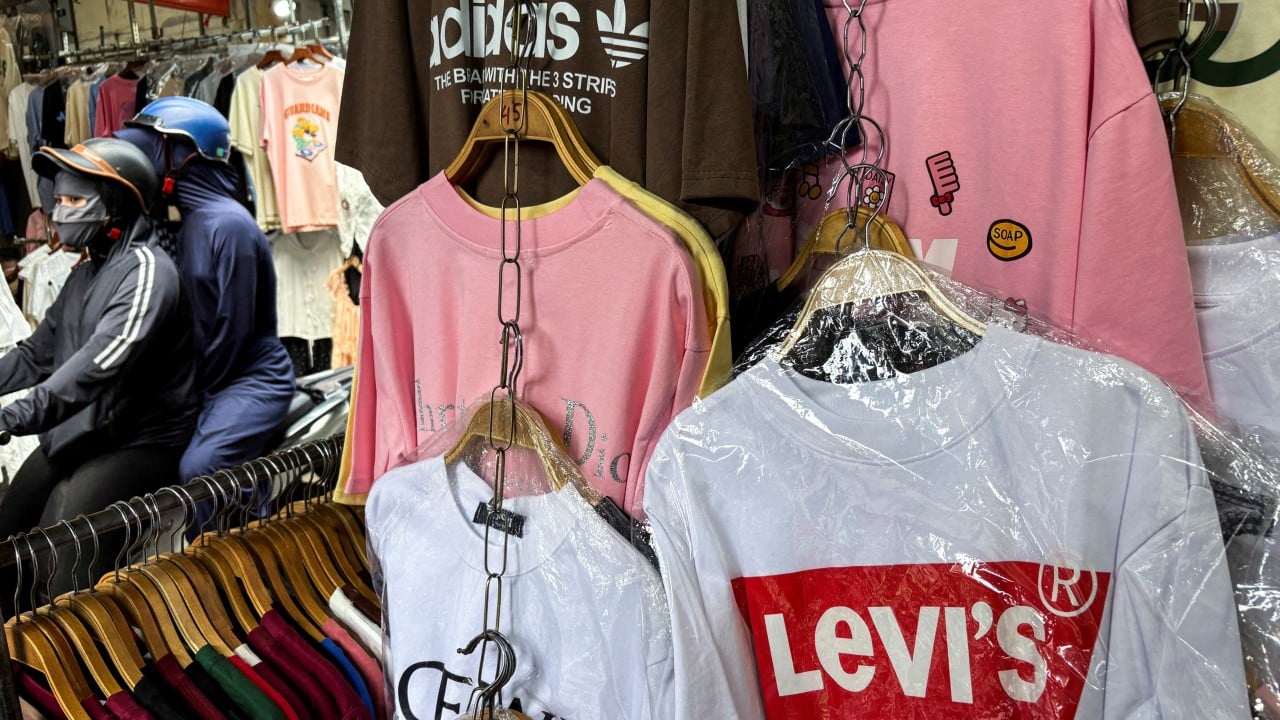
Walk into Saigon Square on any humid afternoon in Ho Chi Minh City, and you will see a masterclass in economic theater. Walkie-talkies crackle near the entrance as spotters watch the street. The moment a market surveillance vehicle pulls up, a low-frequency hum of closing metal shutters ripples through the dense corridors. Stalls selling fake Rolexes, counterfeit Louis Vuitton handbags, and unauthorized Nike sneakers vanish behind iron grates within ninety seconds. When the inspectors leave, the shutters roll back up, and the transaction of illicit luxury goods resumes without a skipped beat.
This persistent survival defies a mountain of geopolitical pressure. The United States Trade Representative keeps Saigon Square firmly on its notorious markets list, while Washington routinely waves the threat of punitive tariffs over intellectual property theft. Hanoi responds with aggressive national directives, specialized anti-counterfeiting task forces, and highly publicized raids. Yet the fakes remain. The real reason these markets survive has little to do with weak laws and everything to do with a delicate domestic economic equilibrium. For Vietnam, the counterfeit trade is not an uncontrolled virus; it is a calculated, structural buffer that the state cannot afford to destroy overnight.
The Economics of a High Tech Underground
The counterfeit economy has evolved far beyond cheap, poorly stitched knock-offs sold out of duffel bags. It is a highly organized, technologically advanced industry that leverages the same regional supply chains fueling Vietnam legitimate manufacturing boom.
Much of the merchandise found in traditional retail hotspots is manufactured in sophisticated facilities across the border in China or inside domestic industrial zones. When multinational brands outsource their production to Vietnamese factories, they leave behind technical expertise, machinery, and sub-contractors. This infrastructure is easily repurposed. A factory that loses a contract with a global footwear brand on Friday can begin turning out high-grade, unbranded, or illegally branded variations of the exact same shoe by Monday.
The distribution network is equally advanced. Retail stalls inside physical markets act as the front-facing showroom, but the true volume moves through decentralized e-commerce channels. Sellers utilize encrypted messaging applications, private social media groups, and live-streaming platforms to shift inventory before traditional law enforcement can track the physical location of the goods.
State-backed surveillance agencies have tried to counter this shift. Enforcement departments now deploy artificial intelligence tools to monitor transaction patterns, cross-reference shipping manifests, and track bulk deliveries moving through domestic logistics hubs. Despite these efforts, the underground supply chain adapts faster than the regulatory frameworks designed to police it. If a specific digital payment pathway is blocked, networks pivot immediately to alternative digital wallets or cash-on-delivery systems that leave no audit trail.
Why Enforcement Campaigns Are Built to Fail
A closer look at official enforcement statistics reveals a stark disparity between the volume of raids and their actual impact on the ground.
Ho Chi Minh City Counterfeit Enforcement Statistics
+-----------------------------------+--------------------+
| Metric                            | Reported Value     |
+-----------------------------------+--------------------+
| Total Violations Handled          | 882 cases          |
| Administrative Fines Collected    | 5.1 billion VND    |
| Total Confiscated Products        | 77,100 units       |
| Criminal Referrals Created        | 2 cases            |
+-----------------------------------+--------------------+
The data demonstrates a systemic reliance on administrative penalties rather than criminal prosecutions. In a market ecosystem generating millions of dollars in untaxed revenue, a fine of a few thousand dollars is handled by syndicates as a predictable cost of doing business.
The structural flaw lies in the legal threshold required for criminal prosecution. Under domestic laws, criminal asset forfeiture and prosecution require proving the possession of counterfeit goods valued above 200 million VND. Retail operators understand this system perfectly. They deliberately keep their on-site inventory minimal, holding just enough stock to fill immediate display shelves while storing the bulk of their counterfeit luxury goods in unmarked, off-site residential apartments and micro-warehouses scattered across the city.
When a raid occurs, the market surveillance officers find only a small batch of infringing items. The stall owner accepts the administrative fine, signs a standardized commitment pledging never to sell counterfeit items again, and restocks the display within forty-eight hours from the hidden warehouse down the street.
The Silent Domestic Consensus
To understand why this cycle continues, one must look past the official press releases detailing government crackdowns. The counterfeit trade serves as a vital economic safety valve for a significant segment of the urban population.
Traditional retail markets provide employment for thousands of low-skilled workers, from stall attendants and delivery couriers to independent micro-entrepreneurs. Aggressive, total elimination of this sector would instantly destroy livelihoods and spark localized economic instability. Furthermore, localized corruption provides a secondary layer of insulation. Small-scale vendors regularly report paying informal, monthly fees to local precinct coordinators and market management staff simply to operate without constant harassment. These small, recurring payments create a vested local interest in keeping the markets open, directly undermining the sweeping "zero tolerance" directives sent down from ministries in Hanoi.
The government is trapped in an architectural contradiction. It must show enough enforcement progress to satisfy Western trading partners and protect the country status as a preferred destination for foreign direct investment. Yet, pushing too hard risks upending the fragile informal economy.
A stark example occurred when the state introduced strict tax collection measures alongside anti-counterfeiting drives, requiring small market merchants to link electronic cash registers directly to national tax databases. Rather than complying, hundreds of shop owners simply pulled down their shutters in coordinated, silent protest. The message to the state was clear. Pushing informal markets into full compliance too quickly can paralyze local commercial hubs.
The Limits of Western Pressure
The United States and European trading blocs view the open sale of counterfeit goods through a singular lens: intellectual property theft that harms international corporations. They brand markets like Saigon Square as lawless anomalies that can be regulated out of existence through aggressive policing and trade penalties.
This view misunderstands the reality of developing supply chains. Vietnam cannot simply switch off an underground economy that is deeply intertwined with its legitimate manufacturing base. The factories producing high-end fakes are often the same facilities providing component parts for legitimate export goods. Forcing a total closure of these operations would ripple through the supply chains of the very multinational brands demanding the crackdowns.
Hanoi strategy has settled into a predictable rhythm of managed friction. The state conducts high-visibility raids ahead of major trade summits or intellectual property reviews, seizes enough high-end luxury knock-offs to produce impressive statistical reports, and issues stern warnings to the public. This satisfies the baseline requirements of international trade agreements without triggering domestic economic distress.
The underground market survives because it functions as a compromise between the demands of global capitalism and the realities of local survival. Until the formal economy can offer these vendors and manufacturers a more lucrative, stable alternative, the walkie-talkies at the entrance of Saigon Square will keep crackling, the metal shutters will keep rolling up and down, and the world most notorious counterfeit market will keep open for business.