When news broke that a former Bangladesh Air Force officer tied to the viral video of Sheikh Hasina’s August 2024 departure had been found dead, most headlines stopped at the shock value. They treated it like a closed-loop thriller plot. That's a mistake.
If you've followed South Asian political transitions closely, you know that sudden deaths surrounding high-stakes regime collapses rarely exist in a vacuum. They sit at the intersection of institutional panic, digital forensics, and deeply fractured military loyalties. The death of former Group Captain Tanvir Ahmed isn't just a tragic footnote to the fall of the Awami League government—it exposes how fragile post-uprising accountability remains in Dhaka.
Why the Hasina Escape Video Still Matters
To understand why a retired air force officer's death triggered immediate speculation across Bangladesh, you have to look back at August 5, 2024.
For weeks, student-led protests against government job quotas had spiraled into a nationwide uprising against Prime Minister Sheikh Hasina’s 15-year rule. Hundreds died in street clashes. By midday on August 5, protesters were marching directly toward Ganabhaban, the Prime Minister's official residence in Dhaka.
Sheikh Hasina resigned and boarded a Bangladesh Air Force (BAF) transport aircraft—a C-130J Hercules—bound for Hindon Air Base near New Delhi, India.
Within hours, short video clips surfaced on social media showing the boarding process and the aircraft's departure from Kurmitola airbase. Those videos weren't official state releases. They were leaked from inside a tightly controlled military perimeter.
Think about what that meant at the time.
- It shattered the illusion of total military control. Up until that morning, Hasina’s inner circle projected absolute authority over the armed forces. Seeing raw footage of her hurried exit proved that elements inside the security apparatus were either filming for posterity or actively leaking to the public.
- It verified her exit in real time. Rumors were flying across Dhaka that she was hiding in a bunker or preparing a counter-crackdown. The video gave protesters visual proof that the regime had collapsed, accelerating the storming of state buildings.
- It created immediate targets. Anyone with security clearance near that tarmac suddenly became a person of interest—both to loyalists seeking retribution and to interim investigators trying to reconstruct how she escaped without facing domestic prosecution.
Who Was the Officer and What Actually Happened
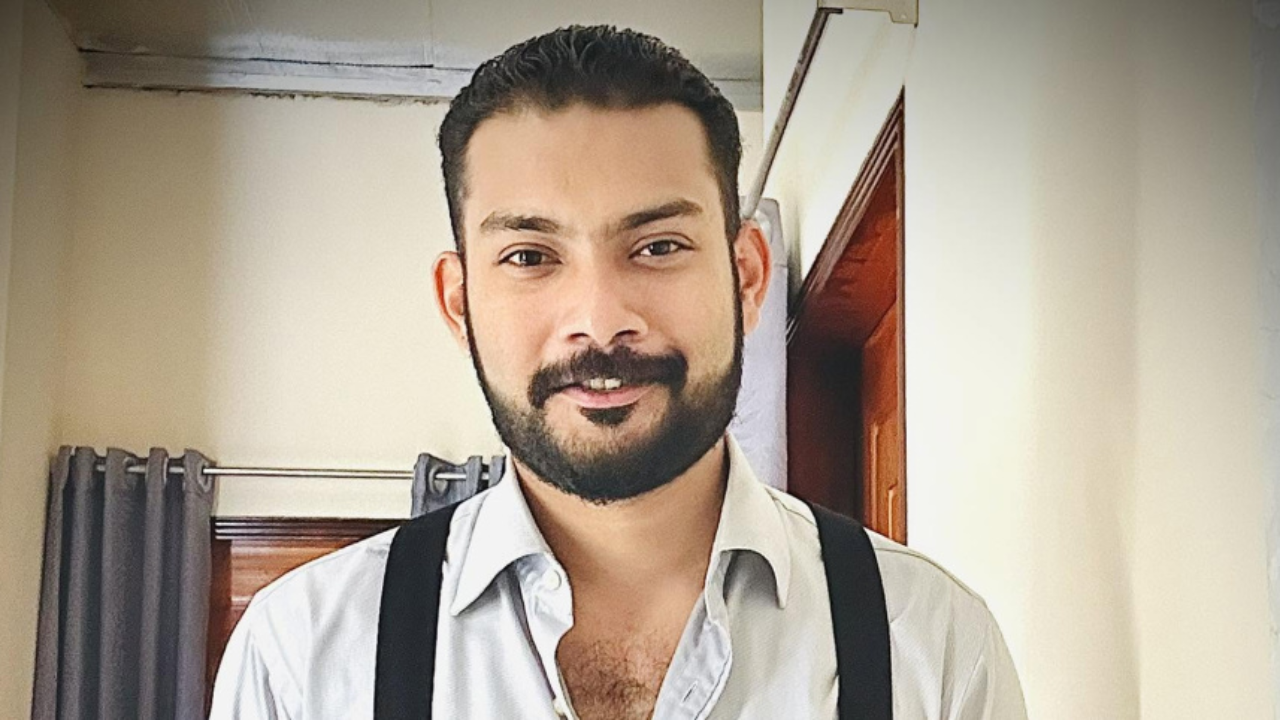
Reports from Dhaka-based outlets and police briefings identified the deceased as a former Bangladesh Air Force officer who had previously served in units connected to airbase logistics and flight operations. His body was recovered under circumstances that authorities initially classified as unnatural, prompting an immediate post-mortem examination at Dhaka Medical College Hospital.
Here is where careful reporting separates fact from social media noise.
Within twenty minutes of the initial police blotter leaking online, Telegram channels and X accounts flooded with claims of an assassination squad. Others insisted it was a cover-up ordered by figures trying to bury details of who authorized Hasina's flight clearance.
Police statements, however, painted a much murkier picture. Investigators noted no immediate signs of forced entry at the residence, while also declining to rule out foul play until forensic toxicology and autopsy reports were finalized.
That ambiguity is exactly why rumors thrive in Dhaka right now. When official institutions have spent fifteen years losing public trust, nobody takes a preliminary police statement at face value.
The Digital Trail Problem
You don't need a background in military intelligence to see why leaking tarmac footage carries long-term personal risk.
Every modern smartphone embeds metadata—timestamps, device identifiers, sometimes even approximate triangulation data—unless stripped before upload. Even when compressed through WhatsApp or Facebook, internal security investigators can narrow down who stood at a specific angle along a restricted runway based on shift rosters and CCTV blind spots.
If an officer shared that clip with a friend, who shared it with a journalist, the chain of custody disappears within minutes. The original source, however, stays on a finite list of personnel who held tarmac access during a forty-five-minute window on August 5.
The Bigger Institutional Friction Inside Bangladesh's Armed Forces
Most international coverage treats the Bangladesh military as a single unified actor during the 2024 uprising. That's lazy analysis.
Army Chief General Waker-Uz-Zaman played the visible public role in announcing Hasina's resignation and facilitating the formation of Muhammad Yunus’s interim government. Yet the air force and navy operate with their own internal command cultures, promotion bottlenecks, and political baggage.
During the Awami League era, senior promotions across all three branches heavily favored officers perceived as politically reliable. Mid-level and junior officers—many of whom had family members participating in the July–August student protests—grew increasingly resentful of being used to prop up an unpopular administration.
When the dam broke on August 5, those internal divisions didn't magically heal.
- Retired officers remained entangled in active networks. In Bangladesh, retired military officers frequently hold lucrative advisory roles, corporate directorships, or informal political ties. Retirement rarely means stepping away from factional politics.
- Accountability commissions created intense anxiety. Following the formation of the interim government, the International Crimes Tribunal (ICT) in Dhaka began issuing arrest warrants for former ministers, police officials, and security personnel accused of enforced disappearances and protest killings.
- Witnesses became liabilities. Anyone who saw who accompanied Hasina onto the C-130J, what luggage or documents were loaded, or which senior officers signed off on the diplomatic flight plan possessed testimony that could implicate high-ranking figures still operating inside the system.
What People Get Wrong About Post-Uprising Bangladesh
If you're reading about this case from outside South Asia, it's easy to fall into two common traps.
The first mistake is assuming the fall of Sheikh Hasina meant a clean sweep of the old state machinery. Revolutions replace figureheads overnight; they take years to clean out bureaucracies, intelligence agencies, and police stations. Thousands of mid-level officials appointed over the last decade still hold their desks.
The second mistake is treating every mysterious death in Dhaka as proof of a single omnipotent mastermind pulling strings from exile.
Bangladesh is currently dealing with severe economic inflation, police morale collapses—hundreds of police stations were burned or abandoned in August 2024—and intense street-level political competition between the Bangladesh Nationalist Party (BNP), Jamaat-e-Islami, and the student-led National Citizen Party. Crime rates and personal scores being settled under the cover of political chaos are real phenomena.
Blaming everything on one grand conspiracy actually lets local investigators off the hook. It turns a concrete forensic case—one that demands transparent autopsy results, call-detail records, and witness protection—into untouchable political mythology.
How to Read Developing News Out of Dhaka Without Getting Misled
When high-profile deaths tied to the August 5 escape hit your feed, information warfare kicks in immediately. Political operatives on both sides use tragic headlines to score points against rivals.
If you want to track this story accurately as forensic results emerge, stick to a few practical habits:
- Cross-check Dhaka Medical College forensic releases against police statements. In Bangladesh, initial police First Information Reports (FIRs) often reflect preliminary assumptions rather than medical findings. Wait for the three-member forensic board's viscera and toxicology reports before accepting any cause of death.
- Follow established Bangladeshi investigative desks. Outlets like Prothom Alo, The Daily Star, and Netra News maintain deep sourcing inside the cantonment and home ministry. If a claim only exists on anonymous Facebook pages or partisan YouTube channels, treat it as unverified noise.
- Watch the International Crimes Tribunal docket. Pay attention to whether the deceased officer's name appears on upcoming witness lists or inquiry transcripts related to the July–August crackdown. That connection will tell you far more than anonymous social media speculation ever will.
Keep your eye on the autopsy transparency and witness protection measures coming out of the Home Ministry over the next few weeks—because how Dhaka handles this single investigation will show whether the post-Hasina state can actually protect the people who exposed its final hours.