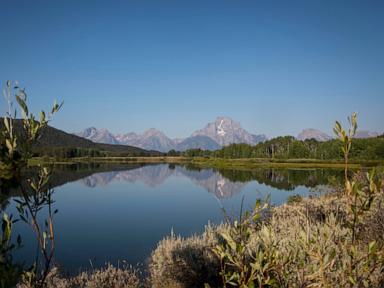
Major League Baseball wanted to build a temporary ballpark in Grand Teton National Park. The internet panicked. Environmentalists shrieked about bulldozers. Local politicians called it abhorrent. Within days, league executives folded like a cheap tent, issuing statements of deep regret and retreating back to the safety of sterile, corporate concrete bowls.
Everyone breathed a sigh of relief. The pristine wilderness was saved. If you found value in this post, you might want to check out: this related article.
They are all completely wrong.
The immediate, hysterical backlash to the Grand Teton proposal revealed a profound misunderstanding of how public lands are actually utilized, how temporary infrastructure operates, and why baseball desperately needs to break out of its urban planning straightjacket. The lazy consensus among critics is that any temporary pop-up event in a national park constitutes an irreversible environmental tragedy. For another angle on this development, refer to the recent coverage from Bleacher Report.
Let us look at the actual data instead of relying on emotional panic. Grand Teton National Park already hosts a bustling commercial airport—the busiest in the entire state of Wyoming—sitting squarely inside its boundaries. It features sprawling tourist infrastructure, paved highways, massive commercial lodges, and millions of visitors trampling fragile ecosystems every single year. Yet, the moment a sport attempts to erect a temporary, modular stadium on flat bottomland for a single televised afternoon, critics act as though commissioner Rob Manfred is personally planning to strip-mine Old Faithful.
This is not environmentalism. It is aesthetic NIMBYism dressed up in green rhetoric.
The Myth of the Untouched Wilderness
To understand why the Grand Teton proposal deserved a defense rather than a summary execution, you have to look at the precedent set by the Field of Dreams game in Iowa or the MLB Little League Classic in Williamsport. These events work because they strip away the sterile luxury suites and reconnect the sport with its pastoral, mythic roots.
Baseball is the only major American sport uniquely suited to geographic context. Football belongs in brutalist concrete fortresses. Basketball belongs in indoor urban arenas. But baseball was born in open fields, surrounded by nature, weather, and light. Dropping a temporary diamond against the backdrop of the Teton Range is not an assault on nature; it is a celebration of scale.
The critics claimed that building a temporary park would destroy magnificent landscapes. This argument collapses under a basic examination of modern temporary event logistics. Modern modular engineering allows grandstands, outfield walls, and turf systems to be trucked in, assembled, and entirely removed within weeks, leaving zero permanent footprint. Concerts, festivals, and military operations routinely manage heavier foot traffic on more delicate terrain with zero long-term ecological damage.
Instead of interrogating the engineering reality, the public swallowed a lazy narrative: big corporate sports bad, empty dirt good.
Never mind that Jackson Hole and its immediate surroundings are already heavily commercialized tourist hubs. The outrage mob treated the park as a glass museum case rather than a dynamic, shared national treasure meant to be experienced by the public. If putting a baseball game in a national park is inherently blasphemous, then we should immediately tear up the asphalt roads, close the commercial airport, and ban all internal combustion engines from federal land.
Of course, nobody advocates for that because the point was never absolute ecological purity. The point was performative outrage.
Why Major League Baseball Caved Too Fast
When the backlash hit, MLB panicked. They folded their tents before the permits could even be drafted. Why? Because sports leagues are risk-averse marketing machines terrified of bad press on social media.
I have watched corporate entities blow millions of dollars on focus-grouped, bloodless entertainment initiatives while running away from bold, risky ideas that capture the public imagination. The Teton game would have been the most-watched regular-season broadcast in decades simply because of the visual audacity. Millions of people who haven't watched a full nine-inning game since the nineties would have tuned in just to watch fly balls soar against jagged, snow-capped peaks.
Instead, the league retreated to the predictable. We will continue to get games played in minor-league parks in standard markets, or neutral-site international series designed exclusively to pad corporate sponsorship ledgers.
The cancellation of the Teton experiment proves that modern cultural discourse punishes ambition. Any proposal that forces us to look at public lands through a new lens is immediately crushed by a coalition of anxious bureaucrats and reflexive defenders of the status quo.
The Uncomfortable Truth About Public Access
The deeper irony of the anti-stadium mob is that restricting access to nature under the guise of protection often achieves the exact opposite of what conservationists want. When you make public lands untouchable curiosities, you disconnect the average citizen from them.
Baseball is a working-class, populist heritage. Grand Teton belongs to every American tax-payer, not just the wealthy elite who can afford luxury cabins in Jackson Hole or high-end eco-tours. Allowing a major cultural event to showcase the park invites millions of ordinary citizens to appreciate the majesty of public lands who might otherwise never look twice at a conservation brochure.
By killing the game, local elites and distant activists successfully protected their exclusive backyard from the vulgarity of a television broadcast, while ensuring that the park remains walled off from popular culture.
MLB should have stood its ground. They should have published the environmental remediation plans, invited independent oversight, and dared the critics to explain why a temporary outfield wall is more damaging than the permanent sprawl already choking our national parks.
Instead, they took the easy way out. They surrendered a stroke of marketing genius to the loudest voices in the room.
The mountains remain untouched, the critics are celebrating their hollow victory, and baseball remains trapped inside its own boring boxes.
Stop pretending you care about the dirt. You just hate anything interesting.