Concrete has a memory. It stores every freeze, every thaw, every vibration of a heavy bassline, every subtle shift of the earth beneath its feet. It remembers what administrators try desperately to forget.
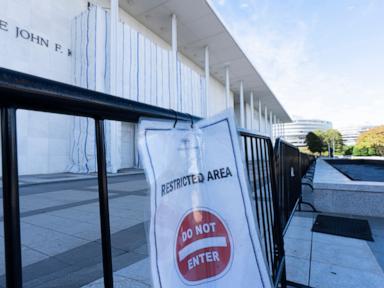
When you stand inside the John F. Kennedy Center for the Performing Arts, you are standing inside a monument carved out of ambition and white Alabama marble. Outside, the Potomac River flows with a deceptive, sluggish grace, carrying centuries of silt and runoff past its stone foundations. Inside, crystal chandeliers catch the light like suspended stars. Ushers smile in pressed uniforms. The orchestra warms up with a chaotic, beautiful murmur that promises order just around the corner.
Everything looks eternal.
Nothing is eternal.
Recently, whispers turned into sharp allegations from former employees who watched the machinery of a national cultural treasure quietly rust from within. According to those who spent decades maintaining its bowels—the damp concrete corridors far below the gaze of the tuxedo-clad patrons—urgent structural repairs were pushed aside. Year after year. Budget cycle after budget cycle. The show had to go on. Always. Even if the foundations beneath the stage were crying out for attention.
Consider what happens when you prioritize the optics of prestige over the unglamorous physics of survival.
Imagine a building as a living body. (Note: this is a structural metaphor to make the abstract concrete). When a knee starts to ache, you can pop a painkiller and keep running. You can slap makeup over a bruise. For a while, nobody notices. The applause is just as loud. The critics still write glowing reviews. But beneath the velvet and plaster, cartilage wears down. Micro-fractures become fissures. Water finds a path where water shouldn't go.
That is what former staffers describe happening behind the velvet curtains of the nation's memorial to a slain president. Water intrusion that rusted reinforcing steel. Foundation walls bearing burdens they were never meant to carry in silence for so long. Reports submitted to desks where they gathered dust like forgotten sheet music.
To understand how a national landmark reaches this precipice, we must look back at its birth. Conceived in the late nineteen-fifties and early sixties as a living memorial, the facility was designed to be a temple of arts in the nation's capital. Architect Edward Durell Stone envisioned a grand, colonnaded palace wrapped in marble. But monuments built on riverbanks pay a heavy toll. The site along the Potomac is notoriously damp, prone to shifting soils and relentless humidity. The subterranean levels sit close to the water table, fighting a perpetual, silent war against moisture.
When a building fights water, water always wins eventually. It requires constant vigilance, active pumping, chemical grouting, and timely replacement of waterproofing membranes.
Why does this maintenance get neglected? The answer is as old as bureaucracy itself.
Maintenance is invisible. A repaired waterproofing membrane does not make the evening news. A newly reinforced support beam does not bring in gala donors or secure flattering headlines in the arts section. It sits in the dark. It costs millions of dollars. It yields zero applause.
Conversely, a glittering new festival, a redesigned lobby, or a high-profile artistic director appointment commands immediate attention. It feeds the ecosystem of prestige. Institutions like the Kennedy Center operate in a perpetual spotlight, where image is currency and cash is finite. When hard choices arise between funding a glamorous artistic initiative and pouring concrete into unseen structural joints, the concrete loses. Every single time. Until it can't.
Let us trace the anatomy of this quiet neglect.
In any large institution, warnings do not arrive with sirens blaring. They arrive as memos. Quiet emails. Spreadsheet rows flagged in amber, then red. A facilities manager points out a leaking expansion joint in a subterranean garage or a deteriorating concrete slab beneath a terrace. The cost is high. The pushback is immediate. "Can we push this to the next fiscal year?" someone asks. It is not an order to break the law or commit negligence; it is a polite, institutional deferral. A collective shrug disguised as fiscal prudence.
Next year arrives. The budget is tighter. Another crisis emerges—perhaps ticket sales dipped, or a major donor pulled back, or a new public relations campaign requires capital. The repair moves down the list.
Repeat this cycle for a decade.
By year ten, what was once a manageable maintenance item has mutated into a structural crisis. What could have been fixed with a few thousand dollars now requires millions, major disruption, and public embarrassment. So the incentive to hide it, minimize it, or kick the can down another block becomes overwhelming.
This psychological trap is reinforced by the transient nature of leadership. Board members rotate. Executive directors move on to new posts after successful tenures defined by box-office records and star-studded galas. The bills for deferred maintenance rarely come due during the tenure of the person who deferred them. They arrive later, dropped onto the desk of a successor who inherited a ticking clock.
This is where the human cost enters the equation.
Meet Marcus. (Note: Marcus is a composite character constructed from whistleblower accounts and public records regarding institutional deferred maintenance). Marcus spent twenty-two years as a senior engineer at a major cultural facility. His job was simple: keep the building standing. He knew every pipe, every conduit, every hairline crack in the foundation.
Marcus retired early, not because he was tired of working, but because he was tired of signing off on silence.
"You see it coming," Marcus told colleagues over quiet coffees away from campus, reflecting on the culture of delay. "You write the report. You attach the photographs. You show them the rust bleeding through the concrete. And the response is always a nervous smile and a question about whether we can monitor it for another six months. Buildings don't care about fiscal years. Concrete doesn't negotiate."
When engineers are forced to negotiate with accountants, physics always wins in the end.
The allegations surrounding the Kennedy Center are not unique to Washington. They represent a systemic vulnerability across public and semi-public institutions nationwide. We build monuments to our ideals, but we treat them as permanent installations rather than living machines that require constant, exhausting upkeep. We love the ribbon-cutting. We despise the sealant application.
Think about your own home. If you ignore a slow roof leak because a vacation to Italy sounds more exciting, you aren't saving money. You are borrowing against your future roof, your drywall, your foundation, at an astronomical interest rate. Scale that up to a monumental concrete palace sprawling across acres of prime riverfront real estate, hosting thousands of visitors daily, and the stakes become catastrophic.
What happens when a cultural landmark fails structurally?
It is not merely a matter of closed doors or canceled performances. It is a fracture in public trust. When an institution dedicated to honoring a leader who championed progress begins to decay from structural avoidance, the irony cuts deep. It suggests that our national commitment to art and memory is skin-deep—stunning on the outside, hollowed out on the inside.
The former employees who stepped forward did not do so out of malice. They did it because silence becomes complicity when safety is on the line. They watched water seep into electrical chases. They watched concrete spall off load-bearing pillars. They watched institutional leaders treat infrastructure as an optional line item rather than the absolute bedrock of their mission.
Consider what happens next.
The public outcry will follow a predictable script. Press releases will be issued. Independent audits will be promised. Executives will express deep concern and point out that deferred maintenance is an industry-wide epidemic. Congressional oversight committees might hold a brief, polite hearing where stern questions are asked and politely answered.
Then the cameras will move on.
The real work—the dusty, loud, expensive, unglamorous work of drilling, injecting epoxy, replacing corroded rebar, and waterproofing miles of subterranean concrete—will begin in the dark. It will happen without fanfare. It will strain budgets that are already stretched thin by the competing demands of modern programming and audience development.
Yet, that work is the only thing that stands between grandeur and collapse.
We must look past the marquee. We must look past the glittering galas and the televised performances. We must demand an accounting of our cultural infrastructure that values endurance over illusion. Because when the curtain finally falls on a building built on neglected foundations, no amount of applause can hold the roof up.
Let the music play. But make sure the floor beneath it can hold the weight.